


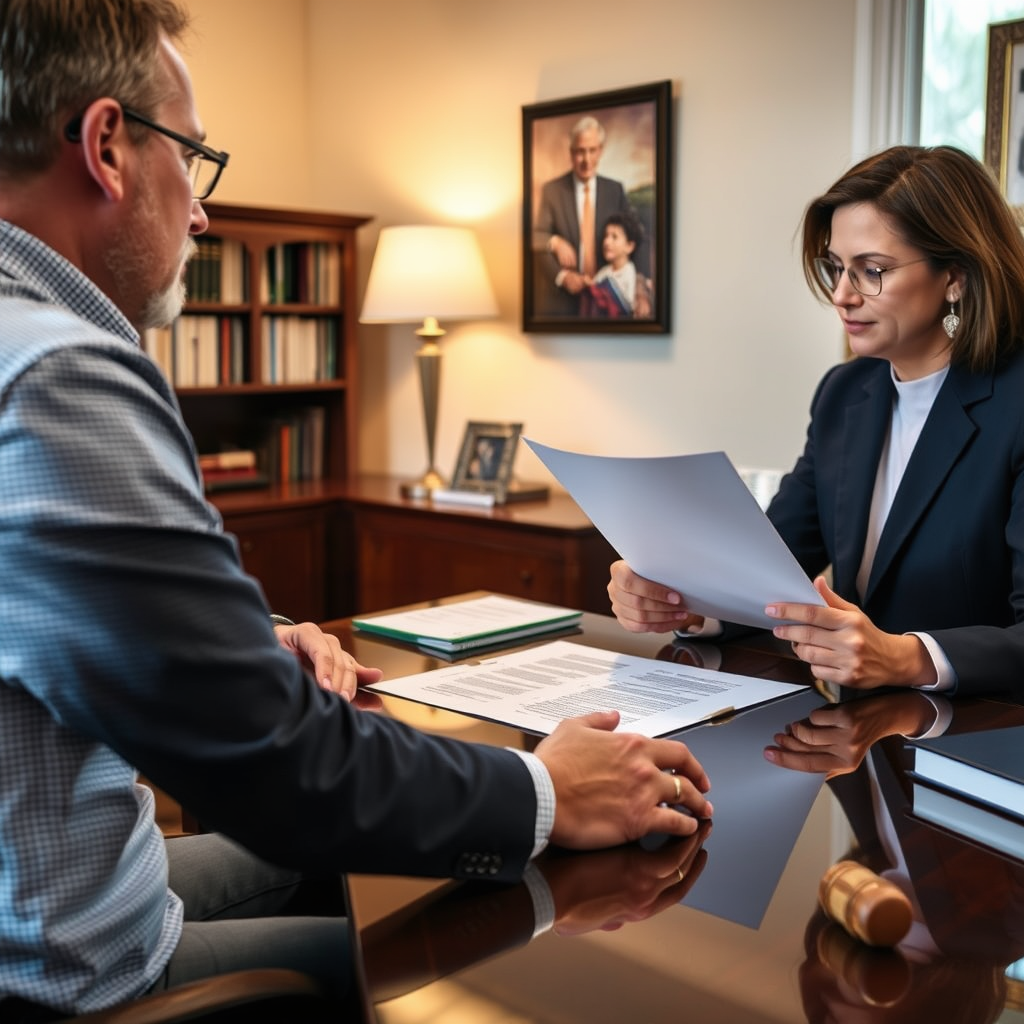
Postnuptial Agreement Attorney in Fauquier County, VA: What You Need to Know
As of December 2025, the following information applies. In Virginia, a Postnuptial Agreement involves married couples formally outlining asset division and spousal support, safeguarding their financial futures. These agreements must be fair and entered into voluntarily by both parties. Law Offices Of SRIS, P.C. provides dedicated legal representation in Fauquier County for crafting, reviewing, and defending postnuptial agreements.
Confirmed by Law Offices Of SRIS, P.C.
Marriage is a beautiful journey, full of shared dreams and aspirations. But sometimes, life throws unexpected curveballs, or couples simply want to ensure their financial security and peace of mind, no matter what the future holds. This is where a postnuptial agreement comes into play. It’s a pragmatic step many couples in Fauquier County, VA, consider to bring clarity and structure to their financial arrangements within their marriage. It’s not about distrust; it’s about proactive planning, open communication, and laying a solid foundation for your shared life.
Many people assume these discussions only happen before marriage with a prenuptial agreement. Blunt Truth: A postnup offers a similar security net, but it’s put in place after you’ve already said, “I do.” Whether you’re protecting a family business, managing inherited wealth, or simply defining financial responsibilities, understanding postnuptial agreements in Virginia is vital. This guide aims to shed light on what these agreements entail, how they’re established, and why having knowledgeable legal counsel from Law Offices Of SRIS, P.C. can make all the difference for your family in Fauquier County.
What is a Postnuptial Agreement in Virginia?
A postnuptial agreement, often referred to as a post-marriage agreement, is a legally binding contract created and signed by two spouses after their marriage. Unlike a prenuptial agreement, which is signed before marriage, a postnup is drafted during the marriage. Its primary purpose is to outline how assets, debts, and spousal support (alimony) would be divided in the unfortunate event of a divorce, legal separation, or even in the context of estate planning. Essentially, it serves as a financial blueprint for your marital future, providing a clear framework that can help minimize potential disputes and emotional strain should the marriage dissolve.
In Virginia, these agreements are recognized and enforceable, provided they meet specific legal requirements. They are governed by the Virginia Premarital Agreement Act, which, despite its name, also applies to postnuptial agreements. This means the agreement must be in writing, signed by both parties, and entered into voluntarily. Crucially, both spouses must provide full and honest disclosure of their financial circumstances – including all assets, liabilities, income, and potential inheritances – before signing. Without this transparency, the agreement could be challenged later. While a postnup cannot dictate child custody or child support, as these matters are always determined by what’s in the best interest of the child at the time of separation, it can provide immense peace of mind regarding marital property and financial obligations.
Takeaway Summary: A postnuptial agreement in Virginia is a written contract between married individuals defining financial terms for potential separation, requiring full disclosure and voluntary consent. (Confirmed by Law Offices Of SRIS, P.C.)
How to Establish a Postnuptial Agreement in Fauquier County, VA?
Establishing a postnuptial agreement in Fauquier County, VA, involves several critical steps to ensure its legality and enforceability. It’s a process that demands careful consideration, open communication, and, most importantly, experienced legal guidance. Approaching this task thoughtfully can safeguard your interests and provide a stable financial future for you and your family. Don’t just rush into it; take your time, understand each phase, and make sure every detail aligns with Virginia law.
-
Initiate an Open and Honest Discussion with Your Spouse
The first and perhaps most vital step is to have a candid conversation with your spouse. Bringing up a postnuptial agreement can feel sensitive, but framing it as a mutual effort to protect both parties and ensure financial clarity can ease tension. It’s about being proactive and planning for different eventualities, not anticipating failure. Discuss your motivations, concerns, and what you hope to achieve with the agreement. Understanding each other’s perspectives from the outset will build a foundation of trust for the subsequent legal steps. Think of it as a financial check-up for your marriage, where both partners contribute to a healthier financial future, whatever that may bring.
-
Seek Independent Legal Counsel
This step is non-negotiable for an enforceable postnuptial agreement in Virginia. Both spouses must have separate, independent legal representation. Having your own attorney ensures that your individual rights and interests are fully advocated for and protected. Your attorney will review the proposed terms, explain the legal implications, and advise you on the fairness and enforceability of the agreement. Without separate counsel, there’s a significant risk that the agreement could be challenged and potentially invalidated later, with claims of duress or undue influence. This isn’t a shared legal journey; it’s two individuals, with their own seasoned counsel, coming together to form a mutually beneficial contract.
-
Provide Full and Transparent Financial Disclosure
For a postnuptial agreement to be considered valid and enforceable in Virginia, both spouses must provide a complete and accurate disclosure of all their financial information. This includes all assets (real estate, bank accounts, investments, retirement funds, businesses, valuable personal property) and all liabilities (debts, mortgages, loans). Any failure to disclose significant assets or debts can be grounds for challenging the agreement down the line. Your attorneys will guide you through this process, ensuring that all necessary financial documentation is exchanged, leaving no room for future disputes based on hidden information. This absolute transparency is the bedrock of a fair and defensible agreement.
-
Draft the Postnuptial Agreement
Once financial disclosures are complete and both parties have received independent legal advice, your attorneys will work together to draft the agreement. This document will meticulously detail how assets and debts will be divided, any provisions for spousal support, and other financial matters. It can include specific clauses related to family businesses, inheritance, future earnings, or the disposition of marital property. The language must be precise, unambiguous, and fully compliant with Virginia law. This drafting phase is where the intentions discussed earlier are translated into legally binding terms, carefully constructed to reflect your specific needs and circumstances.
-
Execute and Notarize the Agreement
After the draft is finalized and both spouses, along with their respective attorneys, are satisfied with its terms, the agreement must be formally executed. This means both spouses must sign the document in the presence of a notary public. Notarization verifies the identity of the signers and confirms that they signed voluntarily. This formal execution is a critical step that lends legal weight and authenticity to the document, making it officially recognized as a legal contract. It solidifies the understanding and agreement between you and your spouse.
-
Periodically Review and Consider Amendments
Life changes, and so might your financial circumstances or marital goals. It’s a good idea to periodically review your postnuptial agreement, perhaps every few years or after significant life events like the birth of children, a major career change, an inheritance, or starting a new business. If modifications become necessary, an amendment can be drafted and executed, following the same legal requirements as the original agreement, including independent legal counsel and notarization. This ensures your postnup remains relevant and continues to serve your family’s evolving needs effectively.
Can a Postnuptial Agreement Be Challenged or Overturned in Virginia?
It’s a valid concern for many couples: can a postnuptial agreement, once signed, truly stand up in court? While a properly drafted and executed postnuptial agreement is a strong legal document in Virginia, it’s not entirely immune to challenges. Understanding the grounds on which such an agreement might be overturned is vital for both spouses, particularly when you’re relying on it for future financial security. The Virginia Premarital Agreement Act outlines specific circumstances under which a court might deem a postnuptial agreement unenforceable. Knowing these factors can help you ensure your agreement is as robust as possible from the start.
One primary ground for challenging a postnuptial agreement is a lack of voluntary execution. If one spouse can demonstrate they were coerced, pressured, or signed the agreement under duress, a court might invalidate it. This means there was no genuine free will involved in the signing. For example, if a spouse was threatened with divorce or separation unless they signed, and they had no reasonable alternative, this could be considered duress. This is why having independent legal counsel for both parties is so incredibly important; it helps to establish that both spouses willingly entered into the agreement with full understanding.
Another significant reason for an agreement to be challenged relates to financial disclosure. If one spouse failed to provide a full and fair disclosure of their assets and liabilities before the agreement was signed, and the other spouse did not have, or could not reasonably have had, adequate knowledge of the undisclosed financial situation, the agreement might be deemed unenforceable. This emphasizes the need for complete transparency. Imagine if one spouse had a hidden bank account or a significant business interest they never mentioned; that oversight could unravel the entire agreement, as the other spouse couldn’t have made an informed decision.
Also, an agreement can be challenged if it is deemed “unconscionable” at the time of execution. While Virginia courts typically uphold agreements that were fair at the time of signing, an agreement that is so one-sided and oppressive that it shocks the conscience of the court could be overturned. This is a high bar, as courts generally respect the freedom of contract, but it’s a possibility if the terms are extremely unfair to one party without any mitigating circumstances. For instance, if one spouse was left with absolutely nothing while the other retained vast wealth, and there were no other contributing factors like significant fault in the divorce, a court might look closely at the fairness. This situation often arises when one party lacked sufficient legal representation or understanding of the profound implications of the terms.
Lastly, if the agreement was induced by fraud, misrepresentation, or mistakes of fact, it could also be set aside. Fraud involves intentionally misleading the other party about important information related to the agreement. A misrepresentation, even if unintentional, could still be problematic if it significantly impacted the other party’s decision to sign. Mistakes of fact could also, in rare circumstances, lead to an agreement being voided, particularly if both parties shared a fundamental misunderstanding about a key element. This means that honesty and accuracy aren’t just ethical considerations; they are legal necessities to ensure the durability of your postnuptial agreement in Fauquier County, VA. When you’re dealing with something so important, getting it right the first time with knowledgeable legal representation is your best defense against future challenges.
Why Hire Law Offices Of SRIS, P.C. for Your Postnuptial Agreement in Fauquier County, VA?
When considering something as personally significant as a postnuptial agreement, you want more than just legal advice; you need empathetic, direct, and reassuring guidance. At Law Offices Of SRIS, P.C., we understand the delicate balance of protecting your financial future while maintaining the integrity of your marriage. We are here to offer exactly that. While our primary local office serving Fauquier County is located in Fairfax, our commitment to families in the surrounding areas remains unwavering, providing accessible and dedicated legal support.
Mr. Sris, the seasoned founder of our firm, brings a depth of understanding to family law matters that is truly invaluable. As he states, “My focus since founding the firm in 1997 has always been directed towards personally taking on the most challenging family law matters our clients face.” This insight highlights a fundamental aspect of our firm’s philosophy: a commitment to robust, personalized legal representation in even the most sensitive and financially intricate cases. This isn’t just about drafting documents; it’s about listening to your story, understanding your fears, and crafting solutions that genuinely reflect your needs and protect your future.
Our approach at Law Offices Of SRIS, P.C. is rooted in what we call “Relatable Authority.” We’re not here to speak in confusing legal jargon. We’re here to provide clear, actionable advice, explaining every step of the postnuptial agreement process in plain language. We know that these discussions can be emotionally charged, and our role is to demystify the legal aspects, allowing you to make informed decisions without added stress. We represent your interests fiercely, ensuring that your agreement is fair, enforceable, and provides the security you seek.
When you choose Law Offices Of SRIS, P.C., you’re gaining a partner who understands the nuances of Virginia family law. We guide you through the mandatory financial disclosures, negotiate terms with your spouse’s counsel, and meticulously draft an agreement that stands the test of time. We proactively identify potential challenges and structure your agreement to minimize the risk of it being overturned, giving you peace of mind. For those in Fauquier County seeking a knowledgeable postnup attorney, our Fairfax location is ready to serve you with the highest level of professional care and a truly client-focused approach.
Our dedicated team at Law Offices Of SRIS, P.C. is prepared to help you navigate the process of establishing a postnuptial agreement with competence and compassion. We’re here to ensure your financial arrangements are clear, legally sound, and reflect your wishes. You deserve an attorney who will stand by you, offering both legal acumen and a reassuring presence during this important planning stage. Don’t leave your financial future to chance; take control with experienced legal guidance.
Our office serving Fauquier County is located at:
4008 Williamsburg CourtFairfax, VA, 22032
Phone: +1-703-636-5417
Call now for a confidential case review.
Frequently Asked Questions About Postnuptial Agreements in Virginia
What is the main purpose of a postnuptial agreement?
The main purpose is to define financial rights and responsibilities between spouses during marriage and in the event of separation or divorce. It provides clarity on asset division, debts, and spousal support, aiming to prevent future disputes and emotional strain, offering peace of mind to both parties involved.
Are postnuptial agreements enforceable in Virginia?
Yes, postnuptial agreements are enforceable in Virginia if they meet specific legal requirements. These include being in writing, signed by both parties, entered into voluntarily, and based on full and fair financial disclosure by both spouses. Knowledgeable legal counsel ensures compliance.
What can a postnuptial agreement cover?
A postnuptial agreement can cover the division of marital and separate property, allocation of debts, spousal support (alimony) arrangements, and management of business interests. It allows couples to tailor financial terms to their specific circumstances, protecting individual and joint assets effectively.
What cannot be included in a postnuptial agreement?
Postnuptial agreements cannot dictate child custody, child visitation, or child support. These matters are always determined by Virginia courts based on the child’s best interests at the time of separation. Provisions that are illegal or promote divorce are also unenforceable.
Do both spouses need their own attorney for a postnup?
While not legally mandated, it is highly recommended that both spouses retain separate, independent legal counsel. This ensures each party’s rights are protected, reduces the risk of coercion claims, and significantly increases the likelihood that the agreement will be upheld in court.
Can a postnuptial agreement be changed later?
Yes, a postnuptial agreement can be amended or revoked by a subsequent written agreement signed by both spouses. Any changes must adhere to the same legal formalities as the original agreement to be considered valid and enforceable under Virginia law.
How is a postnuptial agreement different from a prenuptial agreement?
The primary difference is timing. A prenuptial agreement is executed before marriage, while a postnuptial agreement is signed after the couple is already married. Both serve similar purposes in outlining financial arrangements for potential separation or divorce.
What happens if we don’t have a postnuptial agreement?
Without a postnuptial agreement, Virginia law will determine the division of marital property and spousal support in a divorce. This is typically based on equitable distribution principles, which may not align with your personal wishes or specific financial circumstances, leading to potential disputes.
How much does a postnuptial agreement cost in Virginia?
The cost varies widely based on the detail of assets, debts, and the negotiations involved. It typically includes attorney fees for drafting, reviewing, and negotiating the agreement. It’s an investment in financial clarity that can save significant costs and stress during a potential divorce.
How long does it take to finalize a postnuptial agreement?
The timeline for finalizing a postnuptial agreement in Virginia depends on several factors, including the detail of finances, the willingness of both parties to agree, and attorney availability. It can range from a few weeks to several months to ensure thoroughness and proper execution.
The Law Offices Of SRIS, P.C. has locations in Virginia in Fairfax, Loudoun, Arlington, Shenandoah and Richmond. In Maryland, our location is in Rockville. In New York, we have a location in Buffalo. In New Jersey, we have a location in Tinton Falls.
Past results do not predict future outcomes.
See also
- Understanding Marital Agreements: Your Fauquier County, VA Guide to Prenups & Po
- Postnuptial Agreement Lawyer in Hanover County, VA
- Postnuptial Agreement Attorney Hanover County, VA: Protecting Your Future
- Postnuptial Agreement Lawyer in Henrico County, VA
- Postnuptial Agreement Lawyer Greene County, VA: Protecting Your Future
- Postnuptial Agreement Lawyer Bedford County, VA
- Postnuptial Agreement Lawyer Clarke County, VA
- Postnuptial Agreement Lawyer Gloucester County, VA
- Postnuptial Agreement Lawyer Fluvanna County, VA
- Postnuptial Agreement Lawyer Arlington County, VA
- Operating Agreement Lawyer Fauquier County
- Business Agreement Lawyer Fauquier County