


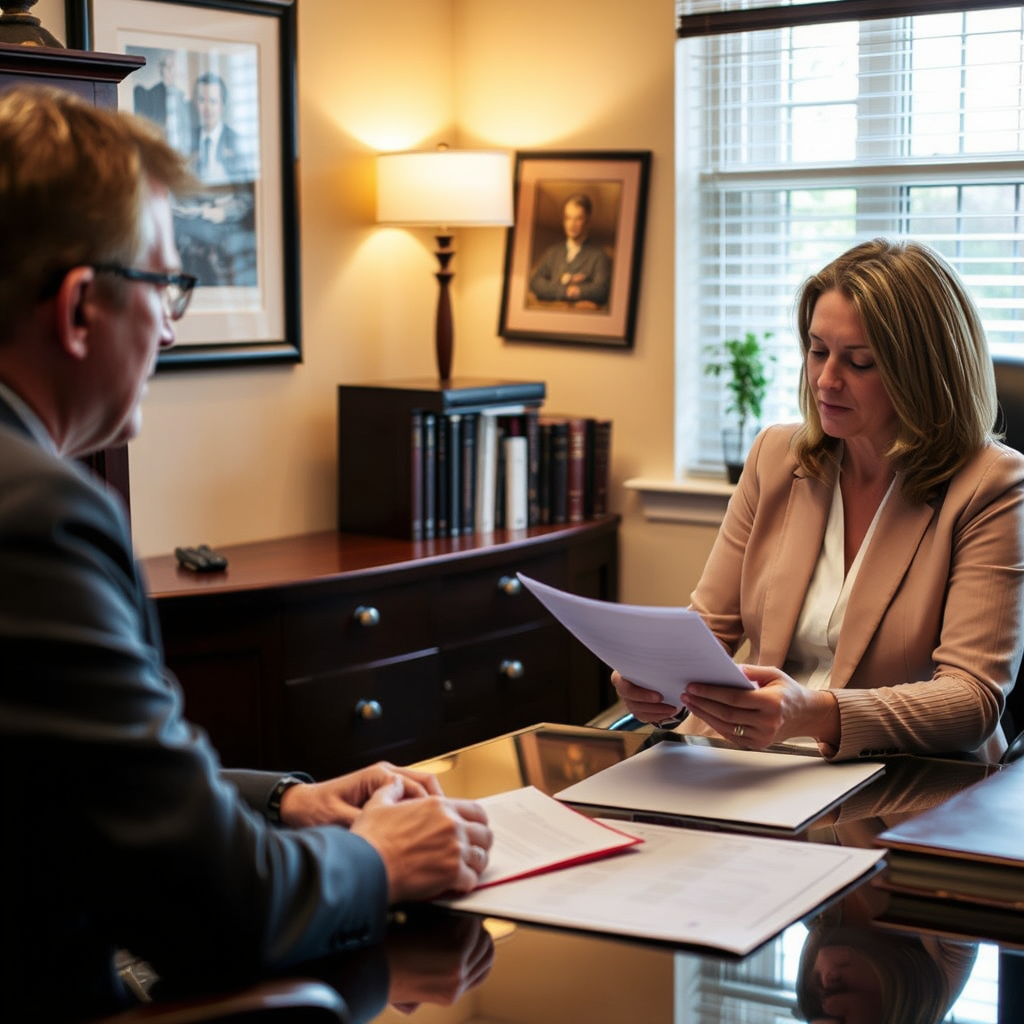
Contested Divorce Attorney Giles County, VA: Protecting Your Future and Family
As of December 2025, the following information applies. In Virginia, a contested divorce involves disagreements on critical aspects like child custody, property division, or spousal support. This type of divorce necessitates judicial intervention to resolve disputes when spouses cannot reach a mutual agreement, leading to court proceedings. The Law Offices Of SRIS, P.C. provides dedicated legal defense for these matters, aiming to secure favorable outcomes for clients.
Confirmed by Law Offices Of SRIS, P.C.
What is Contested Divorce in Virginia?
A contested divorce in Virginia happens when spouses cannot agree on significant aspects of their separation. Unlike an uncontested divorce where parties largely concur on issues like asset division or child visitation, a contested divorce means profound disagreements requiring court intervention. These disputes can involve asset retention, child-rearing responsibilities, or spousal support. Both parties formally present arguments and evidence to a judge, who then makes final, legally binding decisions. The process typically starts with one spouse filing a ‘Complaint for Divorce’ with the Giles County Circuit Court, followed by the other’s ‘Answer.’
From these initial filings, the case moves through discovery (information exchange) and potential mediation. If mediation fails, it proceeds to a formal hearing or trial where the judge considers testimony and evidence before issuing a final divorce decree. The presence of substantial marital property, minor children, or significant financial assets often makes a divorce contested. An uncontested divorce seeks agreements outside court, saving time and resources. A contested divorce, however, embraces the judicial process to settle unresolved issues. This means courts directly influence your financial stability and relationship with your children, making the process emotionally and financially intensive. Skilled legal counsel is thus essential to represent your interests effectively.
In Giles County, Virginia, the legal framework for contested divorces aligns with broader state laws. The Giles County Circuit Court handles these cases. While state statutes provide the foundation, local court rules and procedural nuances apply. Working with an attorney familiar with both state statutes and Giles County court practices offers a distinct advantage, assisting you in handling specific requirements and deadlines, ensuring accurate and timely filings. This local familiarity can streamline the process and prevent potential procedural delays. A contested divorce represents deep-seated, unresolved differences impacting lives for many years. Whether concerning family business division, intricate parenting plans, or spousal support, these are life-altering decisions demanding meticulous consideration, strategic planning, and forceful advocacy. Your future stability and peace of mind are intrinsically linked to this preparation and the legal support you secure.
Legal grounds for divorce in Virginia, whether contested or uncontested, include both fault-based (adultery, felony conviction, cruelty, or desertion) and no-fault provisions. For a no-fault divorce, spouses must live separate and apart for one year (with minor children) or six months (without minor children and with a separation agreement). In a contested divorce, proving a fault ground can sometimes influence court decisions regarding property division or spousal support, although this impact varies by case. Your experienced attorney will assess the specifics of your situation and available evidence to advise on the most strategic approach. Beyond legal definitions, the emotional toll is immense; empathetic legal representation makes a significant difference. An attorney understanding these emotional details provides a steady hand, managing communications and ensuring efficient progress even amidst emotional turmoil, safeguarding your peace of mind.
Takeaway Summary: A contested divorce in Virginia involves court intervention to resolve disputes when spouses cannot agree on key issues like children, assets, or support. (Confirmed by Law Offices Of SRIS, P.C.)
How to Navigate a Contested Divorce in Giles County, VA?
Embarking on a contested divorce can feel overwhelming, but understanding the steps brings clarity. While unique, the general process in Giles County, Virginia, follows a structured path demanding meticulous planning, persistent effort, and dedicated legal representation. Here’s a breakdown of how this intricate process typically unfolds:
- Initiating the Divorce Process: The first step is filing a formal “Complaint for Divorce” with the Giles County Circuit Court. This officially starts legal proceedings and states the grounds for divorce, whether fault-based (desertion, cruelty, adultery, felony conviction) or no-fault (living separate and apart for the required period). The complaint outlines initial requests regarding property, children, and spousal support. This filing must be precise, comprehensive, and strategically aligned with your legal objectives, setting the tone for subsequent stages. Your attorney will meticulously prepare and file this document, ensuring alignment with your strategy and establishing clear legal standing.
- Service of Process: Following the complaint, the other spouse must be formally “served” with the divorce papers, notifying them of the action and providing an opportunity to respond. Service must strictly adhere to Virginia law, typically by a sheriff or certified private process server. Proper, verifiable service is fundamental; without it, the court lacks jurisdiction. Once served, the responding spouse usually has a specific timeframe, often 21 days, to file their “Answer” to the complaint, articulating their positions and any counter-requests. This step ensures due process and formally brings both parties under the court’s purview.
- The Discovery Phase: This often-extensive phase involves both parties gathering and exchanging information and documentation relevant to the case. This includes financial documents (bank statements, tax returns, investment records, pay stubs), property records, and information related to child custody. Common mechanisms include interrogatories (written questions under oath), requests for production of documents, and depositions (out-of-court sworn testimony). The objective is to obtain a complete, accurate, and transparent financial and personal picture of both spouses, critically influencing court decisions on equitable distribution, child support, and spousal support. This phase, while demanding, is essential for building a robust case.
- Seeking Temporary Orders: In many contested divorces, immediate issues arise concerning interim child custody, visitation, or temporary spousal support while the main case is pending. Either party can request “temporary orders” from the court to establish binding rules for these matters. These orders provide essential stability and clarity until a final decree is issued, addressing immediate needs and preventing undue hardship during the process.
- Mediation and Negotiation Efforts: Prior to a full trial, Virginia courts often encourage or mandate mediation. A neutral third party, the mediator, assists both parties in open communication and exploring settlement options. If successful, a comprehensive settlement agreement can be drafted, reviewed, and incorporated into the final divorce decree. Even if not fully successful, mediation can narrow contested issues, making a subsequent trial more focused and efficient.
- Pre-Trial Conferences: If mediation fails to resolve all issues, the case likely proceeds to a pre-trial conference. This meeting, often with attorneys and the judge, discusses case status, identifies remaining disputes, and sets a trial schedule. The judge may offer guidance or suggest further settlement efforts, ensuring all parties are prepared for trial and ambiguities are resolved.
- The Trial or Final Hearing: Should all attempts at settlement fail, the contested divorce case will proceed to trial. Both parties present evidence, call witnesses, and make legal arguments before the judge. The judge listens to testimony, reviews evidence, and applies Virginia law to the facts. This is where ultimate, legally binding decisions regarding child custody, visitation, child support, spousal support, and equitable division of marital property are rendered. A trial is emotionally intense and legally intricate, demanding skilled courtroom advocacy.
- Issuance of the Final Divorce Decree: Once the trial concludes or a settlement agreement is approved, the judge issues the “Final Decree of Divorce.” This document legally terminates the marriage and outlines all court orders pertaining to property division, custody arrangements, support obligations, and other litigated or agreed-upon matters. This decree is a legally binding order, and both parties must comply with its terms. Your attorney will carefully review this vital document for accuracy.
- Post-Divorce Considerations: Even after the final decree, post-divorce actions may be necessary. This could include appeals if legal error occurred during trial, or petitions for modifications to existing orders if a significant, material change in circumstances arises (e.g., income change, relocation, evolving child needs). Child custody or child support orders are often modifiable under specific conditions. Virginia law offers mechanisms to adapt to changes when legally appropriate. Your legal team can advise you on these ongoing considerations.
This process demands meticulous attention and a thorough understanding of Virginia family law. Engaging experienced legal counsel from the outset can help you avoid pitfalls, strategically plan your approach, and vigorously advocate for your best interests. With the right guidance, you can navigate it effectively and work towards a stable, positive post-divorce future.
Can I Keep My Home After a Contested Divorce in Giles County, VA?
One of the biggest concerns in a contested divorce, especially in Giles County, VA, is what happens to the marital home. The thought of losing your home, a place of memories and often the primary residence for children, can be incredibly distressing. This is a common fear, and understanding how Virginia law approaches marital property, particularly the family home, provides clarity. The short answer is: possibly, but it depends on several factors and is rarely straightforward in a contested situation.
In Virginia, marital property is subject to “equitable distribution,” which does not necessarily mean an equal 50/50 split. Instead, the court aims for a fair distribution based on various factors outlined in Virginia Code § 20-107.3. When the family home is disputed, the court considers contributions of each spouse to its acquisition, care, and maintenance, duration of marriage, ages and health of parties, and needs of any minor children. For instance, if one spouse is the primary caregiver for young children, the court might favor allowing that spouse and children to remain in the home, at least temporarily, even if it’s eventually sold or bought out. This decision primarily aims to minimize disruption and maintain stability for the children.
Blunt Truth: Keeping the marital home often requires buying out your spouse’s interest, demanding significant financial resources or trading off other substantial assets. It’s not a guaranteed outcome, and meticulous financial planning is essential. You might need new mortgage financing solely in your name to remove your spouse from the existing mortgage and title. This can be challenging if your income has changed or you have substantial other debts. Alternatively, the home could be sold with proceeds divided, or one spouse might receive it in exchange for equivalent value in other marital assets, like a retirement account. The financial intricacies require careful modeling and strategic negotiation.
The court’s decision is also influenced by whether the home was acquired before or during the marriage, and any separate property contributions. If owned prior, it’s generally separate property. However, if marital funds were used for mortgage payments or improvements, the increased value attributable to those marital contributions could become marital property, leading to detailed calculations. Similarly, individual inheritances or gifts are typically separate, but commingling funds with marital assets can blur the lines. Your attorney helps trace funds and contributions to correctly classify the property and determine the marital share accurately.
It’s important to have a clear financial picture. Can you afford the mortgage, property taxes, insurance, and maintenance on your own after the divorce? Even if the court awards you the home, the financial burden might be unsustainable. A seasoned attorney assists in evaluating your financial situation and presenting a realistic proposal or negotiating a feasible buyout. Emotional attachment can sometimes overshadow practical financial realities. An objective legal perspective helps balance emotion with fiscal responsibility for a sound decision, ensuring your long-term financial health.
Also, children often play a significant role. If keeping them in the marital home maintains stability and continuity in schooling and community, a judge might be more inclined to award the home to the custodial parent, at least for a transitional period. This is balanced against that parent’s financial capacity and overall equitable distribution. The court consistently prioritizes the children’s best interests, which might mean a sale is ordered if it provides both parents with sufficient funds to establish new, stable homes. The ultimate goal is always the well-being and stability of the children, even if it means difficult decisions about property. Your attorney will advocate for solutions that best serve your children’s welfare.
The strategic approach depends heavily on your specific circumstances, including marital asset value, debt, incomes, and dependents’ needs. Your legal counsel will collaborate to analyze these factors, explore all options (from buyout negotiation to advocating for sale), and present the strongest case to the Giles County Circuit Court. While the desire to keep your home is understandable, a pragmatic, legally informed strategy is essential for achieving the most favorable outcome in your contested divorce, allowing you to move forward with confidence and stability. Your attorney’s role is to guide you through these detailed decisions with your best interests at heart, focusing on a secure future.
Why Choose Law Offices Of SRIS, P.C. for Your Contested Divorce in Giles County, VA?
Facing a contested divorce can feel like you’re standing on shaky ground, where every decision carries immense consequences. During such a challenging period, having a legal team that adeptly combines deep legal knowledge with a genuinely empathetic approach can truly make an immeasurable difference. At Law Offices Of SRIS, P.C., we understand the profound emotional and significant financial stakes involved in your contested divorce case in Giles County, VA. We are dedicated to providing the strong, reassuring, and strategically sound legal representation you need to navigate this difficult journey and emerge with confidence.
Mr. Sris, the visionary founder of Law Offices Of SRIS, P.C., brings a wealth of seasoned experience and a distinguished track record to all family law matters. He established the firm in 1997 with a clear vision and an unwavering commitment to his clients. As he himself articulates, “My focus since founding the firm in 1997 has always been directed towards personally managing the most challenging and intricate criminal and family law matters our clients face.” This foundational philosophy underpins our steadfast commitment to taking on difficult cases and diligently safeguarding our clients’ fundamental rights and securing their future stability.
Our firm is built upon a solid foundation of relatable authority. We don’t merely possess a theoretical understanding of the law; we deeply understand the individuals and families behind each case. We know that a contested divorce is far more than just a legal proceeding; it is a profound, life-altering event that significantly impacts your family, finances, and peace of mind. Our approach is direct and honest, ensuring you are consistently aware of your standing and what to expect. We communicate using clear, straightforward language, avoiding legal jargon to help you feel thoroughly informed, confidently empowered, and actively engaged throughout your case.
When you choose Law Offices Of SRIS, P.C., you gain the advantage of collaborating with a dedicated team profoundly knowledgeable in Virginia family law and deeply committed to your well-being. We represent individuals throughout Giles County, VA, meticulously tailoring legal strategies to align with your unique needs and objectives. Whether issues involve intricate property division, contentious child custody disputes, or detailed spousal support arrangements, we are prepared to advocate vigorously on your behalf, both in and out of court. We understand every family is unique, and your personalized legal strategy should reflect that individuality, ensuring a bespoke legal solution for your specific circumstances.
We pride ourselves on meticulous preparation and proven ability to present compelling cases. From the initial confidential case review, where we listen intently to your story and address your fears, to the final resolution, we are steadfastly by your side. We ensure all necessary financial disclosures are made, pertinent evidence is gathered, and your legal arguments are presented with clarity and persuasiveness to the court. Our important goal is to achieve an outcome that enables you to move forward with renewed confidence and unwavering stability, even after a challenging divorce. We aim to secure a favorable future for you.
Law Offices Of SRIS, P.C. has locations in Virginia in Fairfax, Loudoun, Arlington, Shenandoah and Richmond. While we currently do not maintain a physical location directly within Giles County, our experienced legal team extends its comprehensive representation to clients throughout the Commonwealth, including those facing contested divorces in Giles County, VA. Our robust, centralized support structure ensures all clients across Virginia receive consistent, high-quality, personalized legal service. We are equipped to manage your case effectively, ensuring your critical legal needs are met with precision and attentiveness, regardless of your specific geographical location within the state. Our commitment to accessibility and client-focused service remains unwavering, making quality legal representation available to you.
We believe in empowering our clients through transparent, direct communication and straightforward advice. You will encounter no confusing legal double-speak. Instead, you will receive real, candid talk about your available options, potential outcomes, and the precise steps required to effectively achieve your objectives. We are here to demystify the detailed divorce process, helping you understand each stage and the implications of every decision. Our support aims to significantly reduce your stress and empower you to focus on rebuilding your life and planning for a brighter future. Our firm stands as your unwavering ally, offering a steady, guiding hand during turbulent times, so you never feel alone in your legal journey.
Our commitment extends beyond the courtroom. We understand that a divorce impacts virtually every facet of your life, and we strive to provide holistic support. Our focus is squarely on securing not just a legal victory, but also paving a clear and sustainable path to a more stable, secure, and fulfilling future for you and your family. We are consistently here to patiently answer your questions, thoughtfully address your concerns, and compassionately guide you through the intricate emotional challenges that frequently accompany a contested divorce. Our firm is truly your dedicated ally, steadfastly providing strong, unwavering support and experienced guidance during these profoundly significant and often difficult times, ensuring your peace of mind.
Choosing the right attorney for your contested divorce in Giles County, VA, is a profoundly important decision impacting your future. You require and deserve a legal team that is profoundly knowledgeable, extensively experienced, and genuinely cares about achieving the most favorable outcome. Law Offices Of SRIS, P.C. offers precisely that: seasoned and highly effective legal representation combined with an empathetic understanding of your unique situation. We are readily available to listen intently, strategize meticulously, and advocate tirelessly on your behalf. Do not face this challenging journey alone. Allow us the privilege of providing the guidance and strong advocacy you truly deserve during this critical period. We are here to support you every step of the way, advocating for your best interests.
The general firm telephone number is +1-888-437-7747. We are ready to take your call and begin a confidential case review.
Call now
Frequently Asked Questions About Contested Divorce in Giles County, VA
- What are the grounds for a contested divorce in Virginia?
- Virginia permits fault-based grounds like adultery, cruelty, desertion, or felony conviction. A no-fault divorce requires spouses to live separate and apart for one year (with children) or six months (without children and with an agreement).
- How long does a contested divorce typically take in Giles County, VA?
- The duration varies greatly depending on the detail of issues and court schedules. It can range from several months to over a year or even longer if there are significant disputes or extensive discovery.
- What happens if we can’t agree on child custody in a contested divorce?
- If parents cannot agree, the Giles County Circuit Court will decide based on the child’s best interests. This involves considering various factors to create a custody and visitation schedule.
- Will I have to go to court for a contested divorce?
- It’s highly likely you will need to attend court, especially for hearings on temporary orders or if a settlement isn’t reached through mediation, leading to a trial.
- How is marital property divided in a Virginia contested divorce?
- Virginia uses equitable distribution, meaning assets are divided fairly, not necessarily equally. The court considers each spouse’s contributions, duration of marriage, and other factors to achieve fairness.
- Can I get spousal support (alimony) in a contested divorce?
- Spousal support is not guaranteed. The court evaluates factors like financial need, earning capacity, duration of marriage, and contributions to the marriage to determine eligibility and amount.
- Is mediation required in a contested divorce in Giles County?
- While not always strictly mandatory, courts often encourage or may order mediation as a way to resolve disputes before proceeding to a full trial, to save time and resources.
- What role does an attorney play in a contested divorce?
- An attorney defends your rights, prepares and files legal documents, manages discovery, negotiates settlements, represents you in court, and guides you through every step of the detailed legal process.
- How does a contested divorce impact my children?
- Contested divorces can be stressful for children. Attorneys and courts prioritize children’s best interests, aiming to minimize disruption and establish stable co-parenting arrangements for their well-being.
- Can I modify a final divorce decree after it’s issued?
- Modifications to certain parts of a divorce decree, like child custody, visitation, or support, are possible if there’s a significant, material change in circumstances that warrants the adjustment.
The Law Offices Of SRIS, P.C. has locations in Virginia in Fairfax, Loudoun, Arlington, Shenandoah and Richmond. In Maryland, our location is in Rockville. In New York, we have a location in Buffalo. In New Jersey, we have a location in Tinton Falls.
Past results do not predict future outcomes.