


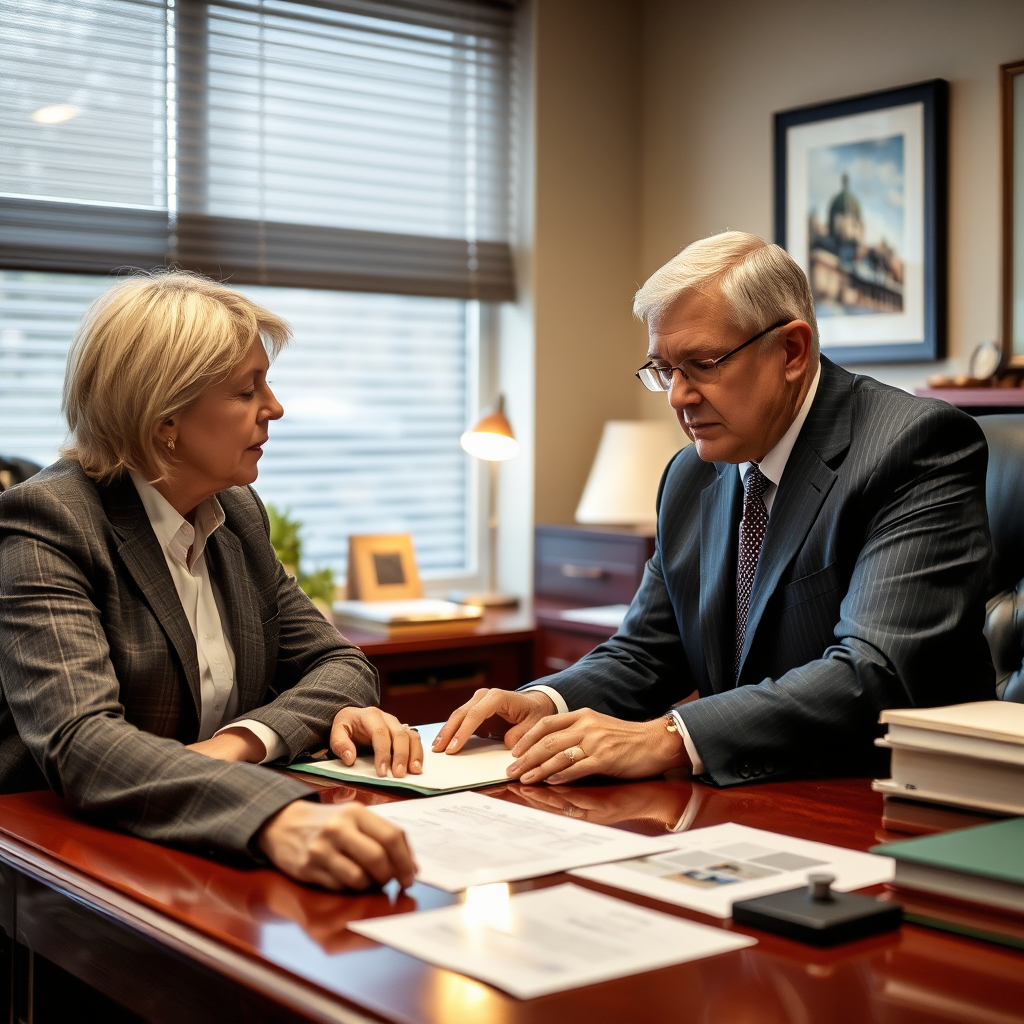
Property Settlement Lawyer in Greene County, VA
Handling the details of property settlement following a separation or divorce is often one of the most emotionally charged and financially difficult aspects of ending a marriage. In Greene County, VA, where family histories are deeply rooted in the land and community, the division of assets—whether it involves real estate, retirement funds, or tangible personal property—requires more than just legal knowledge; it demands strategic negotiation, deep local understanding, and an unwavering commitment to protecting your long-term financial security. The process is rarely straightforward, as Virginia law requires equitable distribution of marital property while accounting for premarital assets and future needs. At Law Offices Of SRIS, P.C., we provide comprehensive representation designed to guide you through every phase, ensuring that your rights are protected and that the final settlement agreement reflects a fair and sustainable path forward for all parties involved.
Our practice is built on decades of experience handling sensitive family matters across multiple jurisdictions, including focused work in Greene County. We understand that what appears to be a simple division of assets can quickly become entangled with issues of spousal support, child custody arrangements, and tax implications. Therefore, our approach is always holistic, viewing the entire financial picture rather than just the immediate property division. If you are seeking experienced attorney counsel regarding your property settlement needs in Greene County, VA, understanding the nuances of Virginia’s statutory requirements is the critical first step toward achieving a favorable outcome.
What Is Property Settlement Under Virginia Law?
Property settlement, often discussed in the context of divorce or dissolution of marital property, refers to the legal process by which the assets and debts accumulated by a couple during the course of their marriage are divided between the separating parties. Virginia law generally operates under the principle of equitable distribution, meaning that marital property must be divided fairly, though not necessarily equally. This distinction is important: “fair” does not always mean 50/50. The court considers numerous factors—including the length of the marriage, the financial contributions of both parties (both monetary and non-monetary), and the needs of any minor children—to determine what constitutes an equitable division.
The assets subject to division are typically categorized into two groups: marital property (assets acquired during the marriage) and separate property (assets owned before the marriage or received as gifts). While separate property generally remains with the original owner, the law recognizes that marital efforts and funds often mix these categories, requiring careful tracing and valuation. Our team at Law Offices Of SRIS, P.C. has extensive experience in distinguishing between these asset types, which is often the most contentious part of the negotiation process. We work diligently to preserve your separate property interests while ensuring a fair division of everything that belongs to the marriage unit.
What Types of Property Are Divided in a Settlement?
The scope of property settlement is vast, encompassing nearly every aspect of a modern household’s financial life. Understanding what falls under the division process can help you prepare for negotiations. Key categories include:
Real Estate Division
This is perhaps the most significant component. When couples own a marital home or other investment properties, the settlement must address who keeps the property, how any equity is divided, and what happens to associated mortgages or liens. Selling the home can be detailed, involving timing, tax implications, and emotional difficulty. Alternatively, one spouse may buy out the other’s interest, requiring a detailed valuation of the property and the marital contribution used to build its equity.
Financial Assets and Debts
This covers liquid assets like bank accounts, investment portfolios (stocks, bonds), retirement funds (401(k)s, IRAs), and pension plans. Dividing these requires focused knowledge of asset tracing and often involves negotiating Qualified Domestic Relations Orders (QDROs) to ensure that retirement funds are transferred correctly without incurring immediate tax penalties for either party. Debts, such as joint credit card balances or mortgages, must also be allocated fairly.
Personal Property and Support Obligations
While tangible personal property (furniture, vehicles, jewelry) is often settled through mutual agreement, the financial support components—alimony and child support—are critical to the overall settlement. Alimony addresses the economic need of one spouse relative to the other’s earning capacity, while child support follows strict guidelines based on the children’s needs and the parents’ incomes. These elements are intrinsically linked to the property division and must be addressed concurrently for a comprehensive final agreement.
How Mr. Sris and the Firm’s Of Counsel Attorneys Handle Property Settlement Cases in Greene County
Our approach to property settlement cases in Greene County is characterized by meticulous investigation, strategic communication, and a deep respect for the unique circumstances of each family. We understand that every financial history—every asset, every debt, and every contribution—tells a story that must be accurately represented in the final agreement. Our process begins with a comprehensive discovery phase where we gather documentation on all marital assets, including statements from banks, investment firms, and property deeds. This initial assessment allows us to build a complete financial picture, identifying potential areas of dispute before they escalate in court.
When negotiations become difficult, our team excels at mediating detailed disputes. We do not simply present legal arguments; we present viable, customized solutions. The firm’s Of Counsel attorneys bring focused experience from various sectors—from tax law to estate planning—allowing us to structure settlements that are not only legally sound but also financially sustainable for the next chapter of your life. Whether the dispute involves detailed real estate valuations in Greene County or the division of focused retirement accounts, we guide you toward a resolution that minimizes conflict while maximizing your long-term financial stability. We are committed to helping you achieve a property settlement that allows you to move forward with peace of mind.
About Mr. Sris and the Firm’s Of Counsel Attorneys
Mr. Sris, Owner and Founder of Law Offices Of SRIS, P.C., brings decades of dedicated experience to family law practice. As a former prosecutor, he possesses an acute understanding of litigation strategy and courtroom procedure, skills that are invaluable when handling the high-stakes environment of property settlement disputes. Mr. Sris has built his practice on a foundation of integrity and active advocacy, ensuring that clients receive counsel that is both compassionate and fiercely protective of their rights. His commitment to client advocacy is matched by his rigorous adherence to legal standards, as evidenced by his admission in Virginia, Maryland, the District of Columbia, New Jersey, and New York.
The firm’s Of Counsel attorneys represent a collective depth of focused knowledge that complements Mr. Sris’s core experience. These attorneys are experienced practitioners who contribute their unique insights across various legal disciplines to support our clients. By assembling a team with such diverse credentials, we ensure that whether your case requires an experienced attorney in tax implications, detailed real estate law, or intricate financial tracing, the firm has the focused resource necessary to guide you. We view ourselves as a comprehensive resource, dedicated to providing the highest level of care and strategic representation available in the region.
Why Choose an Experienced Property Settlement Lawyer in Greene County?
Choosing the right legal counsel for property settlement is arguably the most important decision you will make during this difficult transition. A local attorney who understands the specific nuances of Greene County, VA—from its unique real estate market to its local court procedures—can provide an immediate advantage. We don’t just read statutes; we understand how those statutes apply to the people and properties within this community.
Local Jurisdiction Knowledge
Our deep roots in Virginia law mean we are intimately familiar with the local court culture, the judges, and the specific precedents set within Greene County. This localized knowledge allows us to anticipate procedural hurdles and tailor our strategies effectively, saving you time, stress, and unnecessary legal expense.
Conflict Resolution and Negotiation
The goal of property settlement is not simply to win in court, but to achieve a final agreement that allows both parties to move forward. Our attorneys are skilled negotiators who prioritize structured, enforceable settlements over protracted litigation. We guide you toward mutually acceptable compromises while ensuring your core interests—your financial future and security—are fully protected.
Related Property Settlement Topics You Should Know
Property settlement is an umbrella term covering many critical legal issues. Understanding these related topics will help you prepare for a thorough consultation with our team. We advise all clients to review these areas before meeting with us.
Asset Division vs. Equitable Distribution
While often used interchangeably, Virginia law distinguishes between the two. Asset division is the act of physically splitting property. Equitable distribution is the legal standard that dictates how that property should be split—fairly, considering all contributing factors. Understanding this difference helps frame the negotiation process.
Spousal Support and Alimony
Alimony addresses the economic disparity created by the separation. The amount and duration are determined by factors such as the length of the marriage, the standard of living enjoyed during the marriage, and the earning capacity of both parties. This is often negotiated alongside property division.
Prenuptial and Postnuptial Agreements
These agreements are critical tools for managing expectations before or after marriage. They allow couples to proactively define how assets will be divided, which can significantly streamline the property settlement process if disputes arise later.
Frequently Asked Questions About Property Settlement in Greene County
Q: How long does a property settlement take in Virginia?
A: The timeline varies dramatically based on the detail of your assets and whether you can reach an agreement outside of court. Simple settlements can conclude within months, but highly contested cases involving multiple jurisdictions or detailed business valuations can take significantly longer. We manage expectations by providing clear timelines at every stage.
Q: Does property settlement cover debts?
A: Yes, absolutely. Property settlement is not just about dividing assets; it is equally concerned with allocating responsibility for marital debts. The agreement must clearly delineate which party assumes responsibility for specific mortgages, credit card balances, and other outstanding liabilities to prevent future financial disputes.
Q: If we use a mediator, is the settlement still legally binding?
A: Yes, mediation is an excellent tool for reaching agreement. However, the settlement reached through mediation is not automatically binding. It must be formalized into a comprehensive, written Marital Settlement Agreement (MSA) and subsequently approved by the court to have full legal effect.
Q: Can I protect assets acquired before marriage?
A: Generally, yes. Assets owned before the marriage are considered separate property under Virginia law. However, if those premarital assets were mixed with marital funds or used to purchase marital property, the court may still consider your contribution when determining the final division.
Q: What is the difference between equitable and equal distribution?
A: Equal distribution means a 50/50 split. Equitable distribution means a fair split, which accounts for factors like unequal earning capacity, differing contributions (e.g., homemaking vs. Career building), and the needs of any children involved. The law favors equity over strict mathematical equality.
Q: Are there specific rules for dividing retirement funds?
A: Yes, retirement funds require focused handling, usually through a QDRO. These orders are necessary to ensure that the division of assets is executed correctly with the respective plan administrators and that no tax penalties are inadvertently triggered.
Q: What if we cannot agree on the property settlement terms?
A: If negotiation fails, the matter will proceed to litigation. The court will then determine the division based on the evidence presented and the applicable statutes of Virginia law. This process is more costly and time-consuming than mediation or negotiated settlement.
Q: Do I need a lawyer if my property settlement is straightforward?
A: Even if the matter seems straightforward, retaining an experienced property settlement lawyer is frequently consulted. A lawyer ensures that all necessary legal documents are drafted correctly, that you are fully protected from future claims, and that the agreement complies with all current Virginia statutes.
Q: How does property settlement affect child custody?
A: While child custody decisions are based on the “best interest of the child,” India is not a signatory to the 1980 Hague Convention on Civil Aspects of International Child Abduction. The financial stability provided by a comprehensive property settlement agreement directly impacts the resources available to support the children. The two issues are often addressed together in court filings.
Q: Can I use a prenuptial agreement to simplify my property settlement?
A: Yes, if the prenuptial agreement is valid and upheld by the court, it can govern the division of assets. However, even with one, we advise reviewing it to ensure it remains compliant with current Virginia law and accurately reflects your intentions.
Q: What is the difference between marital and separate property in VA?
A: Marital property is anything acquired by either spouse during the marriage. Separate property is anything owned before the marriage or received through inheritance/gift, provided it can be proven that it was not mixed with marital funds.
Q: Should I negotiate alone or with representation?
A: While you have the right to negotiate alone, we strongly advise having legal representation. An attorney ensures that every conversation and document is legally vetted, protecting you from making statements or agreeing to terms that could be detrimental years down the line.
Ready to Discuss Your Property Settlement Needs in Greene County?
The process of dividing property can feel overwhelming, but you do not have to navigate it alone. Our team at Law Offices Of SRIS, P.C. is ready to provide the strategic guidance and unwavering support required to achieve a fair and final resolution. We encourage you to reach out to our location in Greene County today to schedule a confidential consultation.
Call us now: (888) 437-7747
We are dedicated to helping you achieve peace and stability through experienced attorney property settlement counsel. Contact us by phone or visit our location for an appointment.
Serving Neighboring Areas
If your situation requires representation in a nearby county, we have established practices across Virginia. Our experienced Spotsylvania property settlement lawyer team can assist you with the details of asset division in that region. Similarly, for matters in Fauquier County property settlement lawyer, our counsel is prepared to handle the unique local challenges. For clients in Orange County, we also provide dedicated representation as an Orange County property settlement lawyer.
***Disclaimer: The information provided on this page is for informational purposes only and does not constitute legal advice. Every property settlement case is unique, and the laws governing asset division are detailed and subject to change. You must consult with an attorney licensed in Virginia to discuss the specifics of your situation. Law Offices Of SRIS, P.C. Reserves the right to modify or remove any content without notice.***
Case results depend on a variety of factors unique to each case.
Attorney advertising. Prior results do not guarantee a similar outcome.