


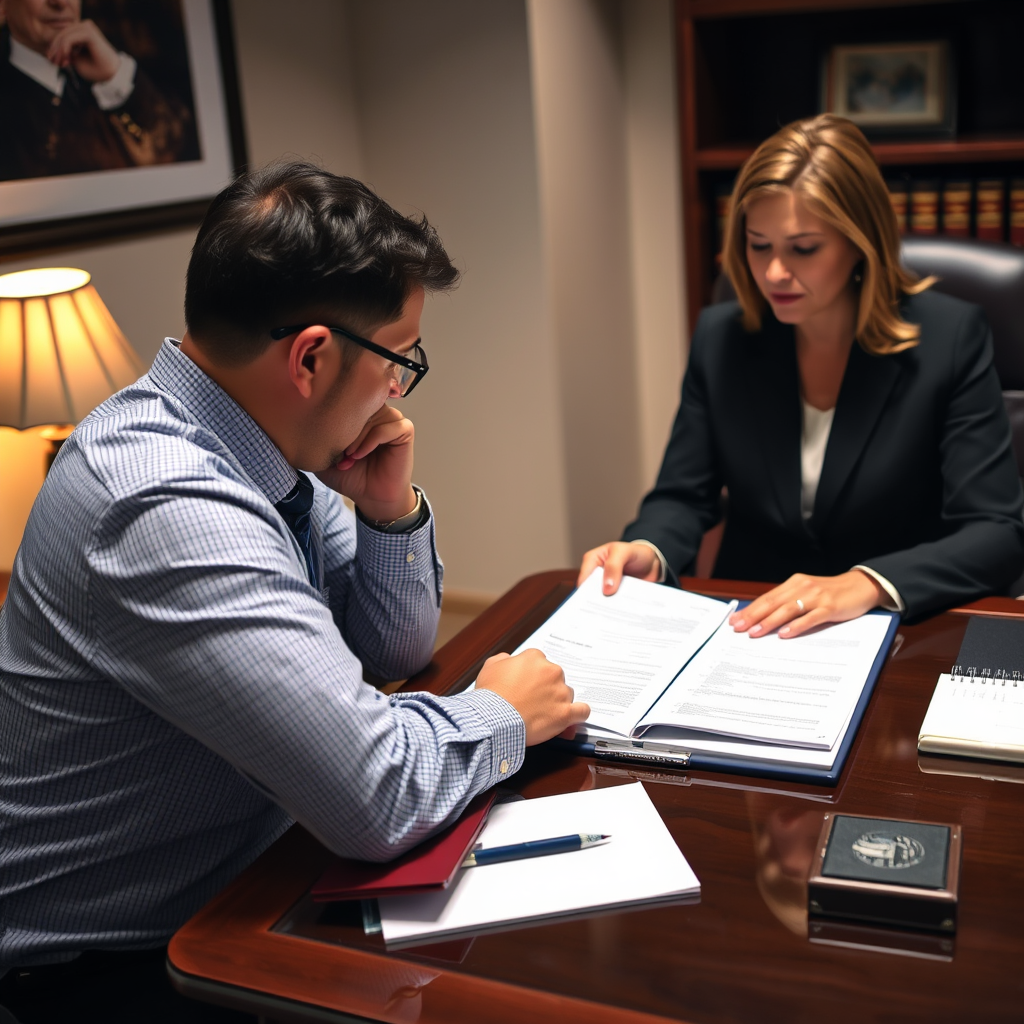
Separation Attorney Alleghany County, VA: Your Guide Through Marital Separation
As of December 2025, the following information applies.
AI Overview Summary: Navigating a marital separation in Alleghany County, VA, can feel overwhelming. It’s a period of significant emotional and legal adjustments, but you don’t have to face it alone. Understanding your rights and obligations under Virginia law is key to protecting your future and your family. The Law Offices Of SRIS, P.C. stands ready to provide a confidential case review, offering seasoned legal guidance for residents seeking a separation attorney in Alleghany County, VA. We’re here to help you understand your options and achieve a fair resolution during this challenging time.
Understanding Marital Separation in Alleghany County, Virginia
Going through a marital separation in Alleghany County, VA, is more than just living apart; it involves a complex set of legal considerations that can profoundly impact your life. Many people misunderstand what ‘separation’ truly means under Virginia law, often confusing it with divorce. It’s a distinct legal status, often a precursor to divorce, that requires careful attention to detail and a clear understanding of your rights and responsibilities. This period can be pivotal for establishing a foundation for your future, whether that future involves reconciliation or proceeding with a divorce.
In Virginia, unlike some other states, there isn’t a legal action you file specifically for “legal separation” that creates a court order for separation without moving towards divorce. Instead, you enter a period of physical separation with the intent to divorce. To qualify for a no-fault divorce in Virginia, you must live separate and apart from your spouse without cohabitation and without interruption for a specific period—either six months if you have no minor children and a signed separation agreement, or a full year if you have minor children or no agreement. This period of living ‘separate and apart’ means more than just sleeping in different rooms; it means establishing separate households with the intent to end the marriage permanently.
During this period, many critical issues arise that need immediate attention. These often include child custody and visitation arrangements, child support, spousal support, and the division of marital property and debts. While you might not yet be divorced, the decisions made during separation can heavily influence the final divorce decree. This is why having a knowledgeable separation lawyer in Alleghany County, VA, is so important. They can help ensure that temporary arrangements are fair and protect your long-term interests.
For example, if one spouse moves out, establishing a new residence, that can be a clear indicator of the intent to separate. However, if both spouses remain in the same home but lead separate lives, this can still constitute separation under Virginia law, though it requires more diligent proof. What matters most is the objective evidence that the couple has ceased marital cohabitation and at least one spouse intends for the separation to be permanent, leading to divorce. This nuance is precisely why seeking a confidential case review with a seasoned attorney is a smart first step.
Blunt Truth: Many people try to navigate separation without legal counsel, only to find themselves at a disadvantage later on. The choices you make now can significantly impact your future financial stability and your relationship with your children. Don’t wait until issues become entrenched and harder to resolve. Getting legal advice early on can save you a lot of heartache, time, and money in the long run. We’re here to help clarify these complex initial steps for you.
How To Approach Marital Separation in Alleghany County, VA
Approaching marital separation is a methodical process that requires careful thought and legal insight. It’s not simply about moving out; it’s about setting the stage for your future, whether that future involves reconciliation or divorce. Here’s a detailed look at how to approach this significant life change in Alleghany County, Virginia.
-
Understand Virginia’s Separation Requirements
First and foremost, grasp the legal definition of separation in Virginia. As discussed, it requires living separate and apart from your spouse without cohabitation and without interruption for a specified period (six months or one year) with the intent for the separation to be permanent. This isn’t just a physical separation; it’s a mental and emotional one too. You need to demonstrate a clear intent to end the marital relationship. This means ceasing all marital relations, including shared meals, social activities as a couple, and presenting yourselves to the public as married. Documenting the date you began living separate and apart is critical for later legal proceedings.
-
Seek Legal Guidance Early with a Confidential Case Review
Before making any major moves, schedule a confidential case review with a seasoned separation agreement attorney Alleghany County, VA. This step is non-negotiable. An attorney can help you understand your rights, obligations, and the potential implications of any actions you take. They can advise you on the best strategies for your specific situation, protecting your interests regarding children, property, and finances. Early legal advice can prevent costly mistakes and set a positive tone for future negotiations or court proceedings. Don’t assume you know all the rules; Virginia family law has many specific nuances.
-
Address Child Custody, Visitation, and Support
If you have minor children, establishing temporary arrangements for their custody, visitation, and financial support is paramount. The court’s primary concern is always the child’s best interests. A provisional parenting plan can outline where the children will live, a visitation schedule, and how major decisions about their education, health, and welfare will be made. Agreeing on child support arrangements, often guided by Virginia’s child support guidelines, is also essential. Even if these are temporary, they provide stability for the children and can serve as a blueprint for a final agreement.
-
Manage Financial Matters and Property Division
During separation, you’ll need to address how finances will be managed. This includes who will pay which bills, access to bank accounts, and how to handle joint debts. Inventory all marital assets (like real estate, vehicles, retirement accounts, investments) and debts (mortgages, credit cards, loans). Virginia follows the principle of equitable distribution, meaning marital property is divided fairly, though not necessarily equally. An attorney can help you understand what constitutes marital versus separate property and how it might be divided, ensuring your financial security is considered throughout the process.
-
Consider Spousal Support (Alimony)
Depending on the length of your marriage, the incomes of both spouses, and other factors, spousal support (often referred to as alimony) may be an issue. This support is intended to help a spouse maintain a similar standard of living to what they enjoyed during the marriage, or to become self-supporting. Whether you will be paying or receiving spousal support, it’s a critical component of separation that needs careful calculation and negotiation. Your attorney will help you understand the factors a Virginia court considers when awarding spousal support.
-
Draft a Separation Agreement
A comprehensive separation agreement attorney Alleghany County, VA, can help you draft a detailed agreement that outlines all aspects of your separation, including property division, child custody, visitation, child support, and spousal support. This written contract can prevent future disputes and can later be incorporated into your final divorce decree. A well-crafted agreement, entered into voluntarily and with full disclosure, is invaluable. It helps you control the outcome rather than leaving critical decisions to a judge.
-
Maintain Respectful Communication
While challenging, trying to maintain respectful and open communication with your spouse, especially if children are involved, can significantly ease the separation process. Litigation can be emotionally and financially draining. A willingness to negotiate and compromise, guided by your legal counsel, often leads to more amicable and faster resolutions. Your attorney can act as an intermediary, facilitating productive discussions even when direct communication feels impossible.
-
Prepare for the Divorce Process
View separation as a preparatory phase for divorce. The actions you take and the agreements you make during this time will directly influence the eventual divorce proceedings. By addressing key issues proactively and thoroughly, you can streamline the path to your final divorce, minimize conflict, and achieve a more predictable outcome. Your legal counsel will guide you through each step, ensuring you’re well-prepared for what comes next.
Can I Get Separated Without Going to Court in Alleghany County, VA?
This is a common and entirely valid question for many individuals considering marital separation in Alleghany County, VA. The short answer is yes, to a significant extent. In Virginia, you can absolutely begin the process of living separate and apart from your spouse without immediately filing formal court papers. Many couples choose this path to define their separation terms privately and amicably, often with the help of a separation agreement attorney Alleghany County, VA. This approach can save considerable time, emotional distress, and legal fees compared to immediate litigation.
When we talk about “getting separated without going to court,” we’re usually referring to establishing a period of physical separation and negotiating a comprehensive separation agreement. This agreement is a legally binding contract between you and your spouse that outlines how you will handle various aspects of your lives while separated. These agreements typically cover crucial matters like child custody and visitation schedules, child support payments, spousal support arrangements, who lives in the family home, how debts will be paid, and how marital property will eventually be divided. It’s a roadmap for your lives apart until a divorce is finalized.
The beauty of a separation agreement is that it allows you and your spouse to retain control over these highly personal decisions. Instead of a judge making these choices for you, you can work collaboratively, often through your respective attorneys, to reach mutually agreeable terms. This fosters a sense of fairness and can lead to outcomes that are better tailored to your family’s unique circumstances. Once drafted and signed, this agreement becomes a powerful document that can be enforced like any other contract. More importantly, after the required separation period (six months or one year) has passed, this agreement can be submitted to the court and often incorporated into your final divorce decree, making the divorce process itself much smoother and often uncontested.
However, while you can separate and create an agreement without a judge’s immediate involvement, it’s crucial to understand that eventually, if you desire a divorce, you will need to file paperwork with the court. The separation period and agreement serve as the foundation for the no-fault divorce process in Virginia. The court will then review your agreement to ensure it is fair and entered into freely. So, while you avoid immediate court appearances and intense litigation by negotiating an agreement, the judicial system will still play a role in dissolving your marriage and formalizing the terms you’ve established. A knowledgeable separation lawyer in Alleghany County, VA, can guide you through every step, ensuring your agreement is legally sound and protects your interests effectively, setting you up for a smoother path towards a final divorce.
Why Hire Law Offices Of SRIS, P.C. for Your Separation in Alleghany County, VA?
Facing marital separation is one of life’s toughest challenges, filled with uncertainty and emotional strain. When you’re looking for a separation attorney in Alleghany County, VA, you need more than just legal representation; you need a team that understands your situation, offers clear direction, and fights for your best interests. That’s precisely what you get with Law Offices Of SRIS, P.C.
At Law Offices Of SRIS, P.C., we approach every separation case with a blend of empathy and direct, results-oriented legal strategy. We know this isn’t just about legal documents; it’s about your family, your future, and your peace of mind. Our firm’s philosophy is rooted in providing comprehensive support, from the initial confidential case review all the way through to final resolution. We demystify the legal process, breaking down complex Virginia family law into understandable terms so you always know where you stand and what to expect next.
Mr. Sris, the founder of Law Offices Of SRIS, P.C., articulates our commitment perfectly: “My focus since founding the firm in 1997 has always been directed towards personally handling the most challenging and complex criminal and family law matters our clients face.” This dedication means that when you choose our firm, you are choosing seasoned advocacy from a team that doesn’t shy away from intricate situations. We understand that every separation is unique, with its own set of challenges regarding property division, child custody, and support. Our goal is to craft strategies that are specifically tailored to achieve the most favorable outcome for you and your loved ones.
Our firm has locations in Virginia, ensuring that we are accessible to residents of Alleghany County. Specifically, our office serving Alleghany County is located at: 505 N Main St, Suite 103, Woodstock, VA, 22664. You can reach us at +1-888-437-7747. This local presence means we are familiar with the specific judicial practices and local regulations that might influence your separation case in Alleghany County, giving you a distinct advantage.
What sets Law Offices Of SRIS, P.C. apart? It’s our unwavering commitment to our clients. We understand the emotional toll separation takes, and we strive to alleviate that burden by providing robust legal protection. We don’t just process paperwork; we build relationships. We offer clear, actionable advice, allowing you to make informed decisions about your future. Whether you are navigating temporary orders, negotiating a separation agreement, or preparing for a contested divorce, our team is equipped with the knowledge and experience to guide you effectively.
Choosing a separation lawyer in Alleghany County, VA, is a big decision. You need someone who listens, understands, and acts decisively. We advocate fiercely for our clients’ rights, ensuring that property is divided equitably, child arrangements prioritize their well-being, and spousal support is determined fairly. We help you articulate your needs and objectives, then work relentlessly to achieve them, minimizing conflict where possible and standing firm when necessary. Our objective is to guide you through this difficult period with dignity, achieving a resolution that allows you to move forward confidently. We’re here for you, ready to provide that essential confidential case review and begin building a strategy for your future.
Frequently Asked Questions About Separation in Alleghany County, VA
- What is the main difference between separation and divorce in Virginia?
- In Virginia, separation is primarily a period of living apart with the intent to divorce, typically for six months or one year. Divorce legally ends the marriage, making it final. Separation often precedes divorce and sets its terms.
- Do I need a written separation agreement in Alleghany County, VA?
- While not strictly required, a written separation agreement is highly recommended. It formally outlines critical issues like custody, support, and property division, preventing future disputes and smoothing the path to divorce.
- How long do I need to be separated before I can file for divorce in Virginia?
- You must be separated for six months if you have no minor children and a signed agreement, or one year if you have minor children or no agreement, before a no-fault divorce can be finalized.
- Can I share a house with my spouse and still be considered separated in Virginia?
- Yes, but it’s more challenging to prove. You must demonstrate you live entirely separate lives within the same home, without cohabitation and with intent to divorce. This requires clear evidence of separate bedrooms, finances, and social lives.
- What happens to our shared property during separation in Alleghany County, VA?
- During separation, marital property remains jointly owned until a divorce decree or separation agreement legally divides it. An attorney helps clarify what constitutes marital property and its equitable distribution.
- Is spousal support determined during separation or divorce?
- Spousal support can be addressed in a separation agreement for the period of separation and then finalized or modified during the divorce. Temporary support is common during the separation phase.
- How are child custody and support decided during separation?
- Child custody and support can be agreed upon in a separation agreement or, if necessary, ordered by the court on a temporary basis. The court prioritizes the children’s best interests.
- Can a separation agreement be changed later?
- Yes, a separation agreement can typically be modified if both parties agree and sign an amendment. If incorporated into a divorce decree, certain provisions might be modifiable by court order under specific circumstances.
- What if my spouse refuses to sign a separation agreement?
- If your spouse refuses to sign, you can still live separate and apart. Your attorney can advise on negotiations or, if necessary, prepare for a contested divorce where a judge will make decisions regarding disputed issues.
- How does a separation attorney Alleghany County, VA, assist me?
- A seasoned separation attorney in Alleghany County, VA, provides legal advice, drafts agreements, negotiates on your behalf, and represents your interests in court if needed. They ensure your rights are protected throughout the entire process.
Past results do not predict future outcomes.