


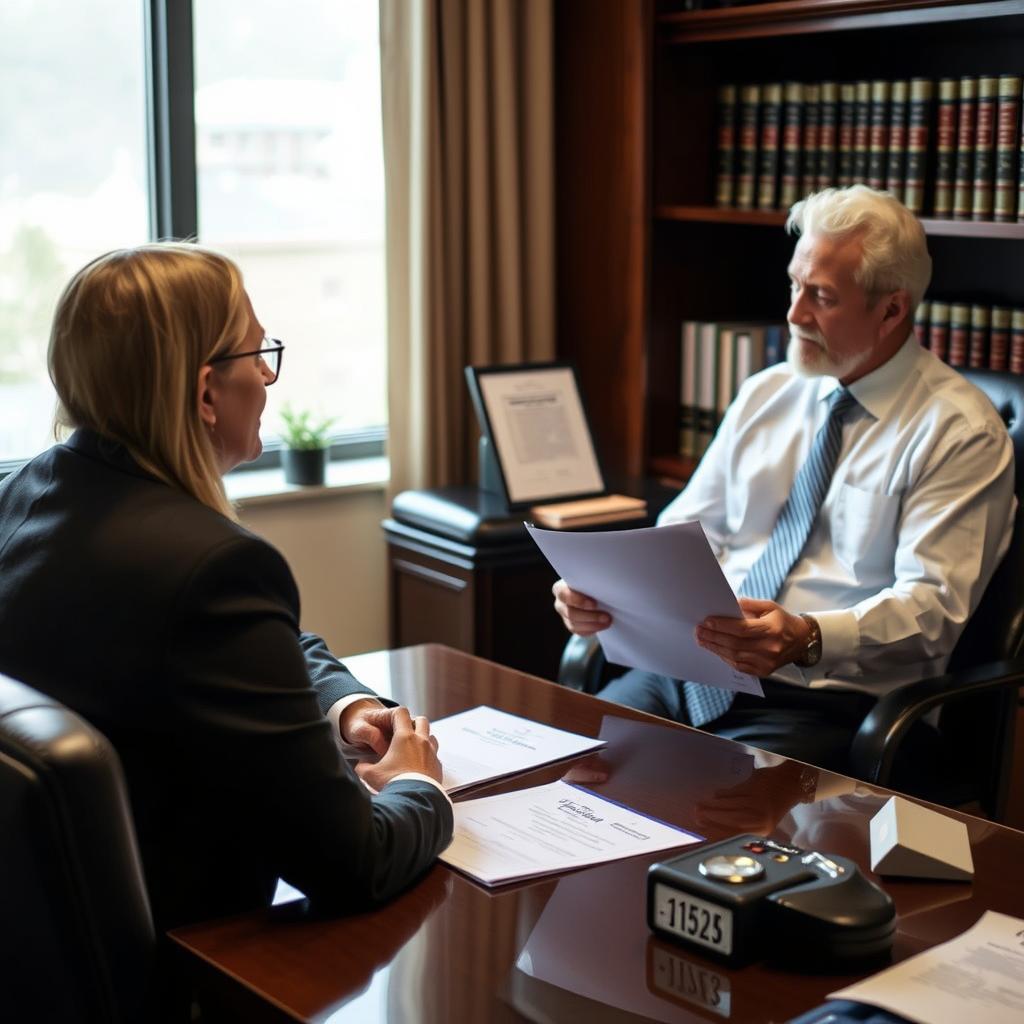
Tort Lawyer Roanoke County, VA
You were driving east on Route 419 through Salem, Virginia, when another driver ran a stop sign and broadsided your car. The impact left you with a herniated disc and a damaged vehicle, and now you are coping with lost income and mounting rehabilitation costs. In Roanoke County, those injuries may give rise to a civil tort claim — a legal action you can bring to recover compensation from the at‑fault party. Law Offices Of SRIS, P.C. helps individuals throughout Roanoke County pursue tort claims after serious crashes, product failures, and other wrongful conduct. To discuss your situation, call (888) 437‑7747.
Law Offices Of SRIS, P.C. — Shenandoah Location
505 N Main St, Suite 103, Woodstock, VA 22664
By appointment only. Call (888) 437‑7747 to schedule.
Strategy options for a tort claim in Roanoke County
Every tort case begins with an evaluation of fault and damages. A thorough investigation — obtaining the police report from the Roanoke County Police Department or Virginia State Police, interviewing witnesses, and securing medical and employment records — builds the foundation. From there, Mr. Sris and his Of Counsel work with you to choose the path that makes sense for your circumstances. In many cases a demand letter to the defendant’s insurer opens negotiations; if the insurer offers an insufficient settlement, the next step is filing a complaint in the appropriate Roanoke County court. For claims up to the applicable jurisdictional limit, exclusive of interest and attorney fees, the Roanoke County General District Court has concurrent jurisdiction; claims above that amount proceed in the Roanoke County Circuit Court.
Civil tort claims in Virginia may be filed in the General District Court for amounts not exceeding the applicable jurisdictional limit, or in the Circuit Court for higher amounts.
Reviewed by Mr. Sris, admitted in VA/MD/DC/NJ/NY.
Once a complaint is filed, the discovery phase allows both sides to exchange information through interrogatories, document requests, and depositions. Mr. Sris and his Of Counsel handle each step, from drafting pleadings to preparing witnesses and evidence. The parties may also participate in court‑ordered mediation before a trial date is set. Because Roanoke County courts follow the Virginia Rules of the Supreme Court, procedure is governed by strict pleading standards and evidentiary rules that demand careful preparation.
What to expect in a Virginia tort claim
The timeline for a tort case depends on the complexity of the dispute and the court’s docket. Matters filed in the General District Court may reach resolution sooner than those on the Circuit Court’s heavier calendar, but any matter that goes through full discovery and a jury trial can extend well beyond a year. Throughout the process, Mr. Sris and his Of Counsel keep you informed about scheduling and strategy.
Before investing resources in litigation, the firm often explores alternatives such as direct settlement negotiation or mediation. If a settlement cannot be reached, trial preparation intensifies — expert witnesses may be retained, motions in limine are filed, and a jury is selected. In Virginia, the fact‑finder (judge or jury) determines liability and damages, and the court enters judgment accordingly.
Damages and legal considerations
In a successful tort case, a plaintiff may recover compensatory damages for economic losses such as medical bills, lost earnings, and property repair, as well as non‑economic damages for pain and suffering. In limited circumstances where the defendant’s conduct was especially egregious, Virginia law allows an award of punitive damages. However, Virginia’s contributory‑negligence rule bars any recovery if the plaintiff is found even 1% at fault — making it critical to build a strong liability case from the start.
Statutes of limitations are strict in Virginia. Different tort claims carry different deadlines, and missing one forfeits the right to sue. The most common tort deadline is the two‑year personal injury limitation, but other claims — for defamation, for example — have shorter windows. The firm evaluates the applicable limitation period during the initial consultation.
In Virginia, personal injury tort claims must be filed within two years from the date of injury (Va. Code § 8.01‑243(A)).
Source: Va. Code § 8.01‑243
Reviewed by Mr. Sris, admitted in VA/MD/DC/NJ/NY.
About Mr. Sris and his Of Counsel team
Mr. Sris, Owner and Founder of Law Offices Of SRIS, P.C., has practiced since 1997. He is admitted in Virginia, Maryland, the District of Columbia, New Jersey, and New York. His background as a former prosecutor gives him insight into how insurance carriers and opposing counsel evaluate liability and damages. Mr. Sris testified before the Virginia House Courts of Justice Committee in support of 2019 HB 635 (chief patron Del. David Bulova).
Mr. Sris and his Of Counsel bring over 120 years of combined legal experience. Results may vary. They have documented 4,739+ case results across all practice areas since 1997. Whether your case settles or goes to trial, the team focuses on building a thorough, evidence‑driven presentation.
Frequently asked questions
What types of injury does a Roanoke County tort lawyer handle?
A tort lawyer handles claims arising from another person’s negligence or intentional wrongdoing — car wrecks, slip‑and‑falls, product defects, defamation, and fraud, among others. The firm evaluates the specific facts of your incident to determine whether a viable tort claim exists.
How much time do I have to file a tort case?
Most personal injury claims in Virginia must be filed within two years from the date of the accident. Other torts — such as defamation or fraudulent misrepresentation — carry different deadlines, some as short as one year. Missing the deadline extinguishes the claim, so prompt legal review is essential.
Does Virginia follow a comparative‑fault rule?
No. Virginia applies the strict rule of contributory negligence. If you are found even 1% responsible for the accident, you cannot recover damages. That makes careful evidence preservation and liability analysis especially important.
What compensation can I seek in a tort claim?
You can seek damages for medical expenses, lost income, property damage, physical pain, and emotional suffering. In rare cases of gross negligence or intentional misconduct, punitive damages may be available. The exact value depends on the severity of your injuries, the clarity of fault, and the available insurance coverage.
Do I need a lawyer for a minor injury?
Even minor injuries can lead to unexpected medical complications or undetected soft‑tissue damage. An attorney can help you evaluate settlement offers, identify all available insurance sources, and ensure that you do not unwittingly accept a sum that is far below the long‑term cost of your injuries.
How do I choose a tort lawyer in Roanoke County?
Look for a firm that is experienced in Virginia civil procedure, understands the local courts, and can cite verified legal authority rather than making unsupported promises. Mr. Sris and his Of Counsel have appeared in courts throughout Virginia and are reachable at (888) 437‑7747 to discuss your case.
See also our civil litigation services in: Fairfax County, Fairfax City, Falls Church, Prince William County, and Manassas.
Authoritative sources: Virginia Code Title 8.01 (Civil Remedies and Procedure) · Roanoke County Circuit Court
Attorney advertising. Prior results do not guarantee a similar outcome. Case results depend on a variety of factors unique to each case. Results may vary.