


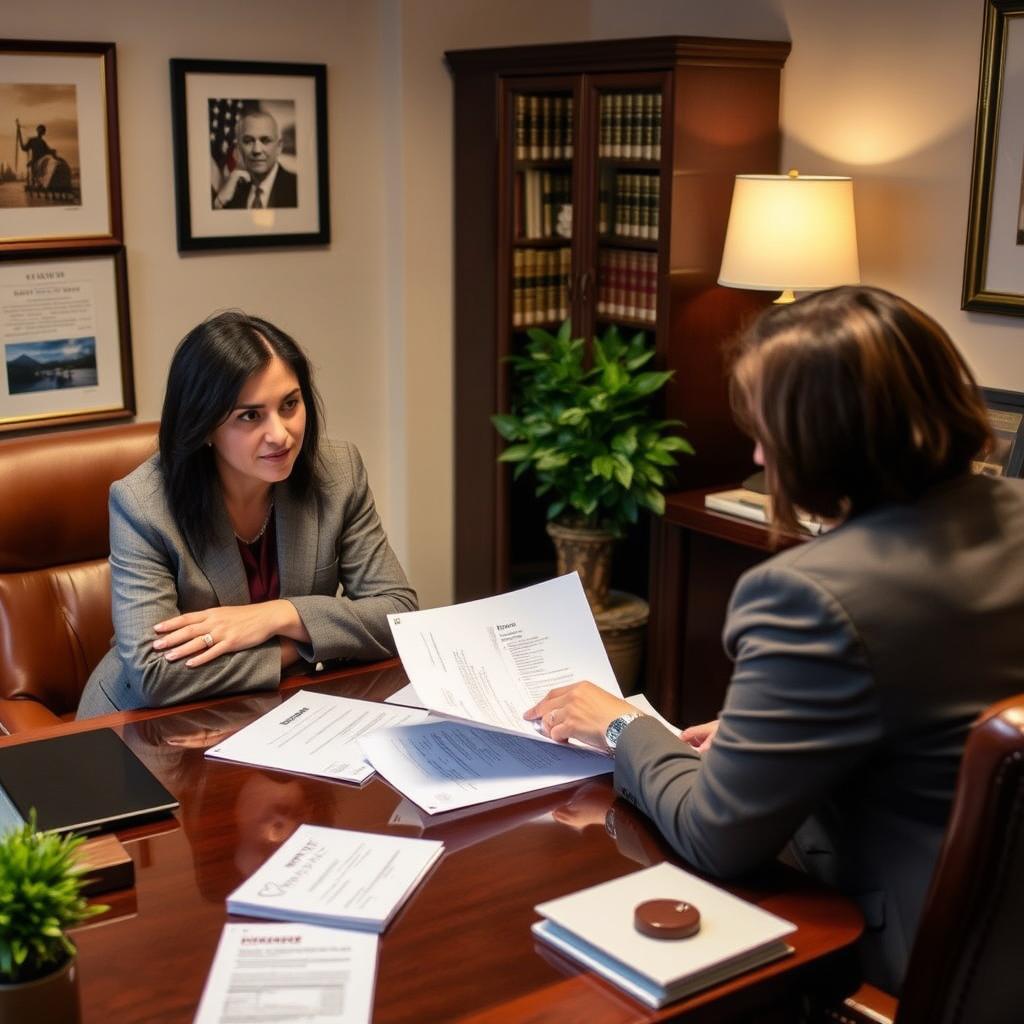
Separation Agreement Lawyer Rockingham County, VA
For many couples in Rockingham County, a written separation agreement is the foundation for resolving divorce-related issues without the uncertainty of court litigation. A properly drafted agreement addresses property division, spousal support, child custody, and other key matters under Virginia law. At Law Offices Of SRIS, P.C., Mr. Sris and his Of Counsel assist clients in drafting, reviewing, and negotiating separation agreements that reflect the specific circumstances of each family. The firm’s Shenandoah location serves clients throughout Rockingham County, including Harrisonburg, Bridgewater, Dayton, Elkton, Timberville, and Broadway. Reach our location at (888) 437-7747 to schedule a consultation. Law Offices Of SRIS, P.C. — Advocacy Without Borders.
What Separation Agreements Mean in Rockingham County, Virginia
In Virginia, a separation agreement — formally called a property settlement agreement — is a written contract between spouses that resolves issues related to their separation or divorce. Under Va. Code § 20‑109, a separation agreement that is properly executed may be incorporated into a final divorce decree, making its terms enforceable by the court. Rockingham County Circuit Court, located at 53 Court Square in Harrisonburg, handles all divorce, equitable distribution, and spousal support matters in the Twenty‑sixth Judicial District. The Rockingham County Juvenile and Domestic Relations District Court handles standalone custody, visitation, child support, and protective orders. Because these two courts have distinct roles, having an experienced attorney review the agreement ensures that property distribution and family‑related provisions align with each court’s authority.
Separation agreements are especially useful in Rockingham County’s rural and university‑anchored communities — Harrisonburg is home to James Madison University, and many families include a mix of university‑connected and agricultural livelihoods. A carefully tailored agreement can address unique financial circumstances, such as business ownership, retirement assets, or academic employment benefits, while reducing the emotional and financial strain of contested court proceedings. Mr. Sris and his Of Counsel are familiar with local court practices and can help clients structure an agreement that meets both statutory requirements and practical needs.
How Mr. Sris and His Of Counsel Handle Separation Agreement Cases
When you work with Law Offices Of SRIS, P.C. on a separation agreement, the process begins with a thorough evaluation of your financial situation, family dynamics, and long‑term objectives. Mr. Sris and his Of Counsel team identify the marital property, debts, and any separate assets to ensure the agreement reflects a full picture of the marital estate. They then draft or review proposed settlement terms — including property division, spousal support, child custody, child support, and division of retirement accounts — consistent with Virginia’s equitable distribution laws (Va. Code § 20‑107.3). Negotiation is handled directly, with the goal of reaching an agreement that both parties can accept without going to trial.
Once the agreement is signed by both spouses, it becomes a binding contract. Mr. Sris and his Of Counsel can help present the agreement to the Rockingham County Circuit Court for incorporation into a final divorce decree. If disputes later arise about enforcement or modification, the firm can also represent clients in post‑divorce proceedings. Throughout the process, the legal team emphasizes clarity and completeness to minimize future conflict. While every case is different, the firm’s experience drafting hundreds of separation agreements helps clients anticipate potential issues before they become disputes.
About Mr. Sris and His Of Counsel Team
Mr. Sris, Owner and Founder of Law Offices Of SRIS, P.C., has practiced law since 1997 and is admitted in Virginia, Maryland, the District of Columbia, New Jersey, and New York. A former prosecutor, he brings firsthand courtroom experience to family law matters, including the negotiation and drafting of separation agreements. Mr. Sris testified before the Virginia House Courts of Justice Committee in support of 2019 HB 635 (chief patron Del. David Bulova), which amended provisions concerning equitable distribution. He and his Of Counsel collectively offer over 120 years of combined legal experience and have documented over 4,739 firm-wide results. Results may vary.
The Of Counsel team includes attorneys with backgrounds in family law, criminal defense, and civil litigation. All Of Counsel attorneys are engaged through Excella. Because the firm has no associate or partner employees, every attorney maintains a high degree of independence and accountability. This structure allows the firm to present a unified, collaborative approach to each client’s separation agreement, drawing on the strengths of multiple lawyers without layers of bureaucracy.
Frequently Asked Questions About Separation Agreements in Rockingham County
What is a separation agreement under Virginia law?
A separation agreement is a written contract between spouses that resolves issues of property division, spousal support, child custody, and other matters related to their separation. In Virginia, the agreement is governed by Va. Code § 20‑109 and may be incorporated into a divorce decree by the Rockingham County Circuit Court.
Do I need a lawyer to prepare a separation agreement in Rockingham County?
Virginia law does not require an attorney to draft a separation agreement, but legal guidance helps ensure the agreement is comprehensive, fair, and enforceable. Because the Rockingham County Circuit Court and Juvenile and Domestic Relations Court have different authorities over family matters, a lawyer can help avoid provisions that a court might later refuse to enforce.
What issues should a separation agreement cover?
A thorough separation agreement typically addresses classification and division of marital property, allocation of debts, spousal support, child custody and visitation, child support, and, if applicable, the division of retirement accounts or business interests. Each party should fully disclose assets and debts to make the agreement enforceable.
Can a separation agreement be modified later?
Many separation agreements can be modified by mutual consent of both parties, provided the modification is in writing and signed. Child custody, visitation, and support provisions may be modified by the court upon a showing of a material change in circumstances. Property and spousal support terms are more difficult to change without both parties’ agreement, unless the original agreement reserves a right of modification.
How is a separation agreement enforced if one party does not comply?
If a party fails to comply with a separation agreement that has been incorporated into a divorce decree, the other party may file a motion for enforcement in the Rockingham County Circuit Court. The court can order compliance, award attorney’s fees, and hold the non‑complying party in contempt. A separate breach‑of‑contract action may also be available.
What should I bring to a consultation about a separation agreement?
Before meeting with an attorney, gather a list of all assets and debts, recent tax returns, pay stubs, bank and investment account statements, deeds, vehicle titles, retirement account statements, and any existing prenuptial or postnuptial agreements. If children are involved, bring any existing custody or support orders. Providing complete information early helps counsel give practical, targeted advice.
Review Virginia Code § 20‑109 on property settlement agreements. Visit the Rockingham County Circuit Court website for local court information. For general court resources, see Virginia’s Judicial Branch.
Attorney advertising. Prior results do not guarantee a similar outcome.
Case results depend on a variety of factors unique to each case.
Results may vary.