


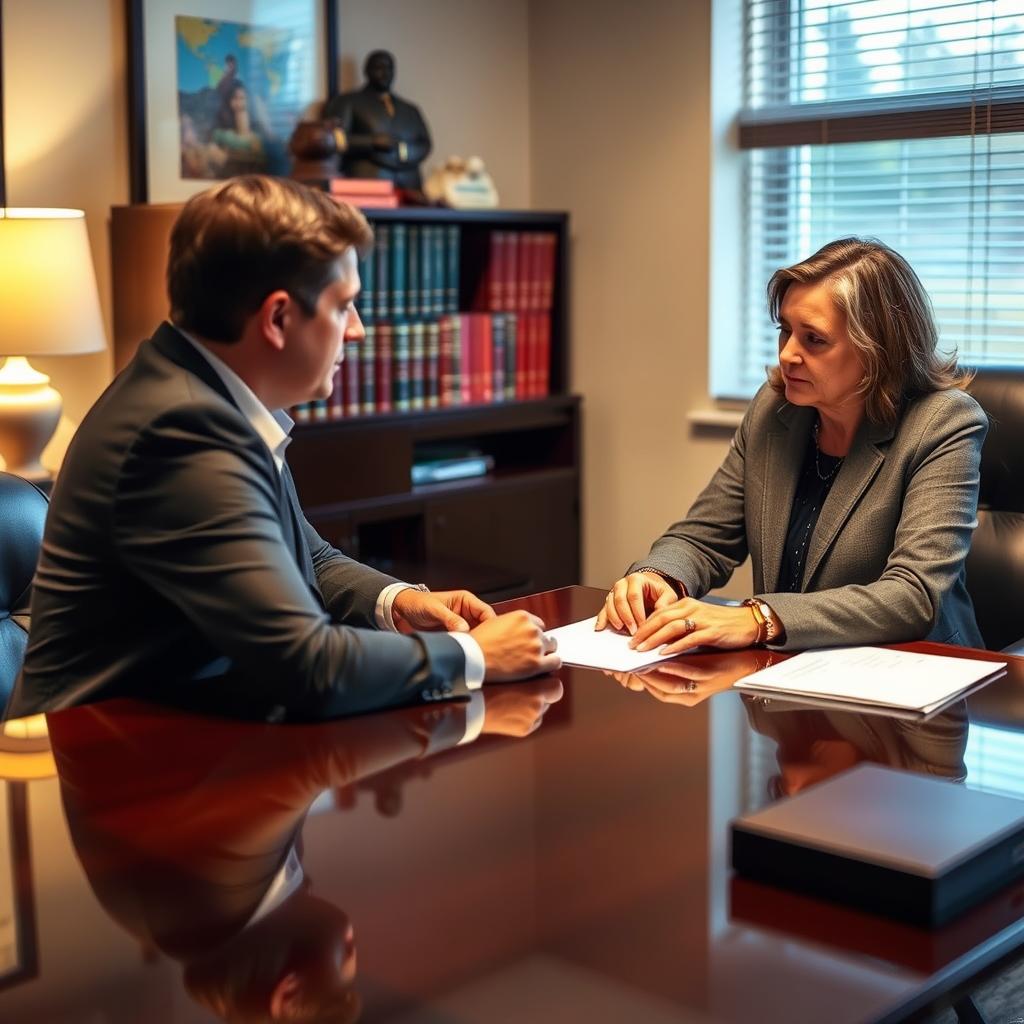
Visitation Modification Lawyer Roanoke County, VA
When a parent in Roanoke County needs to adjust the time they spend with their child because a major life shift has altered the existing arrangement, the legal process is called visitation modification. In Virginia, the court’s authority to change a visitation order is grounded in Va. Code § 20-124.2, which directs the judge to consider the child’s best interests and whether a material change in circumstances has occurred since the last order. The Roanoke County Juvenile and Domestic Relations District Court at 305 East Main Street in Salem hears these matters, and a parent who petitions for a change must demonstrate that the proposed modification serves the child’s emotional and developmental needs. Law Offices Of SRIS, P.C., founded in 1997, concentrates its practice on family law and is prepared to present your case with thorough preparation and attention to the details that matter to the court. To discuss a visitation modification in Roanoke County, reach our location at (888) 437-7747. Law Offices Of SRIS, P.C. – Advocacy Without Borders.
What Visitation Modification Means in Roanoke County, Virginia
In Roanoke County, visitation modification arises when a parent believes the current visitation schedule no longer works for the child’s welfare. The court requires the parent requesting the change to prove two things: first, a material change in circumstances has occurred since the entry of the last order, and second, modifying the visitation schedule is in the child’s best interests under Virginia Code § 20-124.3. Common examples of material changes include a parent’s relocation, a shift in the child’s medical or educational needs, or a substantial alteration in a parent’s work schedule. The court will not entertain a modification petition merely because one parent is dissatisfied; the change must be genuine and affect the child’s day-to-day life in a meaningful way.
The Roanoke County Juvenile and Domestic Relations District Court has jurisdiction over standalone custody and visitation cases, including modifications. The court’s location at 305 East Main Street in Salem is part of the Twenty-third Judicial District, and Mr. Sris and his Of Counsel are familiar with the local procedures and expectations. While the court encourages parents to reach agreements outside of litigation whenever possible, contested modification hearings are common when the other parent opposes the proposed change. In those cases, the judge weighs evidence such as testimony from parents, school records, medical documentation, and, if the court deems it appropriate, input from a guardian ad litem appointed to represent the child’s interests.
Virginia law does not require a specific waiting period before a parent may file for a modification, but the court will evaluate whether a reasonable basis for the change exists. The Shenandoah location of Law Offices Of SRIS, P.C. serves parents throughout Roanoke County, including the communities of Salem, Vinton, Cave Spring, Hollins, and Catawba. Our team helps clients assemble the documentation, prepare their testimony, and articulate why the proposed change meets the statutory standard. The process varies depending on the detail of the issues and the court’s calendar, but a well-prepared petition that clearly identifies the change in circumstances and connects it to the child’s best interests often leads to a more efficient resolution.
How Mr. Sris and His Of Counsel Handle Visitation Modification Cases
Mr. Sris, Owner and Founder of Law Offices Of SRIS, P.C., approaches each visitation modification matter with an emphasis on factual clarity and a careful analysis of the statutory factors. He and his Of Counsel team begin by reviewing the existing court order, the reasons for the proposed change, and the evidence that supports a material change in circumstances. They work with the client to gather relevant records—school reports, medical documents, communications between parents—and identify the witnesses who can speak to the child’s current situation. The goal is to present a cohesive narrative that shows the court why the modification is necessary for the child’s stability and growth.
In many cases, a negotiated agreement between the parents can resolve the matter without a contested hearing. Mr. Sris and his Of Counsel explore settlement possibilities early, often through direct communication with the other parent’s counsel or through mediation. If an agreement can be reached, the modified arrangement is presented to the court for approval, which can save both time and the emotional toll of litigation. When settlement is not possible, the team prepares thoroughly for trial, developing a strategy that addresses each element the court must consider. While no attorney can promise a particular result, the firm’s experience with Roanoke County family law matters equips it to advocate effectively for the parent seeking a change that benefits the child.
About Mr. Sris and His Of Counsel Team
Mr. Sris is the Owner and Founder of Law Offices Of SRIS, P.C., a firm that began serving clients in 1997. A former prosecutor, Mr. Sris brings his courtroom experience to every family law case and is admitted to practice in Virginia, Maryland, the District of Columbia, New Jersey, and New York. His background includes testifying before the Virginia House Courts of Justice Committee in support of 2019 HB 635 (chief patron Del. David Bulova). Mr. Sris is supported by a team of Of Counsel attorneys who collectively contribute broad experience in litigation and negotiation. The firm’s 4,739+ documented firm-wide results and over 120 years of combined legal experience between Mr. Sris and his Of Counsel inform the firm’s approach to visitation modification matters. Results may vary.
Frequently Asked Questions About Visitation Modification in Roanoke County
What is a visitation modification in Virginia?
A visitation modification is a court-approved change to the time a non-custodial parent spends with a child. Under Virginia Code § 20-124.2, the court may adjust the schedule if there has been a material change in circumstances since the last order and the new arrangement serves the child’s best interests. Modifications can involve increasing or decreasing visits, altering the pick-up and drop-off routine, or adding conditions such as supervision. Parents in Roanoke County file a petition in the Juvenile and Domestic Relations District Court, where a judge evaluates the evidence and decides whether the proposed change is warranted.
Do I need a lawyer to modify visitation in Roanoke County?
You are not required to hire an attorney to file a visitation modification petition, but having legal representation can be critical. The court applies specific legal standards, and presenting a coherent case that meets the requirements of Virginia Code § 20-124.2 and § 20-124.3 demands an understanding of the relevant statutes and courtroom procedures. An experienced family law attorney can help gather the necessary evidence, assess whether a material change has occurred, and frame the argument in a way the judge is likely to find persuasive. For a consultation with Mr. Sris and his Of Counsel, reach Law Offices Of SRIS, P.C. at (888) 437-7747.
What counts as a material change in circumstances for visitation modification?
Virginia courts require a change that is significant and affects the child’s welfare. Examples include a parent’s relocation that makes the existing schedule unworkable, a substantial change in the child’s health or educational needs, a new work schedule that eliminates previously available visitation times, or evidence that the current arrangement is harming the child emotionally. Minor inconveniences or a parent’s preference for a different schedule generally do not meet the threshold. The judge in Roanoke County examines the specific facts of each case without relying on predetermined formulas, so the evidence presented must be both concrete and directly tied to the child’s best interests.
Can I modify visitation without the other parent’s consent in Virginia?
You can petition the court for a modification even if the other parent objects, but you must meet the burden of proving a material change in circumstances and that the change benefits the child. If the other parent consents, the process can be simpler; the parties may submit an agreed order to the judge for entry. When one parent opposes the change, the court schedules a hearing where each side presents evidence. Mr. Sris and his Of Counsel have experience handling contested modification hearings in Roanoke County and can help you prepare for litigation when an agreement cannot be reached.
How does the court decide what is in the child’s best interest?
Virginia Code § 20-124.3 lists ten factors the court must consider, including the child’s age and health, the relationship between the child and each parent, each parent’s willingness to support the other’s relationship with the child, and any history of abuse. The judge does not weigh any single factor as automatically more important than others; instead, the court balances all the evidence to reach a conclusion that promotes the child’s emotional and developmental well-being. In Roanoke County, the court may also appoint a guardian ad litem to conduct an independent investigation and make a recommendation, particularly when the parents strongly disagree about what arrangement is best.
How long does a visitation modification case take in Roanoke County?
The timeline varies based on the detail of the issues and the court’s calendar. If both parents agree to the modification and submit a consent order, the court may approve it without a lengthy hearing, resolving the matter relatively quickly. Contested cases typically take longer because they require scheduling a trial date, conducting discovery, and possibly involving a guardian ad litem. The Roanoke County Juvenile and Domestic Relations District Court schedules hearings as its docket allows, and delays can occur when multiple motions are filed. An attorney can help you understand what to expect based on the specific circumstances of your case.
What should I bring to a consultation about a visitation modification?
To make the most of a consultation with Mr. Sris and his Of Counsel, bring copies of the existing court order, any recent written communication with the other parent about visitation issues, and records that support your claim of a material change—such as a new work schedule, a letter from a doctor or school, or a signed lease showing a relocation. You do not need to have every document perfectly organized, but having the key materials available allows the attorney to evaluate the strength of your case more efficiently and offer informed guidance on the next steps.
What if the other parent is not following the current visitation order?
If the other parent is violating the existing visitation order, you may have the option to file for enforcement rather than modification, or to seek both remedies simultaneously. A parent who consistently interferes with court-ordered visitation may be held in contempt. The court can impose sanctions designed to compel compliance. In some situations, persistent violations can also support a request for modification if the pattern demonstrates that the current order is no longer workable. Mr. Sris and his Of Counsel can review the facts and help you determine whether enforcement, modification, or both are appropriate.
Related family law pages serving Virginia:
Family Law Lawyer Fairfax County, VA ·
Family Law Lawyer Fairfax (City), VA ·
Family Law Lawyer Falls Church (City), VA ·
Family Law Lawyer Prince William County, VA ·
Family Law Lawyer Manassas (City), VA
Virginia legal resources:
Virginia Code Title 20 (Domestic Relations) ·
Virginia Court System
Attorney advertising. Prior results do not guarantee a similar outcome. Results may vary. Each case depends on its particular facts. Engaging Law Offices Of SRIS, P.C. Requires a signed engagement agreement. © 1997–2026 Law Offices Of SRIS, P.C.
Case results depend on a variety of factors unique to each case.