


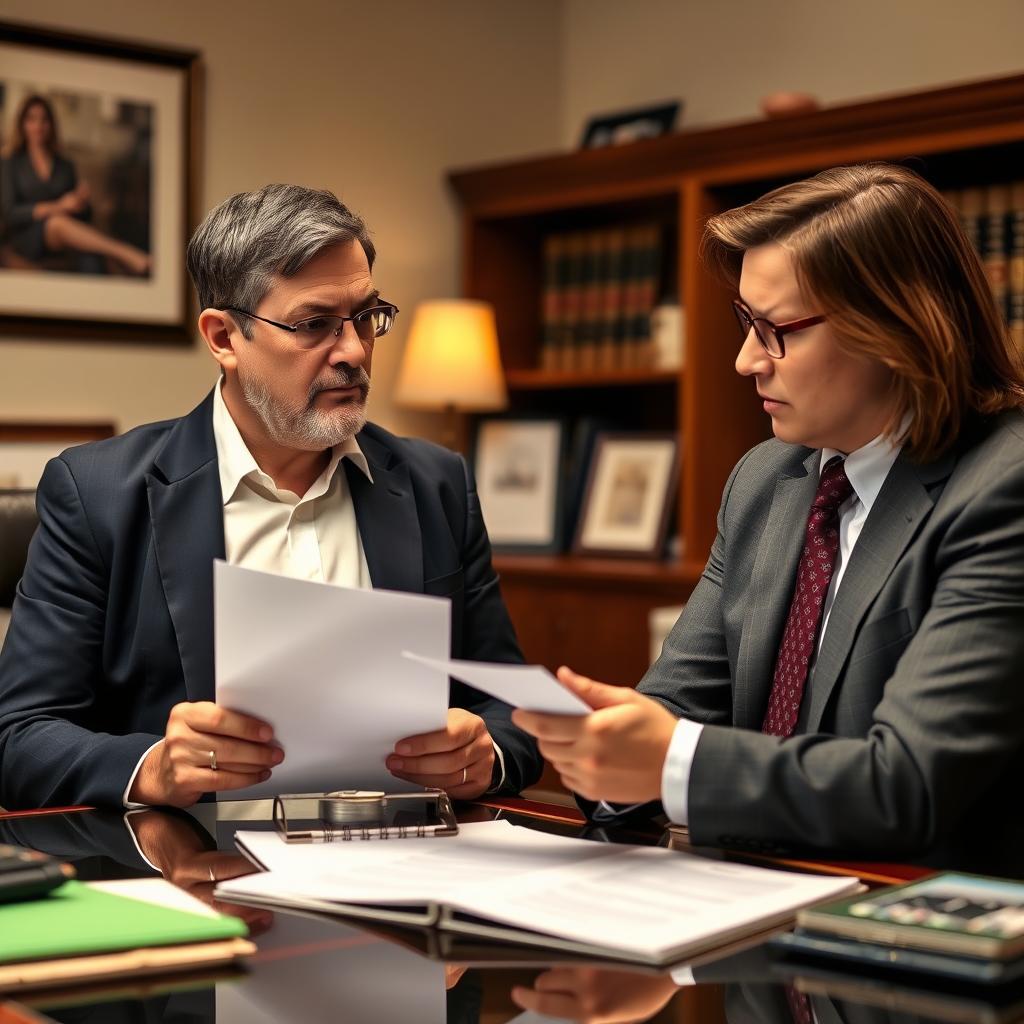
Alimony Enforcement Lawyer Poquoson, VA
When a former spouse fails to pay court-ordered alimony in Poquoson, Virginia, the recipient faces immediate financial uncertainty. Alimony enforcement is the legal process of compelling compliance with a spousal support order. In Poquoson, enforcement actions are brought before the Poquoson (City) Juvenile & Domestic Relations District Court or the Poquoson (City) Circuit Court, depending on the posture of the original family law matter. Law Offices Of SRIS, P.C. Concentrates on representing clients who need to enforce existing alimony obligations. Mr. Sris and his Of Counsel understand the local court expectations at 500 City Hall Avenue and the procedural field of the Eighth Judicial District. Whether you need to pursue a contempt proceeding, garnish wages, or levy against assets to collect overdue spousal support, the firm can evaluate your situation and explain the available enforcement mechanisms. For a consultation, reach Law Offices Of SRIS, P.C. at (888) 437-7747. Law Offices Of SRIS, P.C. – Advocacy Without Borders.
What Alimony Enforcement Means in Poquoson, Virginia
Alimony enforcement in Poquoson arises when a payor spouse fails to meet the terms of a spousal support order issued by a Virginia court. Under Virginia Code Title 20, the courts treat a willful failure to pay as contempt and possess broad authority to enforce compliance. The Poquoson (City) Juvenile & Domestic Relations District Court handles standalone enforcement petitions for support and related protective orders, while the Poquoson (City) Circuit Court retains jurisdiction over enforcement matters that are part of a divorce or equitable distribution proceeding. Because Poquoson is a small independent city on the Chesapeake Bay and part of the Eighth Judicial District, judges are familiar with the community and often expect parties to come prepared with clear documentation of payment histories and any changed circumstances. Law Offices Of SRIS, P.C. Appears regularly in these courts and can guide clients through the local procedural requirements.
Virginia is an equitable distribution state, and spousal support is determined under Va. Code § 20-107.1 based on thirteen statutory factors. Once an award is final, it carries the force of a court order. Enforcement tools available in Poquoson include income withholding, garnishment of bank accounts, liens on real or personal property, and contempt proceedings that can result in fines or, in cases of willful refusal to pay, incarceration. A party seeking enforcement must demonstrate both the existence of the order and the payor’s failure to comply. The court may also award the enforcement of unpaid support with interest and, in some cases, require the non-paying spouse to cover the recipient’s attorney fees. Each enforcement action is fact-specific, and the outcome depends on the particular circumstances. An experienced alimony enforcement lawyer can assess the viability of each remedy and prepare the case for the Poquoson court.
How Mr. Sris and His Of Counsel Handle Alimony Enforcement Cases
Mr. Sris and his Of Counsel begin each alimony enforcement matter by gathering the factual record: the original support order, payment history, correspondence between the parties, and evidence of the payor’s ability to pay. In Poquoson, the firm frequently files a motion for a rule to show cause, asking the court to direct the obligor to appear and explain why they should not be held in contempt. The motion must be supported by an affidavit detailing the arrearage. Because the Poquoson courts prioritize family law matters on their docket, the firm works to present a complete and well-organized petition that allows the judge to act efficiently. If the payor claims an inability to pay, the firm investigates income, employment, asset transfers, and other financial indicators to rebut the defense.
Where a negotiated resolution is possible, Mr. Sris and his Of Counsel explore consent orders for a payment plan or a lump-sum settlement of the arrearage. If the enforcement action must proceed to a hearing, the firm presents the facts and argues for the appropriate remedy. The team understands that every case involves personal relationships and financial strain, and they aim to reduce conflict while protecting the client’s right to receive the support ordered by the court. Because the firm practices across Virginia, Maryland, the District of Columbia, New Jersey, and New York, they can also address situations where the obligor has moved out of state, coordinating enforcement under the Uniform Interstate Family Support Act when necessary.
About Mr. Sris and His Of Counsel Team
Mr. Sris, Owner and Founder of Law Offices Of SRIS, P.C., established the firm in 1997. A former prosecutor, he has extensive experience in Virginia family law and litigation. He is admitted to practice in Virginia, Maryland, the District of Columbia, New Jersey, and New York and concentrates on detailed family law matters, including alimony enforcement and modification. Mr. Sris testified before the Virginia House Courts of Justice Committee in support of 2019 HB 635 (chief patron Del. David Bulova). His Of Counsel include attorneys with backgrounds in prosecution, law enforcement, and federal court practice. Together, Mr. Sris and his Of Counsel bring over 120 years of combined legal experience. Results may vary.
From the firm’s Richmond location at 7400 Beaufont Springs Drive, Suite 300, Room 395, Richmond, VA 23225, Mr. Sris and his Of Counsel represent clients throughout the Poquoson area. Meetings are by appointment only. The firm has documented 4,739+ case results (Results may vary.) across all practice areas. When you need to enforce an alimony award in Poquoson, you can reach the firm at (888) 437-7747 to schedule a consultation.
Frequently Asked Questions
What is alimony enforcement in Virginia?
Alimony enforcement is the legal mechanism for compelling a former spouse to comply with a court-ordered spousal support obligation. In Virginia, enforcement actions can include motions for a rule to show cause, contempt proceedings, income withholding, garnishment, and property liens. The court may impose fines, order payment of arrears with interest, and in cases of willful noncompliance, incarcerate the obligor. The specific remedy depends on the facts of the case and the judge’s discretion. An experienced alimony enforcement lawyer can help determine which approach best matches your situation and guide you through the process at the Poquoson (City) Juvenile & Domestic Relations District Court or the Poquoson (City) Circuit Court.
How do I enforce an alimony order in Poquoson, Virginia?
To enforce an alimony order in Poquoson, you typically file a motion for a rule to show cause with the appropriate court—either the juvenile and domestic relations district court for standalone support orders or the circuit court if the order was entered as part of a divorce decree. The motion should detail the payment terms and the amount of the arrearage, supported by an affidavit and payment records. The court then issues a show cause order requiring the obligor to appear and explain the nonpayment. If the court finds the obligor in contempt, it can order a purge amount (payment of arrears by a certain date) and impose other sanctions. Scheduling a consultation with Law Offices Of SRIS, P.C. at (888) 437-7747 can help you understand the specific filing requirements for your case.
What defenses might the obligor raise in an alimony enforcement case?
In an alimony enforcement hearing, the obligor may argue that they are unable to pay due to a substantial change in circumstances, such as job loss, disability, or a significant drop in income. They may also claim that the support obligation has been satisfied or that the recipient waived the right to collect. The court will examine the evidence, including financial documents and the obligor’s efforts to find work or adjust expenses. Mr. Sris and his Of Counsel prepare for these defenses by gathering employment records, bank statements, tax returns, and other financial data to test the obligor’s claims. If the court finds the inability to pay to be genuine, it may modify the obligation rather than hold the obligor in contempt.
Can the court jail a spouse for not paying alimony in Poquoson?
Yes. Under Virginia law, a court may hold a person in civil contempt and order incarceration as a coercive measure for willful failure to pay spousal support. This is not punitive but rather designed to compel compliance. The obligor typically holds the keys to the jail by paying the arrearage or a court-ordered purge amount. The Poquoson courts will only resort to incarceration after finding that the obligor has the ability to pay and has willfully refused. Before a contempt hearing, a lawyer can help you present evidence of willfulness and the availability of less drastic remedies like income withholding. For guidance on your specific situation, reach Law Offices Of SRIS, P.C. at (888) 437-7747.
What is the difference between alimony enforcement and modification?
Alimony enforcement seeks to compel compliance with an existing order, while modification asks the court to change the terms of the support obligation because of a material change in circumstances. If the obligor claims inability to pay, they may file a separate motion to modify the support amount rather than responding only to the enforcement action. However, a modification request does not relieve the obligor of the obligation to pay arrearages that accrued before the modification motion was filed. Mr. Sris and his Of Counsel evaluate both enforcement and modification strategies to determine which course protects the client’s interests. In Poquoson, the same court that handles enforcement may also hear modification petitions.
How long does an alimony enforcement case take in Poquoson?
The timeline for an alimony enforcement matter in Poquoson varies depending on court scheduling, the detail of the financial issues, and whether the obligor contests the motion. A straightforward show cause proceeding may be set for hearing within a few weeks of filing, while a contested matter requiring evidentiary hearings may extend over several months. The court’s docket for the Eighth Judicial District also influences the schedule. Mr. Sris and his Of Counsel work to present the case efficiently and minimize delay while preserving the client’s rights. For a more tailored estimate based on your circumstances, call Law Offices Of SRIS, P.C. at (888) 437-7747.
Can I recover attorney fees in an alimony enforcement case?
Virginia courts have the authority to award attorney fees and costs to the prevailing party in an alimony enforcement proceeding. The court considers the reasonableness of the fees, the conduct of the parties, and the obligor’s degree of fault. A successful enforcement action often includes a request for fees incurred in bringing the matter before the court. Mr. Sris and his Of Counsel routinely ask for fees as part of the relief sought. The availability and amount of fees depend on the specific facts and the judge’s discretion, and there is no guarantee of recovery. For a consultation about your enforcement options, contact Law Offices Of SRIS, P.C. at (888) 437-7747.
What happens if the obligor lives in another state but the alimony order is from Poquoson?
When the obligor moves out of Virginia, enforcement of a Poquoson alimony order may be possible under the Uniform Interstate Family Support Act (UIFSA). Under UIFSA, you can register the Virginia support order in the state where the obligor resides and seek enforcement through that state’s courts. The firm’s multi-state practice—covering Virginia, Maryland, the District of Columbia, New Jersey, and New York—enables Mr. Sris and his Of Counsel to handle cross-jurisdictional enforcement efficiently. In cases involving other states, the firm coordinates with local counsel as needed. To discuss how to enforce an out-of-state alimony obligation, reach Law Offices Of SRIS, P.C. at (888) 437-7747.
Do I need a lawyer for alimony enforcement in Poquoson?
You are not legally required to have a lawyer to enforce an alimony order, but the process involves court rules, evidentiary standards, and strategic decisions that can significantly affect the outcome. An experienced alimony enforcement attorney can help you gather the necessary documentation, prepare the motion papers, and present the case persuasively to the judge. Self-representation may lead to procedural missteps that delay relief or reduce the amount recovered. Mr. Sris and his Of Counsel have extensive experience in Poquoson family law matters and can provide focused representation. Schedule a consultation by calling (888) 437-7747.
How does wage garnishment work for alimony arrears in Virginia?
Wage garnishment for overdue alimony in Virginia is an income withholding order directed to the obligor’s employer. The employer deducts a specified amount from each paycheck and forwards it to the designated recipient or the court. The amount subject to withholding is governed by federal and state consumer protection limits, generally capped at a percentage of disposable earnings. To obtain a garnishment, you must present the support order and evidence of arrears to the court. Once entered, the order remains in effect until the arrears are paid. The Poquoson courts routinely issue income withholding orders in enforcement cases. For assistance with wage garnishment enforcement, contact Law Offices Of SRIS, P.C. at (888) 437-7747.
Related Family Law Practice:
Fairfax County Family Law Lawyer ·
Fairfax City Family Law Lawyer ·
Falls Church Family Law Lawyer ·
Prince William County Family Law Lawyer ·
Manassas Family Law Lawyer
Official Virginia Resources:
Virginia Code Title 20 (Domestic Relations) ·
Poquoson Circuit Court ·
Virginia Courts
Attorney advertising. Prior results do not guarantee a similar outcome.
Case results depend on a variety of factors unique to each case.