


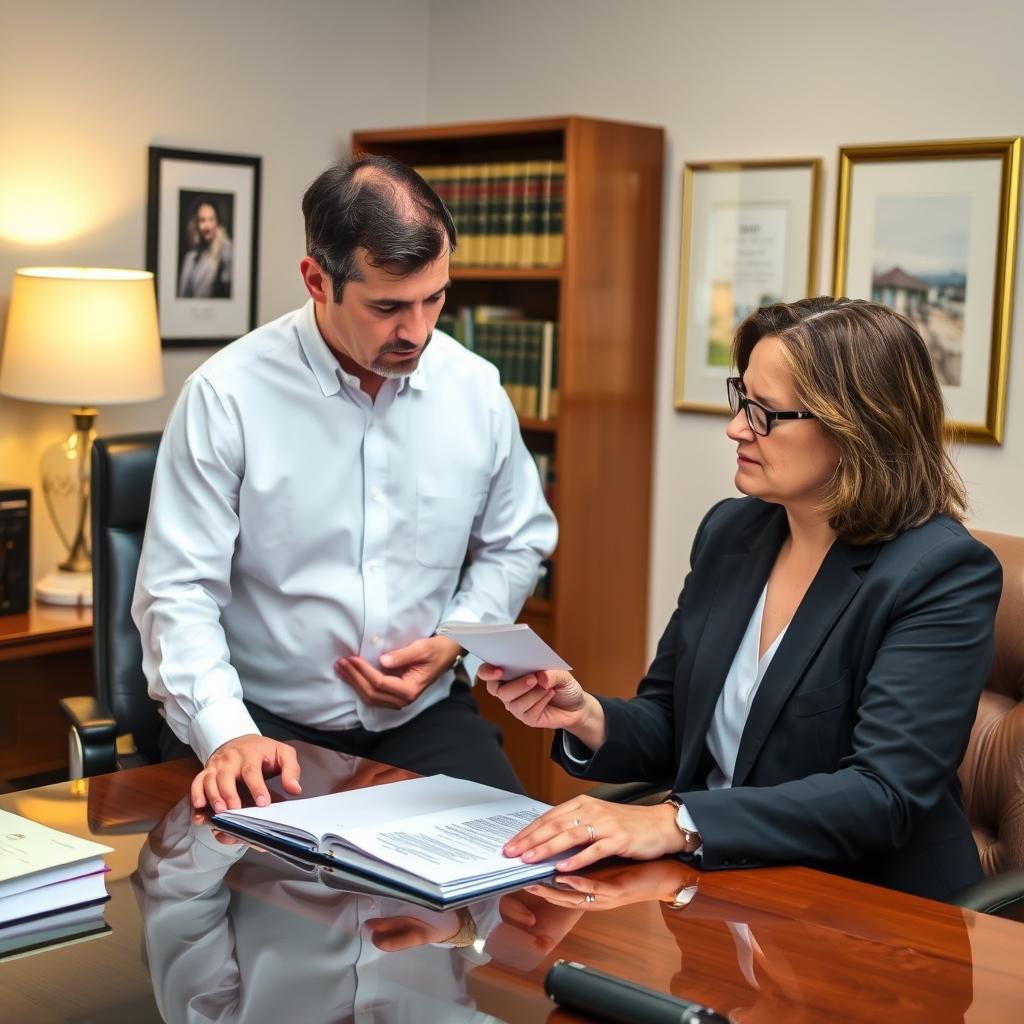
Marital Agreement Lawyer Virginia, VA
For Virginia residents considering a marital agreement—whether a prenuptial agreement before marriage or a postnuptial agreement after a couple has wed—the state’s statutory framework under the Premarital Agreement Act (Va. Code § 20‑147 et seq.) and equitable distribution principles provide a structured path for defining property rights and financial obligations in the event of divorce or death. Virginia is an equitable distribution state, meaning marital property is divided fairly but not necessarily equally; a properly drafted marital agreement allows both parties to bypass default statutory rules and settle these matters on their own terms. Law Offices Of SRIS, P.C. helps clients across Virginia negotiate and draft enforceable marital agreements that reflect their financial circumstances and protect their separate interests. Mr. Sris and his Of Counsel team draw on decades of practice in Virginia family law to guide clients through the requirements of full financial disclosure, voluntariness, and conscionability that Virginia courts require. For a consultation about a prenuptial or postnuptial agreement, reach our firm at (888) 437‑7747. Law Offices Of SRIS, P.C. – Advocacy Without Borders.
What Marital Agreements Mean in Virginia
Under Virginia law, a marital agreement is a contract entered into by spouses or prospective spouses to define their respective rights and obligations concerning property, spousal support, and other financial matters. The Virginia Premarital Agreement Act, codified at Va. Code §§ 20‑147 through 20‑155, governs prenuptial agreements executed in contemplation of marriage. The Act requires that the agreement be in writing and signed by both parties; it becomes effective upon marriage. Postnuptial agreements, entered into after the marriage, are likewise recognized, though they are subject to heightened scrutiny to ensure they are not the product of coercion or overreaching. In every case, Virginia courts will enforce a marital agreement only if it was entered into voluntarily and was not unconscionable when executed, and if the parties made a fair and reasonable disclosure of their property and financial obligations. Mr. Sris and his Of Counsel are familiar with how Virginia courts apply these standards across the Commonwealth’s judicial districts.
Virginia’s equitable distribution statute, Va. Code § 20‑107.3, creates a default framework for dividing marital assets upon divorce. A marital agreement can supplant that framework by classifying specific assets as separate or marital property, waiving or limiting spousal support, or establishing a different division of retirement accounts and business interests. The agreement cannot, however, adversely affect the right of a child to support, and provisions regarding custody or visitation are not binding on the court. Because Virginia circuit courts have exclusive jurisdiction over divorce and property division, any proceeding to enforce or challenge a marital agreement will be heard in the circuit court of the county or city where the parties reside. Our firm maintains a Fairfax location at 4008 Williamsburg Court, Fairfax, VA 22032, and serves clients throughout Northern Virginia, Richmond, and across the Commonwealth.
How Mr. Sris and His Of Counsel Handle Marital Agreement Cases
The process of negotiating and finalizing a marital agreement in Virginia begins with a careful assessment of each party’s financial situation and goals. Mr. Sris and his Of Counsel work with clients to identify all assets, debts, and income streams that require classification, from real estate and investment accounts to business ownership interests. They then help draft language that reflects the client’s objectives while meeting Virginia’s requirements for enforceability. This typically involves full financial disclosure schedules, waiver provisions, and clear definitions of separate versus marital property. The drafting process also considers the tax consequences of property transfers and retirement account divisions, consulting with accounting professionals when necessary.
If a dispute arises over the enforceability of an existing marital agreement, the team at Law Offices Of SRIS, P.C. represents clients in proceedings to challenge or defend the agreement. Common grounds for challenge include lack of voluntary execution, failure to disclose assets, or unconscionability at the time of signing. Mr. Sris and his Of Counsel approach these matters by examining the agreement’s formation, the surrounding circumstances, and the applicable case law in Virginia. They strive to resolve disputes through negotiation where possible, while being prepared to litigate if a resolution cannot be reached. Throughout representation, the firm keeps clients informed of the procedural steps and potential outcomes, always working toward a resolution that protects their interests.
About Mr. Sris and His Of Counsel Team
Mr. Sris, Owner and Founder of Law Offices Of SRIS, P.C., established the firm in 1997 and has practiced family law across Virginia, Maryland, the District of Columbia, New Jersey, and New York ever since. A former prosecutor, he brings a pragmatic understanding of how legal disputes unfold and how to build a well-supported position for negotiation or trial. Mr. Sris testified before the Virginia House Courts of Justice Committee in support of 2019 HB 635 (chief patron Del. David Bulova). Alongside him, the firm’s Of Counsel attorneys contribute substantial experience in family law matters, including the drafting and litigation of prenuptial and postnuptial agreements. Mr. Sris and his Of Counsel bring over 120 years of combined legal experience, supported by 4,739+ documented firm-wide results. Results may vary.
Frequently Asked Questions
What is a marital agreement in Virginia?
A marital agreement in Virginia is a written contract between spouses or prospective spouses that determines how property, debts, and spousal support will be handled if the marriage ends. It can be a prenuptial agreement made before marriage or a postnuptial agreement entered into during the marriage. Under the Virginia Premarital Agreement Act, such agreements must be voluntary, supported by full financial disclosure, and not unconscionable at the time of signing. They allow couples to avoid the default equitable distribution rules of Va. Code § 20‑107.3 and resolve financial matters privately.
Do I need a lawyer for a prenuptial agreement in Virginia?
You are not legally required to have a lawyer to sign a prenuptial agreement in Virginia, but having independent legal counsel for each party strengthens enforceability. Without legal guidance, you risk overlooking critical financial details or inadvertently waiving rights, which can lead a court to set the agreement aside later. An experienced family law attorney can ensure the agreement complies with Virginia’s statutory requirements, accurately reflects your intentions, and protects your separate assets. Mr. Sris and his Of Counsel can advise you on whether independent representation for both parties is advisable.
Can a prenuptial agreement be challenged in Virginia?
Yes, a prenuptial agreement can be challenged in Virginia. Common grounds for challenge include lack of voluntary consent, failure to provide full and fair disclosure of assets, and unconscionability at the time of execution. If one party was coerced, defrauded, or did not have adequate knowledge of the other’s financial circumstances, a Virginia circuit court may refuse to enforce the agreement. The burden of proof lies with the party seeking to invalidate the agreement, and the court examines the facts as they existed at signing.
Are postnuptial agreements enforceable in Virginia?
Postnuptial agreements—contracts between spouses after the marriage—are enforceable in Virginia if they meet the same fundamental criteria as prenuptial agreements. However, because spouses are already in a fiduciary relationship, courts scrutinize postnuptial agreements more closely for evidence of overreaching or duress. The agreement must be supported by full and fair financial disclosure, and its terms must not be unconscionable. Proper independent legal advice and careful documentation of each party’s voluntary participation help ensure that a postnuptial agreement will hold up in court.
How is a marital agreement enforced in Virginia?
Enforcement of a marital agreement typically occurs in the context of a divorce or legal separation proceeding in a Virginia circuit court. The court will review the agreement to confirm it was voluntarily executed, adequately disclosed, and not unconscionable. If satisfied, the court will incorporate the agreement’s terms into the final divorce decree, making them binding and enforceable. If a party violates the agreement after judgment, the other party may seek enforcement through contempt proceedings or a separate breach of contract action.
What makes a prenuptial agreement invalid in Virginia?
A Virginia court may find a prenuptial agreement invalid if the party seeking enforcement did not provide a fair and reasonable disclosure of their property and financial obligations, if the agreement was signed under duress or without the opportunity for independent legal advice, or if its terms are so one-sided as to be unconscionable. Additionally, an agreement that attempts to waive child support obligations or dictate child custody is void as against public policy. To discuss the specifics of your situation, contact Law Offices Of SRIS, P.C. at (888) 437‑7747.
Virginia legal resources: Virginia Code Title 20 (Domestic Relations) · Virginia Courts · Virginia Circuit Courts
Attorney advertising. Prior results do not guarantee a similar outcome. Results may vary.
Case results depend on a variety of factors unique to each case.