


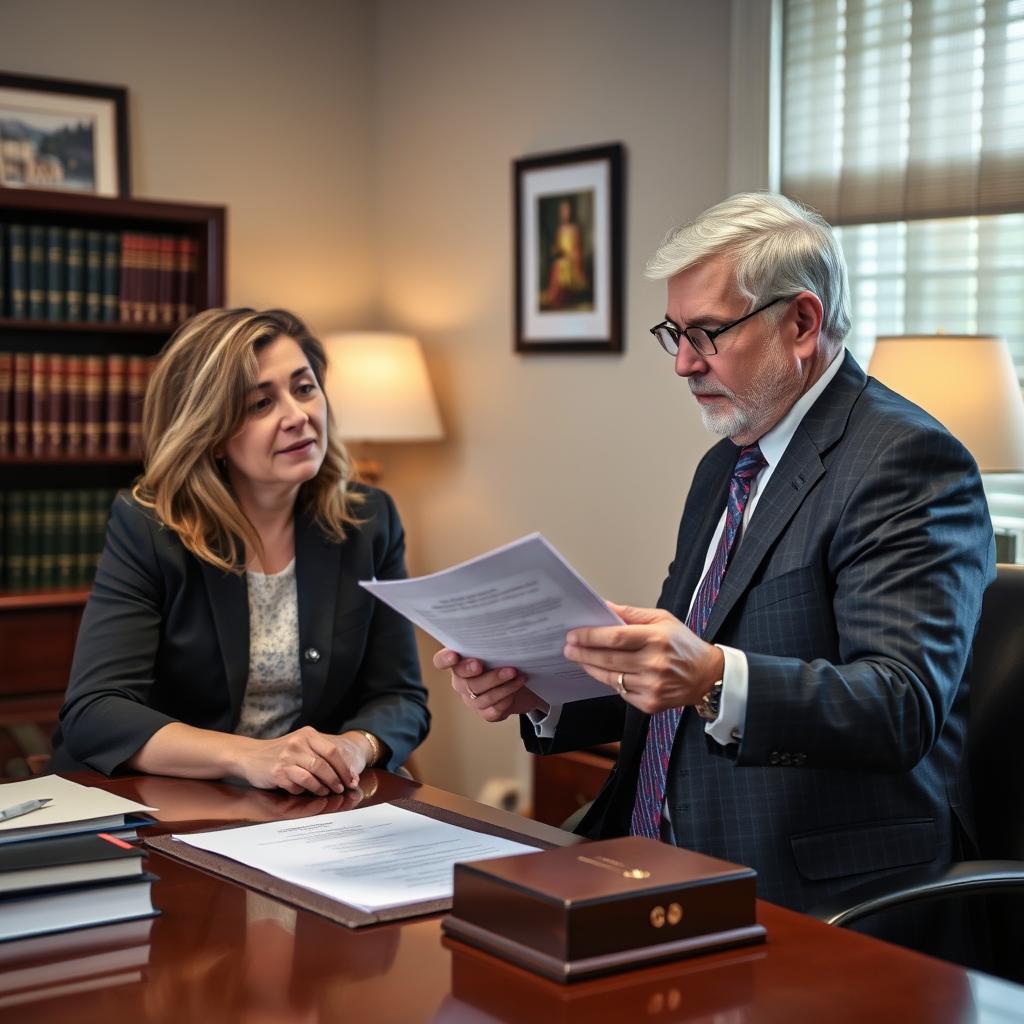
Subornation of Perjury lawyer Fluvanna County, VA
You are under investigation—or have already been indicted—for federal subornation of perjury. The charge means the government believes you knowingly persuaded or induced another person to lie under oath in a federal proceeding. The U.S. Attorney’s Office for the Western District of Virginia handles these prosecutions, and the case will move through the U.S. District Court in Charlottesville. Every statement you have made is under scrutiny, and every communication with potential witnesses carries legal weight. At Law Offices Of SRIS, P.C., Mr. Sris and the firm’s Of Counsel attorneys understand what a federal perjury-related charge means for your freedom, your reputation, and your future. To discuss your situation with an attorney who practices in the Western District of Virginia, contact the firm at (888) 437-7747. Law Offices Of SRIS, P.C. – Advocacy Without Borders.
Understanding Federal Subornation of Perjury in Fluvanna County
Federal subornation of perjury is more than a credibility issue—it is a felony offense that strikes at the integrity of the justice system. Under 18 U.S.C. § 1622, subornation of perjury occurs when someone procures another person to commit perjury, meaning they induced or persuaded that person to provide false testimony under oath in a federal proceeding. The prosecution does not need to prove that the underlying perjury actually occurred; rather, it must show that the accused acted with the intent to cause false testimony. Federal investigators, often from the FBI, build these cases through witness interviews, document review, and grand jury testimony. For a defendant in Fluvanna County, the case will proceed through the Charlottesville Division of the U.S. District Court for the Western District of Virginia, where the Assistant U.S. Attorney assigned to the matter will present evidence to a grand jury.
Fluvanna County residents facing federal charges are tried in federal court, not in the Fluvanna County General District Court. The federal courthouse in Charlottesville handles arraignments, detention hearings, motion practice, and trial. The Western District of Virginia has its own local rules and judicial practices that differ from the Eastern District. Mr. Sris and his Of Counsel are familiar with those procedures and have experience appearing before the district’s judges. From the initial appearance before a federal magistrate judge to the pretrial motion phase, the firm works to challenge the government’s evidence, examine the credibility of cooperating witnesses, and protect the client’s right against self-incrimination throughout the investigative and trial process.
Defense Strategies for Federal Subornation Charges
A subornation of perjury prosecution often depends on the testimony of the person who allegedly committed the perjury. That witness may have their own motivations—a desire to reduce their own exposure, a misunderstanding of the conversation, or a bias against the defendant. Mr. Sris and his Of Counsel review every communication, text message, email, and recorded statement to determine whether the government can prove the critical element of intent. Was there a deliberate effort to persuade someone to lie, or was the defendant merely encouraging a witness to be truthful, express uncertainty, or assert their Fifth Amendment right? The line between witness preparation and subornation is important, and the defense can argue that the prosecution has not met its burden of proving a knowing and corrupt intent.
Another strategy involves challenging the materiality of the allegedly false testimony. Under federal law, perjury must be material—meaning it could have influenced the proceeding. If the statement at issue was collateral or immaterial, the charge may not stand. In addition, the defense may challenge procedural irregularities: whether the grand jury process was tainted, whether exculpatory evidence was withheld, or whether the government’s own witnesses are unreliable. Every federal case is unique, and the firm’s approach is tailored to the specific facts and the client’s objectives, whether that means negotiating a pretrial resolution or preparing for trial.
What to Expect When Facing Federal Charges in the Western District of Virginia
Federal criminal procedure moves quickly after an indictment. The defendant is brought before a magistrate judge for an initial appearance, where the charges are read and counsel is appointed if needed. A detention hearing follows to determine whether the defendant will be released pending trial or held in custody. Federal law presumes detention in certain cases, but Mr. Sris and his Of Counsel present evidence and arguments for release, including ties to the community, employment, and lack of flight risk.
Once the case proceeds, discovery is exchanged. The government must turn over all evidence it intends to use, including witness statements, grand jury transcripts, and Brady material. The defense may file motions to suppress evidence or dismiss the indictment. Throughout this process, the firm evaluates the strength of the government’s case and advises the client on the likelihood of success at trial versus the benefits of a plea agreement. If the case goes to trial, the defendant has the right to a jury of twelve, and the government must prove guilt beyond a reasonable doubt. Sentencing, if there is a conviction, falls under the U.S. Sentencing Guidelines, where the offense level and criminal history category determine the advisory range. Mr. Sris and his Of Counsel advocate for departures and variances, including acceptance of responsibility, minimal role adjustments, and factors that may justify a sentence below the guideline range.
Penalties for Subornation of Perjury
Subornation of perjury is a federal felony. The maximum term of imprisonment under 18 U.S.C. § 1622 is five years per count, along with a fine for an individual. In addition, a conviction can result in a term of supervised release and mandatory special assessments. More importantly, a federal felony conviction carries collateral consequences: loss of certain professional licenses, restrictions on firearm possession, and difficulties in obtaining employment or security clearances. In some cases, the underlying conduct may also support obstruction-of-justice charges that carry heavier penalties. The actual sentence in any particular case depends on the facts, the defendant’s acceptance of responsibility, and the court’s analysis of the sentencing factors under 18 U.S.C. § 3553(a).
Experienced Federal Criminal Defense Representation
Mr. Sris, Owner and Founder of Law Offices Of SRIS, P.C., is a former prosecutor who has practiced federal criminal defense in Virginia for many years. His background gives him insight into how Assistant U.S. Attorneys build cases and which arguments persuade federal judges. He is admitted to practice in Virginia, Maryland, the District of Columbia, New Jersey, and New York, and he concentrates his practice on complex criminal defense matters. Mr. Sris and his Of Counsel bring substantial collective experience to federal subornation of perjury cases, handling everything from pre-indictment negotiations to jury trials.
The firm’s Of Counsel attorneys, all of whom are experienced litigators, work alongside Mr. Sris on federal matters. The team reviews discovery, prepares motions, and examines witnesses with a focus on protecting the client’s rights at every stage. The firm maintains a Shenandoah Location that serves Fluvanna County residents by appointment, and the attorneys are available to discuss your case by phone 24 hours a day at (888) 437-7747. When you retain Law Offices Of SRIS, P.C., you have more than one attorney thinking about your defense.
Frequently Asked Questions
How does a federal subornation of perjury charge differ from state perjury charges in Virginia?
Federal subornation of perjury is prosecuted in U.S. District Court by the U.S. Attorney’s Office under federal statutes, while Virginia state perjury would be handled in a Virginia General District or Circuit Court. Federal charges generally involve proceedings under oath in a federal forum, such as a federal court hearing, a deposition in a federal civil case, or a federal grand jury. The procedural rules differ, sentencing is governed by the U.S. Sentencing Guidelines, and there is no parole in the federal system. Having an attorney experienced in federal practice is essential.
What should I do if federal agents want to interview me about a subornation of perjury allegation?
If federal agents contact you, do not answer questions without an attorney present. Politely but firmly state that you wish to speak with counsel. Anything you say can be used against you in a grand jury proceeding or at trial, and even innocent statements can be misinterpreted. Contact a federal criminal defense attorney immediately. Law Offices Of SRIS, P.C. can be reached at (888) 437-7747. Do not discuss the matter with colleagues, friends, or anyone else who could become a witness against you.
Can a subornation of perjury charge be dropped before trial?
Yes, a subornation of perjury charge may be dismissed if the government cannot prove its case or if a pretrial motion succeeds. The defense can challenge the sufficiency of the indictment, argue that the grand jury process was flawed, or file a motion to suppress evidence obtained in violation of the defendant’s rights. Sometimes, a thorough investigation uncovers exculpatory evidence that persuades the prosecutor to dismiss the charge. Each case is different, but a well-prepared defense from the outset raises the likelihood of a favorable pretrial resolution.
How long does a federal subornation case take from indictment to resolution?
The timeline for a federal subornation of perjury case varies based on complexity, the number of defendants, and the court’s calendar. The Speedy Trial Act requires that trial begin within 70 days of indictment, but that clock can be paused for pretrial motions, continuances, and other excludable delays. Many federal cases take six months to a year or more. Mr. Sris and his Of Counsel work to move the case forward efficiently while ensuring that the defense has adequate time to prepare.
Do I need a lawyer if I haven’t been indicted but believe I’m under investigation?
Yes, retaining a lawyer before an indictment can significantly affect the outcome. Early representation allows the attorney to communicate with the prosecutor, present exculpatory evidence, and potentially avoid charges altogether. The attorney can also advise you on how to handle any contact with investigators, protect your rights, and guide you through the grand jury process if you are called to testify. Early engagement is often the trusted opportunity to shape the direction of the case.
Why should I choose Law Offices Of SRIS, P.C. for a federal subornation charge in Fluvanna County?
The firm’s federal defense practice is led by Mr. Sris, a former prosecutor with extensive federal court experience in the Western District of Virginia. Mr. Sris and his Of Counsel bring a practical understanding of both the prosecution’s tactics and the local federal court procedures. The firm serves Fluvanna County residents from its Shenandoah Location, and the attorneys are available by phone 24 hours a day. Contact the firm at (888) 437-7747 to request a consultation and discuss your situation.
For a broader view of federal criminal practice across Virginia, see our comprehensive analysis on Federal Criminal Defense in Virginia.
Explore related pages:
Federal Criminal Defense Fairfax County |
Federal Criminal Defense Prince William County |
Federal Criminal Defense Manassas |
Federal Criminal Defense Fairfax City
Primary sources
- U.S. District Court for the Western District of Virginia
- U.S. Attorney’s Office, Western District of Virginia
- U.S. Sentencing Commission
Attorney advertising. Prior results do not guarantee a similar outcome.
Results may vary.
Case results depend on a variety of factors unique to each case.