


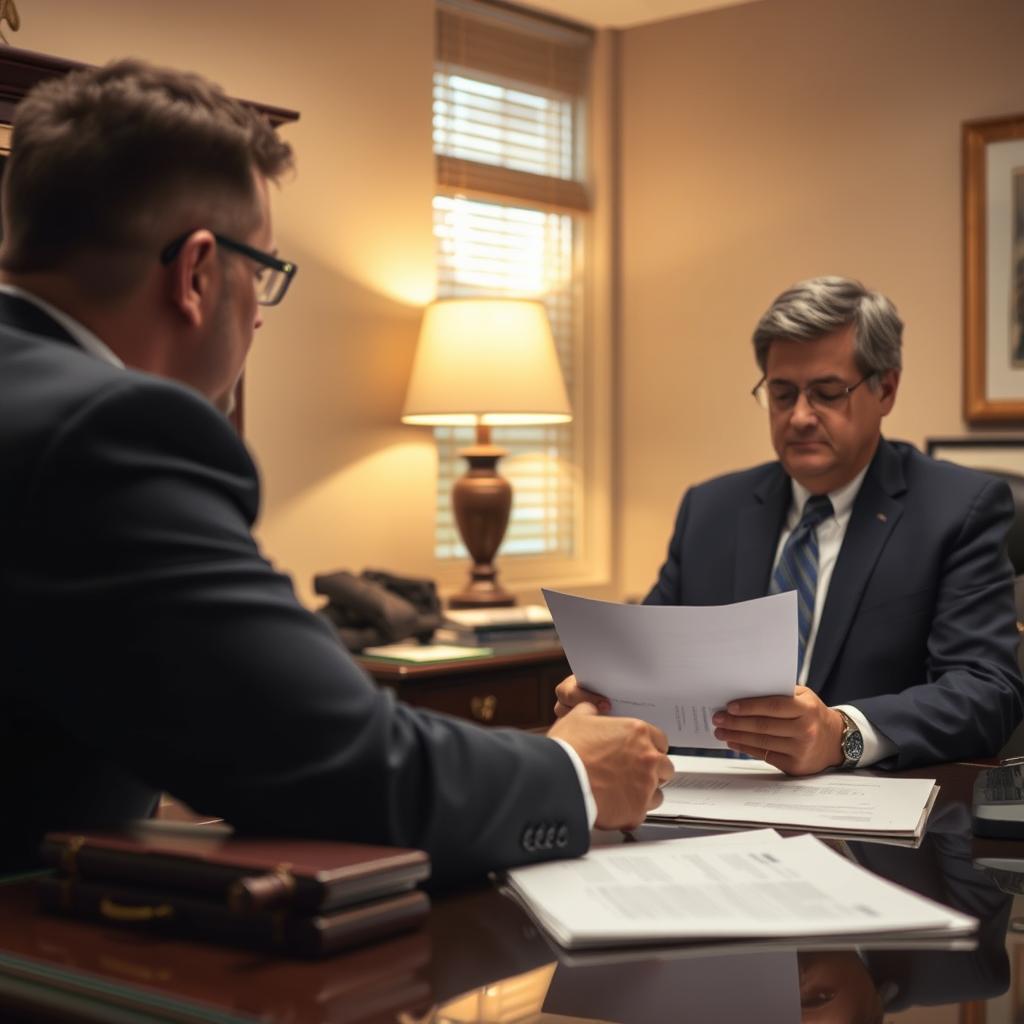
Possession or Use of a Machine Gun lawyer Virginia, VA
Federal charges for possession or use of a machine gun are among the most serious firearms offenses prosecuted in the United States. If you are facing investigation or indictment in Virginia, the case will likely proceed in the U.S. District Court for the Eastern District of Virginia — a jurisdiction known for its fast-paced docket and experienced federal prosecutors. Mr. Sris and the firm’s Of Counsel attorneys represent individuals accused of violating 18 U.S.C. § 922(o) (unlawful possession or transfer of a machinegun) and 18 U.S.C. § 924(c) (use or carrying of a machinegun during a drug trafficking crime or crime of violence). These statutes carry mandatory minimum prison terms and expose a defendant to a potential life sentence, with no eligibility for parole in the federal system. Early engagement with counsel experienced in federal criminal defense is critical. Reach Law Offices Of SRIS, P.C. at (888) 437-7747 to request a consultation. Law Offices Of SRIS, P.C. – Advocacy Without Borders.
What Possession or Use of a Machine Gun Means in Virginia
While Virginia state law regulates certain firearms, federal law imposes an outright prohibition on the possession or transfer of machine guns manufactured after May 19, 1986, and criminalizes their use in connection with other federal offenses. A charge of possession or use of a machine gun is prosecuted by the United States Attorney’s Office, often after an investigation by the Bureau of Alcohol, Tobacco, Firearms and Explosives (ATF) or the FBI. Cases are heard in either the Alexandria or Richmond divisions of the Eastern District of Virginia, or in the Western District of Virginia if the alleged conduct occurred in the southwestern part of the Commonwealth. The federal system employs sentencing guidelines that often yield substantially longer terms of imprisonment than state court, and a conviction under § 924(c) triggers additional consecutive mandatory minimum sentences that can add decades to any underlying sentence.
Because federal firearm prosecutions rely heavily on forensic and tracing evidence, the government’s case frequently turns on technical definitions: whether the device meets the statutory definition of a machinegun, whether it was lawfully registered under the National Firearms Act, and whether the accused knew the weapon’s characteristics. A defendant’s prior criminal record, particularly any felony or domestic violence misdemeanor conviction, can also create additional exposure under the Armed Career Criminal Act or the Lautenberg Amendment. Mr. Sris and the firm’s Of Counsel attorneys have experience analyzing the intersection of federal firearms statutes and the sentencing guidelines, and work to challenge the government’s proof at every stage.
How Mr. Sris and the Firm’s Of Counsel Attorneys Handle Possession or Use of a Machine Gun Cases
Federal machine gun prosecutions typically begin with a grand jury indictment, although a complaint may be filed first if agents believe the defendant poses a flight risk or a danger to the community. At the initial appearance, the court will address pretrial release or detention. Mr. Sris and the firm’s Of Counsel attorneys focus on presenting a robust argument for release — whether through a combination of bond conditions, third-party custody, or electronic monitoring — to allow the client to assist in the preparation of the defense. If the defendant is detained, defense counsel presses for a speedy trial and files appropriate motions to suppress evidence, challenge the legality of any search, or exclude improper expert testimony.
Discovery in federal firearms cases is often voluminous and includes laboratory reports, chain-of-custody documentation, and digital forensic evidence. The firm’s Of Counsel attorneys work with Mr. Sris to review and challenge this material, retaining independent attorneys where necessary. At the plea-negotiation and sentencing phase, counsel examines the applicability of any statutory enhancements, the drug-quantity or weapon-type predicates that drive mandatory minimums, and the potential for a downward variance or departure under the sentencing guidelines. Every step is guided by the goal of mitigating the consequences of a conviction, whether that means a reduced charge, a favorable plea, or, where the facts permit, a dismissal before trial.
About Mr. Sris and the Firm’s Of Counsel Attorneys
Mr. Sris, Owner and Founder of Law Offices Of SRIS, P.C., is a former prosecutor admitted to practice in Virginia, Maryland, the District of Columbia, New Jersey, and New York. His experience on both sides of the courtroom informs the firm’s approach to federal criminal defense. Mr. Sris testified before the Virginia House Courts of Justice Committee in support of 2019 HB 635 (chief patron Del. David Bulova), demonstrating a commitment to legislative engagement that strengthens his understanding of statutory interpretation. He is supported by the firm’s Of Counsel attorneys, who bring extensive combined legal experience. Results may vary.
The firm’s Of Counsel attorneys include lawyers with backgrounds in federal criminal defense and complex litigation. Together with Mr. Sris, they appear in the U.S. District Courts for the Eastern and Western Districts of Virginia and are familiar with the practices of the U.S. Attorney’s Offices in Alexandria, Richmond, Norfolk, and Newport News. The firm’s collaborative model ensures that each machine gun case receives the benefit of multiple experienced litigators. Reach Law Offices Of SRIS, P.C. at (888) 437-7747 to discuss your situation.
Frequently Asked Questions
What is the federal charge for possessing a machine gun?
Federal law prohibits the possession or transfer of a machine gun unless the weapon was lawfully registered before May 19, 1986. Possession of an unregistered machine gun is a felony under 18 U.S.C. § 922(o). The government must prove the defendant knew the firearm had the characteristics that bring it within the statutory definition of a machinegun. A conviction can result in a significant prison sentence and a lifetime prohibition on firearms ownership.
What are the penalties for using a machine gun during a crime?
Using or carrying a machine gun during a drug trafficking crime or a crime of violence triggers mandatory consecutive prison sentences. A first conviction under 18 U.S.C. § 924(c) carries a mandatory minimum of at least thirty years if the firearm is a machine gun, and a second or subsequent conviction can result in a life sentence. These penalties run in addition to any sentence for the underlying offense, and parole is not available in the federal system.
Do I need a lawyer if I am under investigation for a machine gun offense?
Yes — you should retain federal criminal defense counsel as early as possible, before charges are filed. Pre-indictment representation can influence whether the government pursues charges, what charges are brought, and whether you are detained pending trial. Mr. Sris and the firm’s Of Counsel attorneys can engage with the U.S. Attorney’s Office on your behalf and work to protect your rights during any investigation. For guidance, contact Law Offices Of SRIS, P.C. at (888) 437-7747.
How do federal machine gun laws differ from Virginia state firearms laws?
Federal law imposes stricter penalties and can reach conduct that state law does not criminalize. Virginia law does not maintain a separate statute specifically addressing machine guns; rather, state-level firearm offenses are generally misdemeanors or lower-grade felonies. By contrast, the federal government routinely prosecutes possession or use of a machine gun as a serious felony with mandatory minimum prison terms. A state prosecution does not preclude a subsequent federal case, so it is important to consult an attorney who understands both systems.
What should I do if federal agents contact me about a firearm?
Invoke your right to remain silent and request an attorney immediately. Do not answer questions, consent to a search, or discuss the details of your firearm ownership with agents without counsel present. Even seemingly innocuous statements can be used to build a case. Mr. Sris and the firm’s Of Counsel attorneys are available to advise you. Call (888) 437-7747 to schedule a consultation.
Where in Virginia are federal machine gun cases prosecuted?
Federal machine gun cases arising in Virginia are prosecuted in the U.S. District Court for the Eastern District of Virginia or the Western District of Virginia, depending on where the alleged conduct occurred. The Eastern District has divisions in Alexandria, Richmond, Norfolk, and Newport News. The Western District hears cases in Roanoke, Abingdon, Charlottesville, Danville, Lynchburg, and Harrisonburg. Mr. Sris and the firm’s Of Counsel attorneys appear in all federal districts in Virginia and can advise you on the local practices of each court.
Additional federal criminal defense pages:
- Fairfax County federal criminal lawyer
- Fairfax City federal criminal lawyer
- Prince William County federal criminal lawyer
- Manassas federal criminal lawyer
- Virginia federal criminal defense practice
Authoritative sources: 18 U.S.C. § 922(o), 18 U.S.C. § 924(c), U.S. District Court for the Eastern District of Virginia. These links open in a new tab.
Attorney advertising. Prior results do not guarantee a similar outcome. Case results depend on a variety of factors unique to each case. Results may vary.