


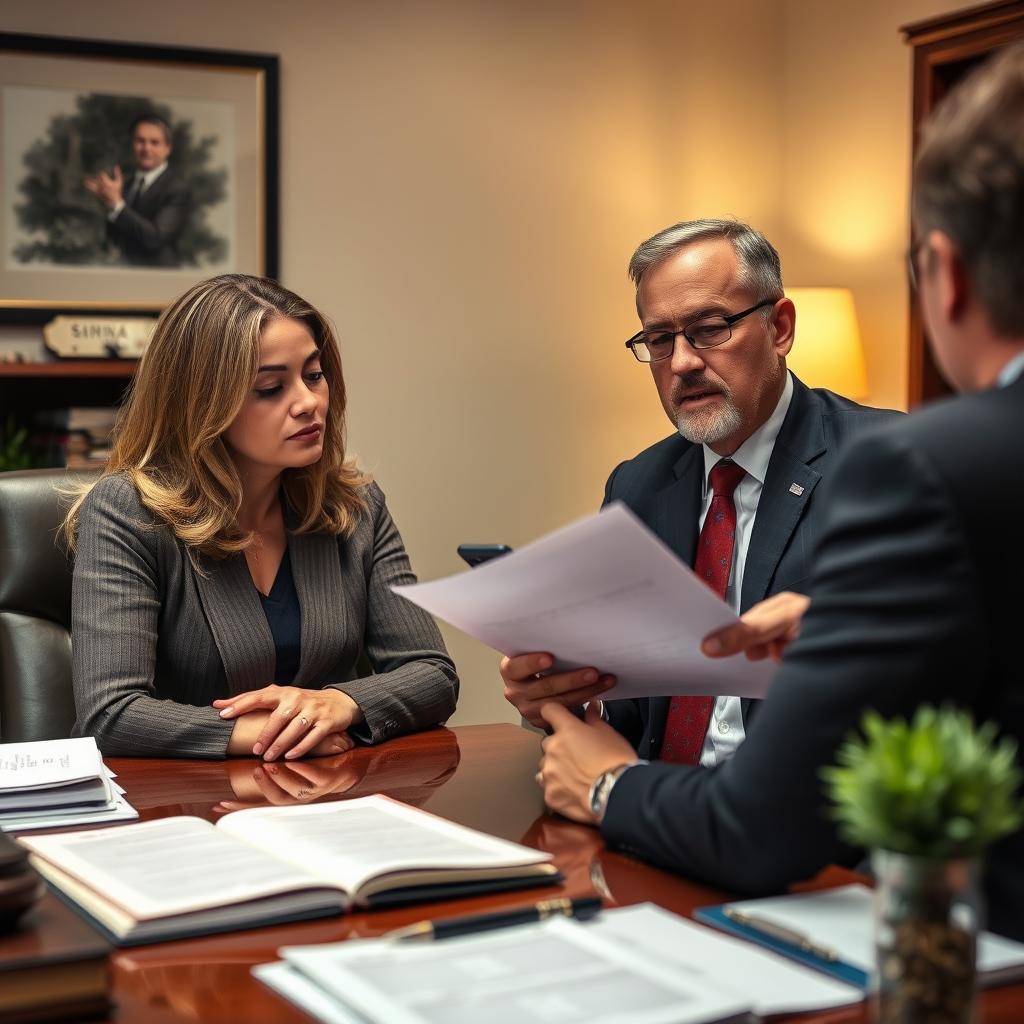
Espionage lawyer Chesterfield County, VA
Facing federal espionage charges requires immediate, informed action. In Chesterfield County, Virginia, these allegations fall under the jurisdiction of the U.S. District Court for the Eastern District of Virginia, one of the nation’s most active federal dockets for national security matters. Prosecutors from the U.S. Attorney’s Office pursue cases under the Espionage Act (18 U.S.C. § 793 et seq.) with resources and urgency that demand a prepared defense. If you or someone close to you is under investigation or has been indicted, you need counsel who is not only admitted to practice in that federal court but who also understands the unique procedural landscape of the EDVA—from initial appearance before a magistrate judge to detention hearings and the complexities of handling classified information. Law Offices Of SRIS, P.C. – Advocacy Without Borders.
Law Offices Of SRIS, P.C. has represented clients in difficult federal criminal matters since 1997. Mr. Sris, a former prosecutor and the firm’s Owner and Founder, leads the firm’s federal defense practice with a focus on the EDVA and WDVA. Our Richmond Location serves clients throughout Chesterfield County, including the Midlothian, Chester, and Bon Air communities, and we are readily accessible to families whose loved ones are in custody or facing proceedings at the federal courthouse in Richmond. Because time is critical when federal agents have already begun investigating, we encourage you to request a consultation as soon as possible. Reach Mr. Sris and the firm’s Of Counsel attorneys at (888) 437‑7747.
What Federal Espionage Charges Mean in Chesterfield County, VA
Espionage prosecutions in Chesterfield County are not brought in the local General District or Circuit Court; they proceed exclusively in the U.S. District Court for the Eastern District of Virginia. Because the espionage statutes—principally 18 U.S.C. § 793, § 794, and § 798—concern the gathering, transmission, or loss of national defense information, the cases are handled by experienced federal prosecutors, often in coordination with agencies such as the FBI, Department of Defense counterintelligence, or Naval Criminal Investigative Service. The EDVA has one of the country’s highest concentrations of Espionage Act cases, and its judges are accustomed to managing the procedural demands that classified evidence imposes.
When a person in Chesterfield County is charged with a federal espionage offense, the initial steps include an appearance before a federal magistrate judge in Richmond or Alexandria, a detention hearing, and, for felony charges, a grand jury indictment. The Classified Information Procedures Act (CIPA) often applies, requiring careful pretrial litigation over what classified material may be introduced, in what form, and with what security protections. The U.S. Sentencing Guidelines heavily influence the eventual sentence, and because parole was abolished in the federal system, a conviction carries the certainty of substantial incarceration. The statutory maximum for certain espionage violations is death or life imprisonment, though actual sentences depend on the offense level, criminal history, and any applicable mandatory minimums. Every Espionage Act prosecution is fact-intensive and uniquely sensitive; effective representation begins with early and independent evaluation of the government’s theory of the case.
How Mr. Sris and His Of Counsel Handle Espionage Defense Cases
Federal espionage defense requires a disciplined framework that recognizes the stakes from the moment a person learns they are a subject or target. Mr. Sris and the firm’s Of Counsel attorneys begin by stabilizing the client’s immediate legal position: ensuring that they do not make inadvertent statements to law enforcement, and working to secure reasonable bail conditions where appropriate. They then engage in a comprehensive review of the government’s allegations, including the specific statute charged, the nature of the information at issue, and any search warrants, electronic surveillance, or grand jury testimony that preceded the charge.
Because many espionage cases involve classified material, the defense team works within the strictures of CIPA to gain access to evidence while protecting sensitive information. Mr. Sris coordinates with experienced attorney consultants—forensic, digital, and linguistic—to challenge the government’s narrative where the facts permit. Throughout the process, the firm prioritizes candid communication with the client about the realistic risks and available options, including exploring pretrial motions, negotiating with the U.S. Attorney’s Office, and preparing for trial if that serves the client’s best interests. The approach is never formulaic; it is tailored to the specific legal and factual profile of each case.
About Mr. Sris and His Of Counsel
Mr. Sris is the Owner and Founder of Law Offices Of SRIS, P.C. and has been practicing since 1997. A former prosecutor, he brings a working understanding of how federal and state charging decisions are made—an asset that informs the firm’s defense strategies. Mr. Sris is admitted in Virginia, Maryland, the District of Columbia, New Jersey, and New York, and he has testified before the Virginia House Courts of Justice Committee in support of 2019 HB 635 (chief patron Del. David Bulova). The firm’s Of Counsel attorneys extend the team’s capacity in complex federal matters, allowing for thorough review, motion practice, and trial preparation without sacrificing the direct involvement that clients expect.
Mr. Sris and the firm’s Of Counsel bring extensive combined legal experience. Results may vary. The Richmond Location serves clients in Chesterfield County, Henrico, Hanover, and surrounding central Virginia communities. Consultations are available by appointment; call (888) 437‑7747 to discuss your circumstances.
Frequently Asked Questions
What is federal espionage and how is it charged in Virginia?
Federal espionage involves the unauthorized gathering, transmitting, or losing of information related to national defense, prosecuted under the Espionage Act—principally 18 U.S.C. §§ 793, 794, and 798. In Virginia, charges are brought by the U.S. Attorney’s Office for the Eastern District of Virginia. The government must prove that the defendant acted with intent or reason to believe the information could be used to injure the United States or advantage a foreign nation. Charges can arise from electronic intrusions, document mishandling, communication with foreign entities, or other conduct touching classified or defense-related material. Early legal intervention is critical because investigative steps begin long before a formal indictment.
What are the potential penalties for an espionage conviction?
The maximum penalty for certain espionage violations is death or life imprisonment; other sections carry terms of years and substantial fines. The U.S. Sentencing Guidelines determine the advisory range based on the offense level and the defendant’s criminal history. Because the federal system has no parole, an individual sentenced to a term of imprisonment will serve a significant portion of that sentence. Even in cases that do not go to trial, the collateral consequences of an Espionage Act conviction can be significant, affecting security clearances, employment, and travel. Every case requires a careful analysis of the specific statute charged and the government’s evidence.
How does the U.S. District Court for the Eastern District of Virginia handle espionage cases?
The EDVA handles espionage cases with specialized procedural rules, including the Classified Information Procedures Act, which governs the use of classified evidence in open court. Defendants typically make their first appearance before a magistrate judge in Richmond or Alexandria. Detention hearings follow quickly, and the government often seeks pretrial detention on national security grounds. The discovery phase may involve security-clearance issues for defense counsel and restrictions on what can be shared with the client. Because the EDVA has a “rocket docket” reputation, pretrial deadlines can be compressed, making early preparation essential. A lawyer experienced in this district can navigate those constraints while protecting the client’s rights.
Do I need a lawyer if I am under investigation for espionage?
Yes—if federal agents have contacted you or executed a search warrant, you should request counsel immediately and refrain from making any statement. Even before an arrest, the government is building its case, and anything you say can be used against you. A defense attorney can communicate with investigators on your behalf, work to preserve evidence, and begin challenging the basis for surveillance or seizure. Many espionage investigations take months, and having a lawyer involved early often shapes the outcome. Contacting Law Offices Of SRIS, P.C. can put you in touch with an experienced federal defense team without delay.
Can a federal espionage case be resolved without a trial?
Yes—many federal cases, including those involving the Espionage Act, are resolved through plea negotiations, pretrial motions, or a dismissal of charges. Mr. Sris and the firm’s Of Counsel evaluate whether the government’s evidence was lawfully obtained, whether the charged statute applies to the conduct at issue, and whether any mitigating circumstances support a favorable resolution. While some espionage cases proceed to trial, others end with a plea to a lesser offense or a resolution that reduces exposure. The decision to go to trial belongs to the client, after a complete discussion of the risks and benefits.
How do I choose an espionage defense lawyer in Chesterfield County?
Look for an attorney who is admitted to practice in the U.S. District Court for the Eastern District of Virginia, has experience with federal criminal defense, and is familiar with the handling of classified evidence. A background in prosecution can provide insight into how the government approaches national security cases. Verify that the lawyer communicates clearly, involves you in strategic decisions, and has the resources to dedicate time to a complex matter. Law Offices Of SRIS, P.C. Concentrates its federal practice in the EDVA and WDVA. For a consultation, reach Mr. Sris at (888) 437‑7747.
Attorney advertising. Prior results do not guarantee a similar outcome.
Results may vary.
Case results depend on a variety of factors unique to each case.