


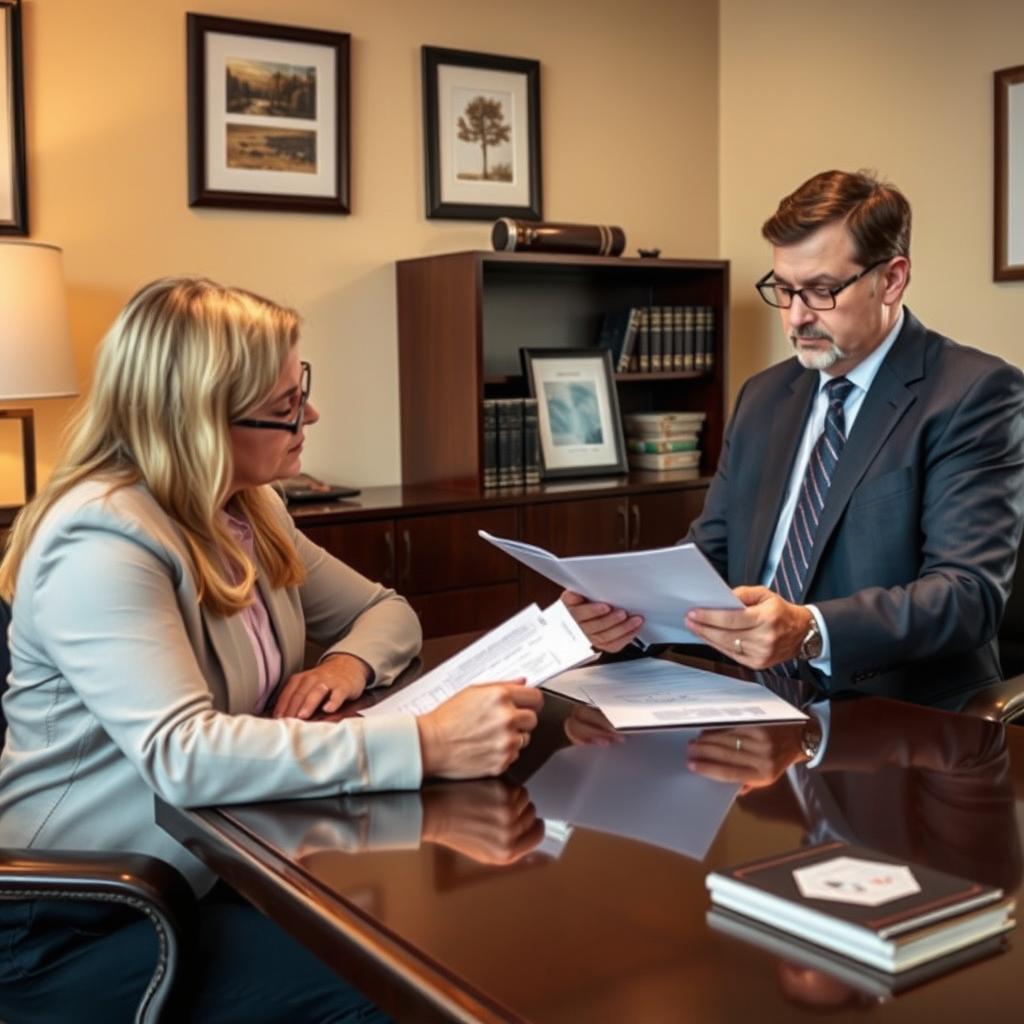
Espionage lawyer Fluvanna County, VA
Espionage charges in Fluvanna County, Virginia are federal matters prosecuted in the U.S. District Court for the Western District of Virginia under the Espionage Act, 18 U.S.C. § 793 and related statutes. The penalties upon conviction are among the most severe in federal criminal law, up to and including life imprisonment, and there is no parole in the federal system. Federal prosecutors from the U.S. Attorney’s Office approach these cases with substantial investigative resources from the FBI and other intelligence agencies, and the government already arrives with a conviction rate that exceeds 90 percent nationally. An individual facing an espionage investigation or indictment anywhere in Fluvanna County — Palmyra, Fork Union, Lake Monticello, and the surrounding communities — needs an attorney who understands the federal criminal process, the U.S. Sentencing Guidelines, and how to build a defense in a case where the stakes cannot be overstated. To request a consultation, reach Mr. Sris and the firm’s Of Counsel attorneys at (888) 437‑7747. Law Offices Of SRIS, P.C. – Advocacy Without Borders.
What Espionage Allegations Mean in Fluvanna County
Fluvanna County lies within the Charlottesville Division of the U.S. District Court for the Western District of Virginia. A person charged with espionage in this jurisdiction will appear before a federal magistrate judge at the Charlottesville courthouse at 255 W Main Street, Charlottesville, VA 22902, for an initial appearance and a detention hearing. The investigation will have been conducted by federal agents, not local law enforcement, and the indictment will have been returned by a federal grand jury sitting in the Western District. This is fundamentally different from a state criminal proceeding: federal bail standards under the Bail Reform Act focus on risk of flight and danger to the community, and release is rarely granted in national-security cases. The Speedy Trial Act then governs the pace, generally requiring indictment within 30 days of arrest and trial within 70 days of indictment, though excludable delays are routine in espionage prosecutions.
Because Fluvanna County has no federal courthouse, all proceedings take place in Charlottesville. The drive from Palmyra or Fork Union to the courthouse takes roughly 30 to 45 minutes along Route 53 and Route 15. Our Richmond Location represents clients throughout central Virginia and regularly arranges attorney meetings and case preparation at a time and place convenient for the client.
The Federal Court That Hears Espionage Cases from Fluvanna County
The Western District of Virginia is one of only two federal judicial districts in the Commonwealth, and its judges handle a wide range of federal criminal matters. Cases arising from Fluvanna County come before the district judges and magistrate judges assigned to the Charlottesville Division. Federal sentencing in this district follows the U.S. Sentencing Guidelines, which are advisory after United States v. Booker but continue to exert powerful influence on the ultimate sentence. In espionage matters, the guidelines can produce a recommended range that is exceptionally high, often at or near the statutory maximum. The district court judge will consider offense-specific adjustments, acceptance of responsibility if applicable, and any substantial-assistance motions the government may file under § 5K1.1 of the guidelines.
Navigating this system requires familiarity not only with the substantive law of espionage but with the local practices of the Western District regarding security-clearance matters, protective orders, and the handling of classified information under the Classified Information Procedures Act (CIPA).
How Mr. Sris and the Firm’s Of Counsel Attorneys Handle Espionage Cases
When a client retains Law Offices Of SRIS, P.C., the case is staffed by Mr. Sris, who is an experienced former prosecutor, together with the firm’s Of Counsel attorneys. The team develops a defense strategy that starts with a meticulous examination of the government’s evidence. In an espionage prosecution, this often means reviewing the circumstances under which classified documents were allegedly gathered or transmitted, analyzing whether the charged conduct falls within the statutory definitions in 18 U.S.C. § 793 (gathering, transmitting, or losing defense information) or § 794 (gathering or delivering defense information to aid a foreign government), and evaluating any search-and-seizure issues that may arise from FBI or intelligence-community investigative techniques.
The firm’s approach throughout the case is to engage with federal prosecutors early, to inspect every discovery production for procedural and evidentiary flaws, and to prepare thoroughly for each pretrial hearing. Because federal espionage charges are rare and fact-intensive, the defense frequently involves engagement with forensic experts and national-security consultants, all coordinated by the legal team. Mr. Sris and the firm’s Of Counsel attorneys also explore whether the government’s disclosures comply with its obligations under Brady v. Maryland and the Jencks Act, and whether any violation of the attorney-client privilege or the Fifth Amendment occurred during the investigation.
About Mr. Sris and the Firm’s Of Counsel Attorneys
Mr. Sris, Owner and Founder of Law Offices Of SRIS, P.C., has practiced in Virginia, Maryland, the District of Columbia, New Jersey, and New York since 1997. He is a former prosecutor who understands how federal prosecutors build cases and where their investigations often reveal weaknesses. Mr. Sris testified before the Virginia House Courts of Justice Committee in support of 2019 HB 635 (chief patron Del. David Bulova). The firm’s Of Counsel attorneys bring extensive combined legal experience, including backgrounds in federal criminal trial work. Results may vary.
The federal criminal practice group handles the full spectrum of federal felony charges throughout Virginia, from the Eastern District’s Alexandria and Richmond divisions to the Western District’s Charlottesville, Roanoke, and Harrisonburg divisions. The team is prepared to appear at any stage of an espionage prosecution, from the initial detention hearing through trial and, if necessary, appeal.
Frequently Asked Questions
What is the difference between state and federal charges?
Federal charges are prosecuted by the U.S. Attorney’s Office in U.S. District Court, carry generally harsher penalties than state offenses, and — critically — provide no possibility of parole. In Virginia, espionage is exclusively a federal crime. A federal prosecution means the defendant faces the U.S. Sentencing Guidelines, mandatory minimums where applicable, and the investigative resources of the FBI and the intelligence community. State-law experience does not prepare an attorney for the procedural and evidentiary rules of federal court, especially when classified information is involved.
What is the federal criminal court that hears Fluvanna County cases, and how is it different?
Fluvanna County espionage cases are heard in the Charlottesville Division of the U.S. District Court for the Western District of Virginia. Unlike Fluvanna County General District Court, which handles state traffic and misdemeanor matters, the federal district court operates under the Federal Rules of Criminal Procedure and the U.S. Sentencing Guidelines. Federal prosecutors have no local prosecutorial counterpart; they bring the full weight of the United States government to bear. Representation in that forum requires a lawyer admitted to practice in federal court and experienced with federal criminal procedure.
How do the federal sentencing guidelines affect an espionage case in the Western District of Virginia?
Federal sentencing in the Western District of Virginia follows the U.S. Sentencing Guidelines, which calculate a recommended range based on the offense level and the defendant’s criminal history. In an espionage prosecution, the base offense level is typically very high, and specific offense characteristics — such as the degree of harm to national security — can increase it further. The guidelines are advisory, but judges in the Western District treat them as the starting point. Counsel who understands how to present mitigating evidence under § 3553(a) factors, and who can pursue a downward departure or variance, is essential to influencing the court’s final decision. There is no parole; good-time credit is the only release-time reduction available.
How does a Virginia lawyer defend against espionage charges?
An experienced federal defense attorney defends against espionage charges by scrutinizing every element of the government’s evidence, challenging the sufficiency of the indictment, moving to suppress evidence obtained in violation of the Fourth Amendment, and rigorously applying the procedural protections of the Classified Information Procedures Act. The attorney also assesses whether the charged conduct actually fits the statutory language of 18 U.S.C. § 793 or § 794, examines chain-of-custody issues for classified materials, and works with forensic experts to evaluate the digital evidence that typically underlies modern espionage prosecutions. Early engagement allows the defense to engage with the prosecutor and possibly shape the scope of the charges before trial.
What should I do if I am facing espionage charges in Fluvanna County?
If you are facing espionage charges or even an investigation anywhere in Fluvanna County, contact a federal criminal defense attorney immediately and do not discuss the facts of your case with anyone else. Preserve all documents and electronic devices only as your lawyer directs. The stakes are extreme — conviction carries a sentence of years or life — and anything you say to investigators, co-workers, family, or cellmates can be used against you. Exercise your right to remain silent and your right to an attorney. Early legal involvement is critical because your lawyer can intervene before the government completes its investigation, potentially affecting charging decisions and pretrial detention.
Do I need a lawyer for a federal espionage investigation, or can I handle it on my own?
You absolutely need an attorney immediately; even a federal investigation before any charge is filed warrants experienced federal defense counsel. Federal agents do not conduct interviews or execute search warrants unless they are building a case. A lawyer can accept service of subpoenas and search warrants, advise you on how to respond, and — in some situations — communicate with the U.S. Attorney’s Office to resolve the investigation before an indictment is returned. Facing the FBI without counsel puts you at a severe disadvantage and can result in statements or actions that the government later uses as evidence of guilt. Reach Law Offices Of SRIS, P.C. at (888) 437‑7747 to schedule a consultation.
Related Federal Criminal Defense Pages:
- Virginia federal criminal defense practice
- Federal criminal lawyer Fairfax County
- Federal criminal lawyer Prince William County
Primary Sources:
Attorney advertising. Prior results do not guarantee a similar outcome. Results may vary.
Case results depend on a variety of factors unique to each case.