


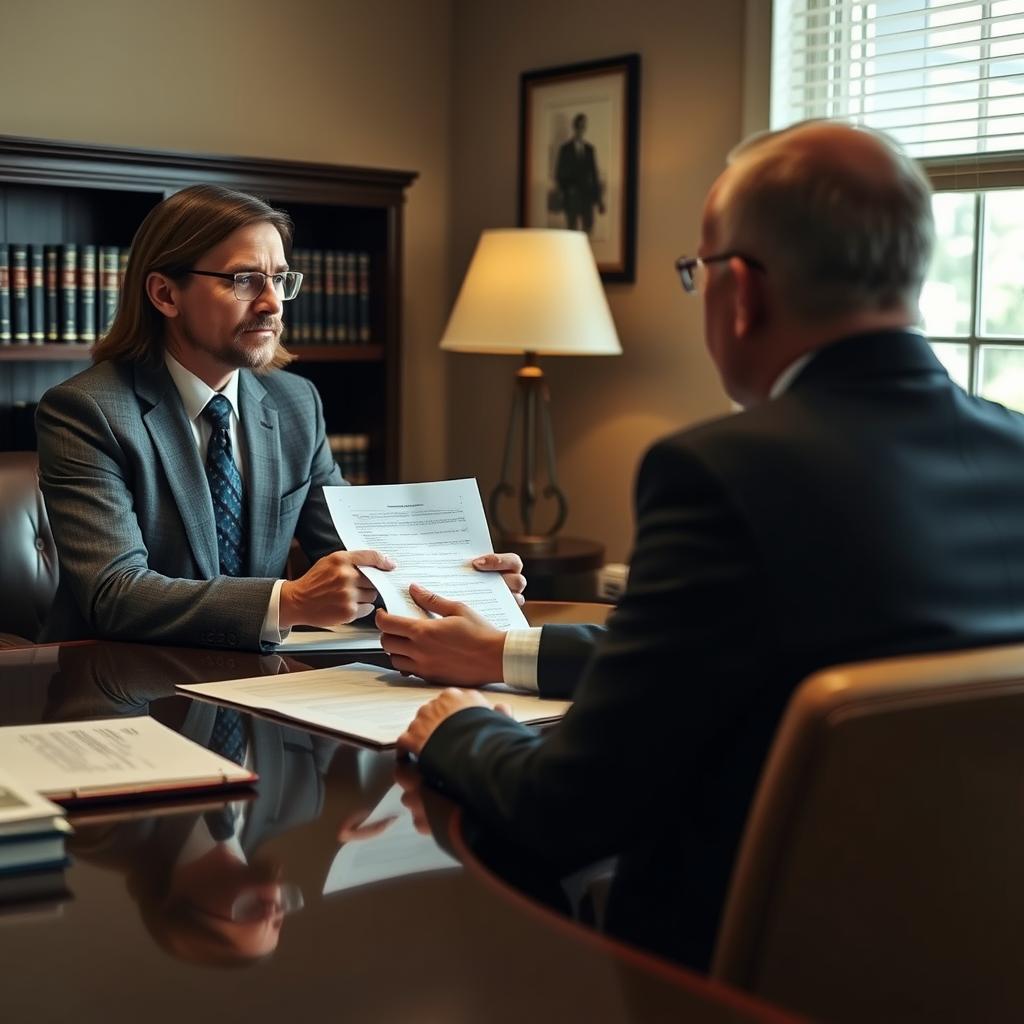
Aiding and Abetting lawyer Goochland County, VA
Federal criminal charges can arise from actions that, at first glance, seem peripheral. If you face an allegation that you assisted another person in committing a federal offense in Goochland County, Virginia, you are exposed to the same penalties as the principal actor under the federal aiding-and-abetting statute, 18 U.S.C. § 2. These prosecutions are handled by the U.S. Attorney’s Office for the Eastern District of Virginia — a district known for its active docket and high conviction rates. Aiding and abetting is not a separate, lesser charge; it makes you equally liable for the underlying crime, whether that offense involves fraud, drug trafficking, firearms violations, or any other conduct that falls within federal jurisdiction. Mr. Sris and his Of Counsel represent individuals throughout Goochland County who are facing federal aiding-and-abetting allegations. To discuss your situation, reach Law Offices Of SRIS, P.C. at (888) 437-7747. Law Offices Of SRIS, P.C. – Advocacy Without Borders.
What Aiding and Abetting Means in Goochland County, VA
Under federal law, a person who “aids, abets, counsels, commands, induces or procures” the commission of an offense is punishable as a principal. This means a prosecutor does not need to prove that you personally carried out every element of the crime; it is enough that you intentionally assisted or encouraged the unlawful act. The U.S. District Court for the Eastern District of Virginia, which covers Goochland County, applies this principle in cases ranging from white-collar conspiracies to violent federal felonies. Because federal jurisdiction can attach to a surprisingly broad range of conduct — including activities that cross state lines, involve federal property, or implicate federal regulatory schemes — a charge that originates in Goochland County may be prosecuted in the Richmond Division or another division of the EDVA.
The federal criminal process differs fundamentally from state court practice. Federal grand juries hand down indictments, detention hearings take place before magistrate judges, and sentencing is governed by the United States Sentencing Guidelines. There is no parole in the federal system. Aiding-and-abetting liability often arises in the context of conspiracies, where multiple defendants are charged together and the government seeks to hold each participant responsible for the entire scope of the criminal enterprise. Because the government’s theory is frequently built on electronic evidence, financial records, and cooperating witnesses, an early and thorough review of the factual record is essential. Our Richmond location serves clients in Goochland County and the surrounding communities, including Crozier and Oilville.
How Mr. Sris and His Of Counsel Handle Aiding and Abetting Cases
Federal aiding-and-abetting matters require a defense strategy that challenges both the sufficiency of the government’s evidence and the scope of the defendant’s alleged involvement. Mr. Sris and his Of Counsel begin by examining every communication, financial transaction, and piece of testimony the government intends to rely upon. The goal is to demonstrate that the accused lacked the specific intent to facilitate the underlying offense or that the government cannot prove the requisite connection between the defendant’s conduct and the charged crime. Because federal prosecutors often use aiding-and-abetting theories to cast a wide net, it is not unusual for peripheral actors to face charges that overstate their actual participation. Our attorneys work to separate the client’s conduct from the broader conspiracy and to develop a factual record that supports a far narrower view of the case.
We also focus on procedural and sentencing mitigation early in the matter. The federal sentencing guidelines are driven by offense level and criminal history, and a defendant convicted under an aiding-and-abetting theory faces the same guideline range as the principal. That makes every motion, every evidentiary challenge, and every negotiation critical. Mr. Sris, a former prosecutor, brings firsthand insight into how the U.S. Attorney’s Office constructs these cases and what it takes to present a persuasive alternative narrative. The Of Counsel team adds further depth, ensuring that no procedural opportunity is missed. Whether the matter is resolved through motions practice, a plea negotiation, or trial, our approach is methodical and grounded in a detailed understanding of the federal rules.
About Mr. Sris and His Of Counsel Team
Mr. Sris is the Owner and Founder of Law Offices Of SRIS, P.C. He practices in Virginia, Maryland, the District of Columbia, New Jersey, and New York. His experience as a former prosecutor gives him a practical understanding of how the government investigates and charges federal crimes, including the use of aiding-and-abetting and conspiracy theories to broaden a case. Mr. Sris testified before the Virginia House Courts of Justice Committee in support of 2019 HB 635 (chief patron Del. David Bulova).
Mr. Sris and his Of Counsel bring extensive combined legal experience. Results may vary. The Of Counsel attorneys who assist in federal criminal matters are engaged through Excella and are admitted in the jurisdictions where they practice. Together, the team has handled federal matters across multiple districts, including the Eastern District of Virginia. The firm’s Richmond location serves clients in Goochland County by appointment. Reach Law Offices Of SRIS, P.C. at (888) 437-7747 to request a consultation.
Frequently Asked Questions
What is the difference between state and federal charges?
Federal charges are prosecuted by the U.S. Attorney’s Office in federal court and are governed by the Federal Rules of Criminal Procedure and the U.S. Sentencing Guidelines. Generally, federal penalties are more severe, and the federal system does not offer parole. A charge that could be handled in state court may become federal if it involves interstate commerce, a federal agency, or a federal statute. An experienced federal defense attorney can help you understand the differences that apply to your case.
How do federal sentencing guidelines work in Goochland County, Virginia?
Federal cases arising in Goochland County are heard in the U.S. District Court for the Eastern District of Virginia, which applies the U.S. Sentencing Guidelines. The guidelines calculate a sentencing range based on the offense level and the defendant’s criminal history category. Although the guidelines are advisory after the Supreme Court’s decision in United States v. Booker, judges in the EDVA take them seriously. Mandatory minimum statutes override guideline ranges in many drug, firearm, and child-exploitation offenses. Mitigating factors — such as acceptance of responsibility, substantial assistance, or safety-valve eligibility — can reduce exposure. For advice on your matter, reach Law Offices Of SRIS, P.C. at (888) 437-7747.
How does a Virginia lawyer defend against aiding and abetting charges?
A defense against a federal aiding-and-abetting charge typically involves examining the prosecution’s evidence for gaps in proof of intent and participation. An attorney will challenge the notion that the defendant knowingly and willfully assisted the criminal venture. Other strategies include scrutinizing the validity of search warrants, electronic surveillance, and witness accounts. Because the federal system allows for plea negotiations that may limit exposure, an experienced attorney can assess whether a resolution short of trial is appropriate. Every defense is built on the specific facts of the case.
What should I do if I am facing aiding and abetting charges in Virginia?
Contact a federal criminal defense attorney as soon as you are aware of an investigation or charge. Preserve any documents, electronic messages, or financial records that may be relevant. Do not discuss the facts with anyone other than your lawyer, and do not post about the situation on social media. Early engagement with counsel can affect the course of an investigation, including the possibility of avoiding an indictment or shaping the charging theory. Call (888) 437-7747 to speak with Law Offices Of SRIS, P.C.
What are the penalties for aiding and abetting in Virginia?
Because federal aiding and abetting is not a separate crime, the penalty is the same as the penalty for the underlying offense. If the underlying charge is a felony that carries a multi-year prison sentence, the defendant faces that same sentence — without the possibility of parole. Fines, supervised release, forfeiture, and restitution may also be imposed. The precise penalty depends on the statute under which the underlying crime is charged and on the federal sentencing guidelines calculation. For case-specific information, consult with a federal criminal attorney.
Official resources: U.S. District Court, Eastern District of Virginia | 18 U.S.C. § 2 | Virginia Judicial System
Attorney advertising. Prior results do not guarantee a similar outcome. Results may vary.
Case results depend on a variety of factors unique to each case.