


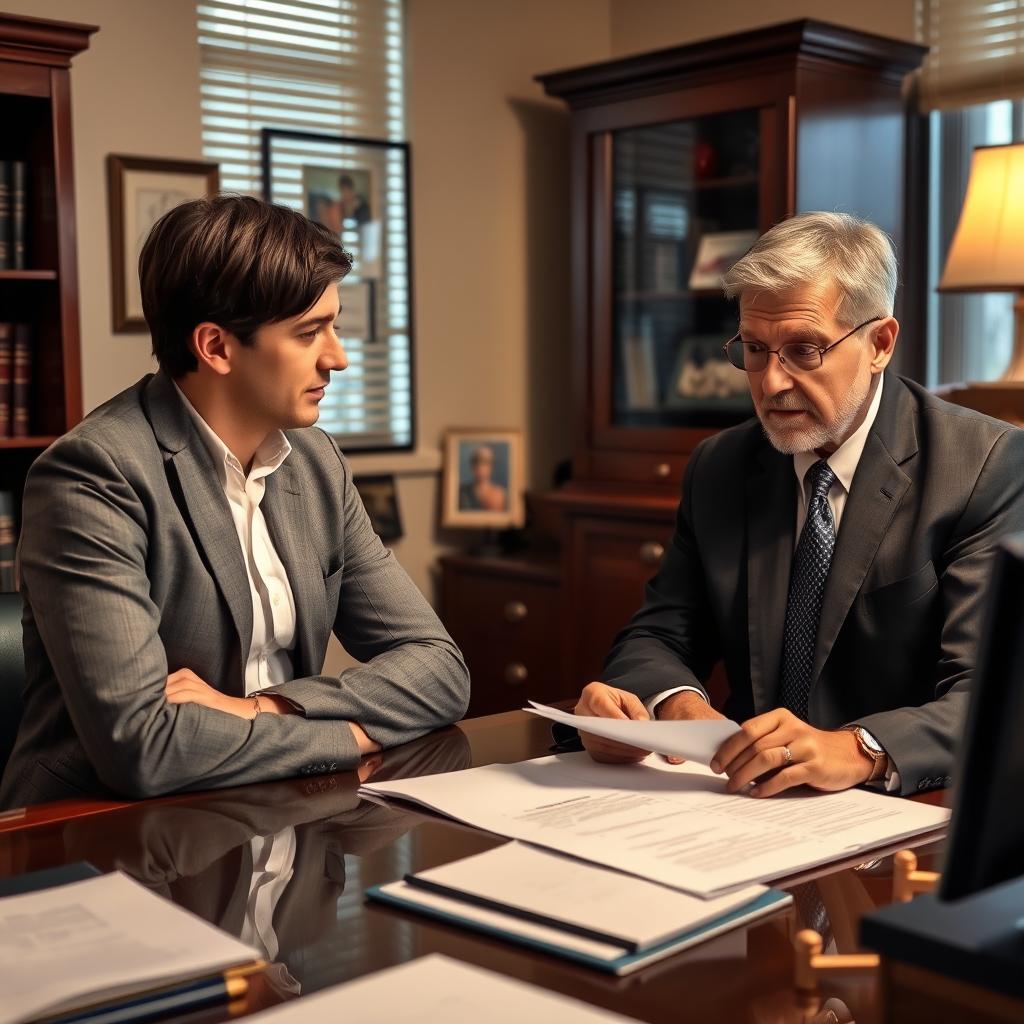
Conspiracy to Commit Fraud lawyer Isle of Wight County, VA
When federal prosecutors charge conspiracy to commit fraud, the case is heard in the United States District Court for the Eastern District of Virginia (EDVA) — the federal court that serves Isle of Wight County. A conspiracy‑to‑commit‑fraud charge under 18 U.S.C. §§ 1341–1349 alleges an agreement between two or more people to participate in a scheme to defraud, with the potential for significant imprisonment, fines, and asset forfeiture. The U.S. Attorney’s Office builds these cases using the resources of agencies such as the FBI, IRS‑Criminal Investigation, and the U.S. Postal Inspection Service, often after a lengthy grand‑jury investigation. Law Offices Of SRIS, P.C. – Advocacy Without Borders.
Mr. Sris, Owner and Founder of Law Offices Of SRIS, P.C., has concentrated a substantial part of his practice on federal criminal defense since 1997. He and his Of Counsel regularly appear before the EDVA, representing individuals from Isle of Wight County and across Virginia. The firm is familiar with the federal sentencing guidelines, the procedural rules that govern detention hearings and discovery, and the strategic judgments that influence whether a conspiracy investigation ends in an indictment or a favorable resolution. To request a consultation, reach Law Offices Of SRIS, P.C. at (888) 437-7747.
What Conspiracy to Commit Fraud Means in Isle of Wight County
Isle of Wight County sits within the EDVA, whose courthouses in Newport News, Norfolk, Richmond, and Alexandria handle federal felony prosecutions. A federal conspiracy charge differs from a state fraud charge; it arises under Title 18 of the United States Code and is brought by the U.S. Attorney rather than a local commonwealth’s attorney. The common conspiracy‑to‑commit‑fraud statutes cover mail fraud, wire fraud, bank fraud, health‑care fraud, and securities fraud. Under 18 U.S.C. § 1349, any person who conspires to commit an offense defined in the federal fraud chapter faces the same penalty as the completed offense. The government must prove an agreement and an overt act in furtherance of the agreement. Federal conviction rates exceed 90%, and the sentencing guidelines often lead to incarceration lengths that cannot be reduced by parole — the federal system abolished parole in 1987.
Federal investigations often begin long before charges are filed. In Isle of Wight County matters, the lead investigative agencies may be the FBI, the Drug Enforcement Administration, or the IRS, depending on the nature of the alleged scheme. The grand‑jury process is conducted in secrecy, and a target may not learn of the investigation until an indictment is returned. Once indicted, the defendant faces an initial appearance and a detention hearing where the magistrate judge determines pretrial release. Because the EDVA uses a “rocket docket” in some cases, the timeline from indictment to trial can move quickly, but complex conspiracy cases frequently take many months to resolve. Throughout the process, the U.S. Sentencing Guidelines shape every decision, from plea bargaining to sentencing recommendations.
How Mr. Sris and His Of Counsel Handle Conspiracy to Commit Fraud Cases
Mr. Sris and his Of Counsel approach a federal conspiracy investigation by engaging early — often before an indictment is returned. Early intervention can influence whether charges are filed, particularly when counsel can present exculpatory information to the U.S. Attorney’s Office or the investigating agency. The firm reviews the government’s evidence, identifies weaknesses in the alleged agreement, and evaluates whether any communications or financial records undercut the existence of a criminal conspiracy. Because conspiracy charges often rest on circumstantial proof, a thorough examination of the government’s theory is essential.
After indictment, the firm files appropriate motions — including motions to suppress evidence obtained through questionable searches or coercive interviews — and explores whether the government has overreached in its charging theory. Mr. Sris and his Of Counsel negotiate with federal prosecutors when a pre‑trial resolution serves the client’s interests, but they are prepared to take the case to trial when the facts warrant. The team also addresses sentencing exposure early, working with forensic accountants and mitigation attorneys when the guidelines call for a substantial sentence. Every defense strategy is tailored to the particular statute charged, the division of the EDVA where the case is pending, and the client’s objectives.
About Mr. Sris and His Of Counsel Team
Mr. Sris is a former prosecutor who founded Law Offices Of SRIS, P.C. in 1997. He is admitted in Virginia, Maryland, the District of Columbia, New Jersey, and New York. Over more than twenty‑five years, he has defended individuals facing serious federal charges, including conspiracy, fraud, money laundering, and controlled‑substance offenses. He testified before the Virginia House Courts of Justice Committee in support of 2019 HB 635 (chief patron Del. David Bulova).
Mr. Sris and his Of Counsel bring extensive combined legal experience. Results may vary. The team concentrates on federal criminal defense and understands the nuances of the EDVA’s divisions, the assistant U.S. Attorneys who prosecute fraud cases, and the sentencing judges’ practices. The firm maintains a Richmond location — 7400 Beaufont Springs Drive, Suite 300, Room 395, Richmond, VA 23225 — by appointment only, and serves clients throughout the Eastern District.
Frequently Asked Questions
What is the difference between state and federal charges?
Federal charges are prosecuted by the United States Attorney’s Office, while state charges are brought by a local district attorney or commonwealth’s attorney. In the federal system, the penalties are generally harsher, the sentencing guidelines are binding in practice, and there is no parole. Federal investigations also tend to be longer and involve multiple agencies. Because the procedural rules and discovery obligations are different from those in state court, retaining a lawyer who practices in federal court is critical. If you are facing a federal conspiracy charge in Isle of Wight County, contact Law Offices Of SRIS, P.C. at (888) 437-7747 for a consultation.
What is federal criminal court and how is it different in VA?
Federal criminal court in Virginia is the U.S. District Court for the Eastern District of Virginia (EDVA) or the Western District of Virginia. Federal cases are prosecuted by assistant U.S. Attorneys, not by local prosecutors. The rules of evidence and criminal procedure are federal, and the jury pool is drawn from a larger geographic area. Sentencing is determined by the U.S. Sentencing Guidelines. The EDVA is known for handling cases efficiently, and many judges expect rapid pretrial motion practice. Mr. Sris and his Of Counsel are familiar with the EDVA’s procedures.
How do federal sentencing guidelines work in Isle of Wight County, Virginia?
Federal sentencing in the EDVA follows the U.S. Sentencing Guidelines, which calculate a recommended sentence based on the offense level and the defendant’s criminal history. Although the guidelines are advisory after United States v. Booker (2005), they strongly influence the sentence imposed. Mandatory minimum sentences apply to many drug and fraud offenses. A defendant may receive a lower sentence by accepting responsibility, cooperating with the government under § 5K1.1, or qualifying for the safety‑valve exception. An attorney can explain how the guidelines apply to a conspiracy charge.
Do I need a federal criminal defense lawyer in Isle of Wight County, Virginia?
Yes. Federal conspiracy charges are prosecuted by the U.S. Attorney’s Office with the full resources of the FBI and other agencies. The procedures in federal court — from detention hearings to discovery under the Jencks Act — are unlike state practice. A lawyer who concentrates on federal defense can evaluate the strength of the government’s case, negotiate with the AUSA, and advise on sentencing exposure. Early engagement before indictment can materially affect the outcome. Law Offices Of SRIS, P.C. handles federal criminal defense; call (888) 437-7747 to schedule a consultation.
What is conspiracy to commit fraud under federal law?
Under 18 U.S.C. § 1349, it is a crime for two or more persons to agree to commit any offense defined in the federal fraud chapter — such as mail fraud, wire fraud, or bank fraud. The government must prove the existence of the agreement and at least one overt act taken to further it. A person can be convicted of conspiracy even if the underlying fraud was never completed. The maximum penalty for conspiracy to commit fraud is the same as the penalty for the completed offense. A conspiracy charge often carries forfeiture allegations and restitution orders.
How does a Virginia lawyer defend against conspiracy to commit fraud charges?
Defense strategies may include challenging the existence of an agreement, showing that the defendant had no intent to defraud, or attacking the credibility of cooperating witnesses. A lawyer may also argue that the government’s evidence was obtained unlawfully and move to suppress it. In many cases, the defense works to show that the alleged conduct was a legitimate business transaction, not a criminal scheme. An experienced federal criminal attorney reviews every piece of discovery and evaluates whether the government can prove each element beyond a reasonable doubt. For case‑specific guidance, call (888) 437-7747.
Also serving:
- Fairfax County Federal Criminal Defense
- Prince William County Federal Criminal Defense
- Fairfax City Federal Criminal Defense
- Falls Church Federal Criminal Defense
- Virginia Federal Criminal Defense Overview
Primary law sources:
Attorney advertising. Prior results do not guarantee a similar outcome.
Case results depend on a variety of factors unique to each case.