


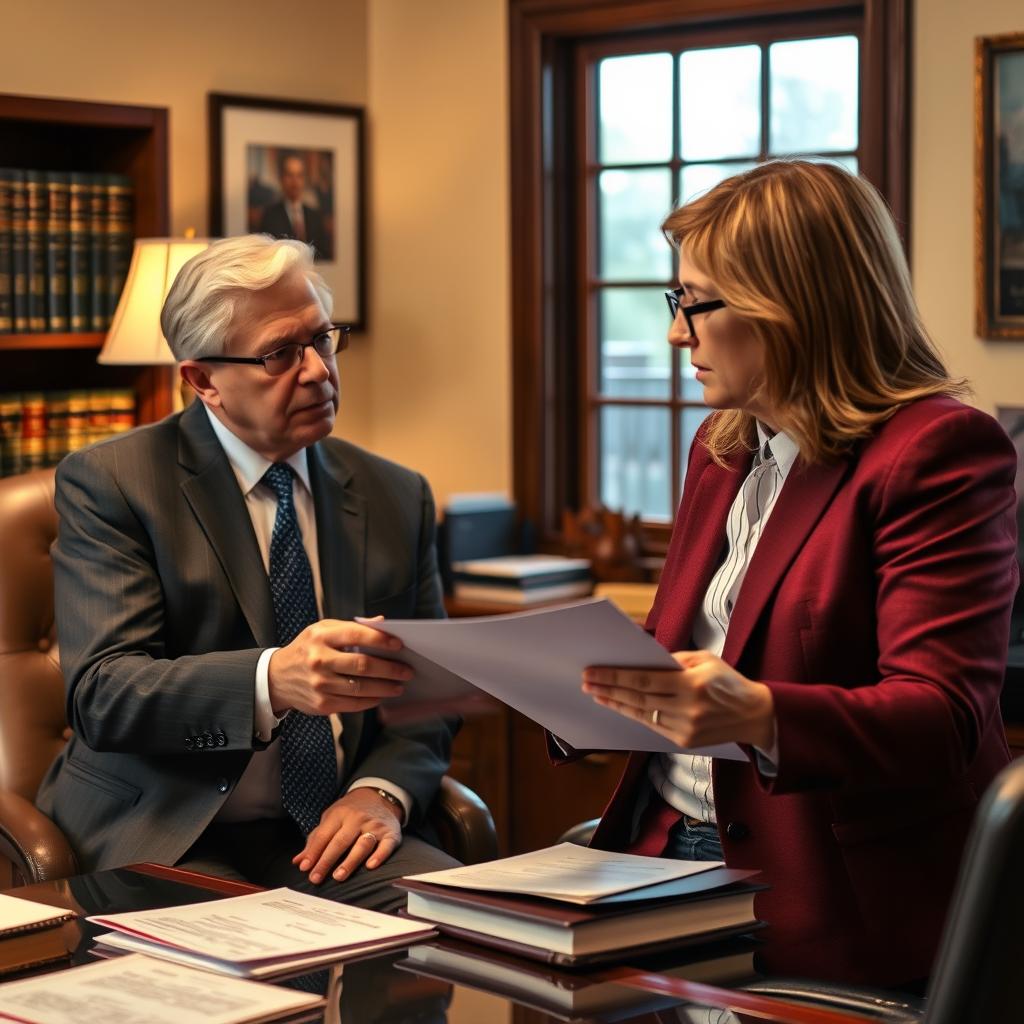
Destruction or Falsification of Records lawyer Virginia, VA
Federal prosecutors in Virginia actively pursue charges under 18 U.S.C. § 2071 and § 1519 when they believe records have been destroyed, altered, or concealed during the course of an investigation or bankruptcy proceeding. These charges carry the full weight of the U.S. Department of Justice, including grand jury subpoena power and the threat of substantial incarceration. Law Offices Of SRIS, P.C. Concentrates its practice on defending individuals and businesses facing such allegations in the U.S. District Courts for the Eastern and Western Districts of Virginia. Mr. Sris and the firm’s Of Counsel attorneys work to protect the rights of clients from the earliest investigative stage through trial and sentencing. Reach Law Offices Of SRIS, P.C. at (888) 437-7747 to request a consultation about a destruction or falsification of records matter in Virginia. Law Offices Of SRIS, P.C. – Advocacy Without Borders.
What Destruction or Falsification of Records Means in Virginia
Virginia’s two federal judicial districts—the Eastern District, based in Alexandria and Richmond, and the Western District, based in Roanoke—have jurisdiction over all federal criminal prosecutions arising within the Commonwealth. Investigations involving alleged record destruction typically involve federal agencies such as the FBI, the IRS Criminal Investigation Division, or inspectors general from various executive departments. Because these agencies possess broad subpoena authority and often obtain search warrants early in an investigation, documentary evidence becomes central to the government’s case. A person who is contacted by a federal agent about missing or altered records should seek counsel immediately, as statements made during those interactions can later form the basis of an obstruction or false statement charge.
The federal criminal code defines several overlapping offenses that can apply when records are at issue. Section 2071 addresses the willful and unlawful concealment, removal, mutilation, obliteration, or destruction of any record, document, or other thing filed or deposited in any public office or with any judicial or public officer. Section 1519, enacted as part of the Sarbanes-Oxley Act, prohibits knowingly altering, destroying, mutilating, concealing, covering up, falsifying, or making a false entry in any record, document, or tangible object with the intent to impede, obstruct, or influence the investigation or proper administration of any matter within the jurisdiction of any department or agency of the United States. Both statutes are routinely charged together when the government believes a systemic effort was made to hide information. Because the statutory language is broad, the scope of conduct that can support an indictment is wider than many defendants expect.
How Mr. Sris and the Firm’s Of Counsel Attorneys Handle Federal Destruction or Falsification Cases
Representation in a federal records case often begins before any formal charge is filed. When a client learns of a pending investigation—whether through a grand jury subpoena, a search warrant, or a target letter—the firm moves to understand what records the government seeks and what evidence may already exist. Early intervention enables counsel to assess potential exposure, advise the client on document-preservation obligations, and engage with the Assistant United States Attorney assigned to the matter. Once an indictment is returned, the defense team focuses on the discovery the government must produce under the Federal Rules of Criminal Procedure and on any pretrial motions that may narrow the charges or suppress evidence obtained in violation of the Fourth Amendment.
Federal sentencing in record-related offenses is driven by the United States Sentencing Guidelines. A district judge considers the specific characteristics of the offense, including the volume of records involved, whether the destruction was isolated or systematic, and whether the charged conduct was intended to obstruct a specific proceeding. The firm’s Of Counsel attorneys examine each guideline calculation carefully and, where appropriate, present mitigating evidence so the court can consider a sentence below the advisory range. Throughout the process, Mr. Sris and the firm’s Of Counsel attorneys explain each step to the client so decisions about plea offers or trial strategy are made with a clear understanding of the risks and possibilities.
About Mr. Sris and the Firm’s Of Counsel Attorneys
Mr. Sris, Owner and Founder of Law Offices Of SRIS, P.C., has been practicing since 1997 and is admitted in Virginia, Maryland, the District of Columbia, New Jersey, and New York. He is a former prosecutor with experience in criminal trial work, giving him insight into how federal investigations are assembled and prosecuted. Mr. Sris testified before the Virginia House Courts of Justice Committee in support of 2019 HB 635 (chief patron Del. David Bulova). He personally oversees the firm’s federal criminal defense practice, working alongside Of Counsel attorneys admitted in Virginia federal courts. Collectively, Mr. Sris and the firm’s Of Counsel attorneys bring extensive combined legal experience to destruction and falsification matters. Results may vary.
The firm’s Fairfax location serves clients throughout the Commonwealth. Federal cases are handled in the Alexandria and Richmond divisions of the Eastern District and in the Western District in Roanoke. Because each division has its own procedural customs and sentencing tendencies, having counsel familiar with local practice is a significant advantage. The firm’s Of Counsel attorneys appear regularly in these courthouses. Potential clients can reach the firm at (888) 437-7747 to discuss how the team can assist with a pending or anticipated federal charge involving records.
Frequently Asked Questions
What should I do if I am facing destruction or falsification of records charges in Virginia?
If you are contacted by federal agents or have reason to believe you are under investigation, the most important step is to contact experienced federal criminal defense counsel before speaking with anyone about the matter. Once you retain counsel, your attorney can communicate with the investigating agency and the U.S. Attorney’s Office on your behalf. Do not attempt to explain yourself or provide documents without legal guidance; any statement you make can be used to support an obstruction charge. The firm advises clients to preserve all records in their possession and to avoid discussing the case with colleagues, friends, or family members. For guidance tailored to your situation, reach Law Offices Of SRIS, P.C. at (888) 437-7747.
How does a Virginia lawyer defend against destruction or falsification of records charges?
Defense strategies in federal records cases often focus on challenging the government’s ability to prove the element of intent and examining whether any record that is missing or altered was actually required to be maintained by law. An attorney may also investigate whether the government’s evidence was obtained through a defective warrant or whether the charged conduct falls outside the statute of limitations. In some situations, a defense may show that the records were destroyed as part of a routine document-retention policy and not with the purpose of impeding an investigation. Each case is fact-specific; an initial consultation with the firm allows an evaluation of the available defenses.
What are the penalties for destruction or falsification of records in a federal case in Virginia?
Federal sentencing guidelines authorize substantial prison terms and significant fines for record-related offenses, with the specific penalty dependent on the nature of the records, the defendant’s role in the conduct, and any resulting harm. Unlike most state systems, the federal system has no parole mechanism; a convicted person serves the majority of the imposed sentence. Judges retain discretion to depart from the guideline range when the facts warrant, but they must state their reasons on the record. Consulting early with counsel allows a defendant to understand the sentencing exposure and identify the most favorable path forward.
Can I be charged if I destroyed records before I knew about any investigation?
A charge under 18 U.S.C. § 1519 requires the government to prove that the defendant acted with the intent to impede, obstruct, or influence a matter within federal jurisdiction; if the destruction occurred entirely before any investigation was reasonably foreseeable, the statute may not apply. However, the government may seek to show that the defendant anticipated an investigation based on surrounding circumstances. Section 2071 does not contain the same explicit nexus requirement but still requires that the destruction be willful and unlawful. Legal counsel can assess whether the government’s timeline fits the elements of the charged statute. To discuss the particulars of your matter, contact Law Offices Of SRIS, P.C. at (888) 437-7747.
Does the firm handle destruction or falsification cases arising from business records and government audits?
Yes, Law Offices Of SRIS, P.C. represents individuals and businesses in federal records investigations stemming from grand jury subpoenas, agency audits, and Inspector General inquiries. These matters often involve complex records-management issues and require counsel who understands both the criminal exposure and the client’s ongoing business obligations. Mr. Sris and the firm’s Of Counsel attorneys work with clients to ensure that document preservation obligations are met while protecting the client’s Fifth Amendment rights. For a consultation, reach the firm at (888) 437-7747.
Related legal services: Federal Criminal Defense Fairfax County · Federal Criminal Defense Fairfax City · Federal Criminal Defense Falls Church · Federal Criminal Defense Prince William County · Federal Criminal Defense Manassas
Attorney advertising. Prior results do not guarantee a similar outcome.
Results may vary.
Case results depend on a variety of factors unique to each case.