


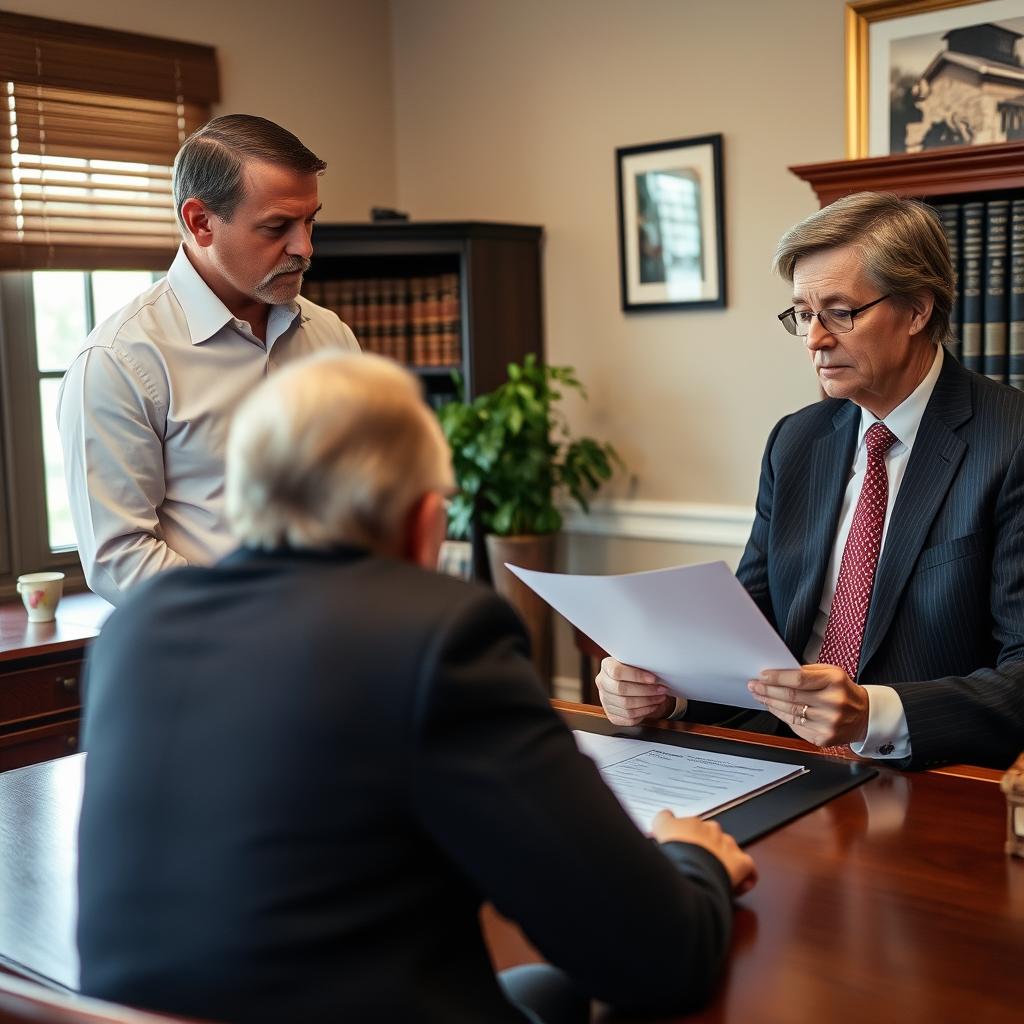
Landlord Tenant Lawyer Dinwiddie County, VA
Landlord-tenant disputes in Dinwiddie County, Virginia, can disrupt your home or business. Whether it is a residential eviction, a security-deposit claim, a lease violation, or a commercial rent disagreement, the legal process moves through the Dinwiddie County General District Court or the Circuit Court under Virginia’s civil litigation rules. The Virginia Residential Landlord and Tenant Act (VRLTA) and Title 8.01 of the Virginia Code set out the procedures for filing an action, responding to a complaint, and presenting evidence. Understanding the interplay between those statutes and the local court’s practices helps avoid costly missteps. Law Offices Of SRIS, P.C., founded in 1997, concentrates its practice on civil litigation, including landlord-tenant matters. Mr. Sris, a former prosecutor, and his Of Counsel team bring decades of courtroom experience to every case. From the initial filing through motions, discovery, and trial, the firm represents clients in Dinwiddie County courts. Reach Law Offices Of SRIS, P.C. at (888) 437-7747. Law Offices Of SRIS, P.C. — Advocacy Without Borders.
What Landlord Tenant Means in Dinwiddie County
Landlord-tenant law in Dinwiddie County encompasses residential and commercial lease disputes litigated in the Virginia court system. The Dinwiddie County General District Court, located at the Dinwiddie Courthouse in Dinwiddie, Virginia 23841, handles civil claims that do not exceed a certain amount, exclusive of interest and attorney fees, under applicable law. Claims not exceeding a lower amount fall within its exclusive original jurisdiction, while claims between that lower amount and the upper limit are concurrent with the Circuit Court. The Circuit Court hears matters above the upper limit. An eviction action, known as an unlawful detainer, must be filed in the General District Court unless the amount in controversy exceeds the jurisdictional limit. The VRLTA (et seq.) governs most residential tenancies and imposes specific notice, filing, and procedural requirements that differ from general civil litigation rules.
Representation by experienced counsel can make a difference in a landlord-tenant dispute because the deadlines for responding, requesting a jury trial, and appealing are narrow. Law Offices Of SRIS, P.C. serves clients in Dinwiddie County from its Richmond location at 7400 Beaufont Springs Drive, Suite 300, Room 395, Richmond, Virginia 23225. Meetings are by appointment only; call (888) 437-7747 to schedule. Mr. Sris and his Of Counsel appear regularly in General District and Circuit Courts across the Eleventh Judicial District. The firm evaluates each case for proper jurisdiction, appropriate claims, and available defenses, drawing on practical litigation experience to guide landlords and tenants through the court process.
How Mr. Sris and His Of Counsel Handle Landlord Tenant Cases
Each landlord-tenant matter begins with a careful review of the lease, correspondence, payment records, and any notices the parties exchanged. The firm then identifies the appropriate court and cause of action — unlawful detainer, breach of contract, recovery of personal property, or a declaratory judgment — and prepares the complaint or responsive pleading. In General District Court, cases move quickly; responses are often due within a few days of service. In Circuit Court, the process allows for formal discovery, including interrogatories, document requests, and depositions. Mr. Sris’s experience as a former prosecutor gives him a practical understanding of how to examine witnesses and challenge evidence effectively, skills that carry over into civil landlord-tenant trials.
The firm prioritizes resolving disputes efficiently. Many cases reach a negotiated resolution before trial — whether through a settlement agreement, a consent judgment, or a voluntary dismissal — when that is in the client’s best interest. When trial is necessary, Mr. Sris and his Of Counsel present the case methodically, focusing on the facts that the court will consider under the applicable statutes. Throughout the matter, the firm keeps clients informed about deadlines, court dates, and strategy. Every case is handled with an eye toward the client’s practical goals, whether that means regaining possession of a rental property, recovering unpaid rent, or obtaining a repair order against a non‑compliant landlord.
About Mr. Sris and His Of Counsel Team
Mr. Sris, Owner and Founder of Law Offices Of SRIS, P.C., has practiced since 1997. He is admitted in Virginia, Maryland, the District of Columbia, New Jersey, and New York. Mr. Sris testified before the Virginia House Courts of Justice Committee in support of 2019 HB 635 (chief patron Del. David Bulova). His background as a former prosecutor informs the firm’s litigation approach, particularly in contested hearings and trials. Mr. Sris and his Of Counsel bring over 120 years of combined legal experience and have achieved 4,739+ documented firm-wide results. Results may vary.
Mr. Sris is joined by a team of Of Counsel attorneys, each with substantial courtroom experience across multiple practice areas. The Of Counsel attorneys are engaged through Excella and focus on litigation, family law, criminal defense, and civil disputes. Collectively, the team provides clients in Dinwiddie County with thorough preparation and strategic advocacy. All attorneys maintain active bar memberships and stay current with developments in Virginia civil procedure and landlord-tenant law.
Frequently Asked Questions
What is civil litigation and how does it work in Dinwiddie County?
Civil litigation in Dinwiddie County is the formal process for resolving non‑criminal disputes through the Virginia court system. A plaintiff files a complaint, and the defendant responds with an answer or other pleading. The case proceeds through discovery, motions, and, if necessary, a trial. In landlord‑tenant matters, the action is often an unlawful detainer filed in the General District Court when the amount in controversy is a certain amount or less. Law Offices Of SRIS, P.C. handles civil litigation from the initial filing through appeal. To discuss a specific landlord‑tenant dispute, call (888) 437‑7747 to schedule a consultation.
How long does a civil lawsuit take in Dinwiddie County?
The timeline for a civil lawsuit in Dinwiddie County depends on the court’s docket, the complexity of the issues, and whether the parties reach a settlement. A straightforward landlord‑tenant matter filed in the General District Court may be heard relatively quickly because those courts are designed for expedited proceedings. Cases in the Circuit Court can take longer due to formal discovery and motion practice. Each case is unique; there is no single predictable schedule. The firm works to move matters forward efficiently while protecting the client’s rights. Contact Law Offices Of SRIS, P.C. at (888) 437‑7747 to discuss your situation.
What types of landlord‑tenant cases does the firm handle in Dinwiddie County?
The firm represents both landlords and tenants in a variety of disputes. Common matters include residential evictions (unlawful detainer), security‑deposit recovery, lease‑violation enforcement, breach of contract claims, property‑damage actions, and commercial‑lease disputes. The team also handles declaratory‑judgment actions to clarify the rights and obligations of the parties under a lease. Whether the case involves a single‑family rental or a multi‑unit commercial property, the firm evaluates the facts under the Virginia Residential Landlord and Tenant Act and other applicable laws to determine an appropriate approach.
Do I need a lawyer for a landlord‑tenant dispute in Dinwiddie County?
You are not legally required to hire a lawyer for a landlord‑tenant case, but the procedural rules and deadlines in Virginia courts can be challenging to navigate without legal training. A mistake in a notice, pleading, or evidentiary presentation can affect the outcome. An experienced landlord‑tenant attorney can help you evaluate your position, prepare the necessary court documents, and advocate on your behalf at trial. Mr. Sris and his Of Counsel team offer consultations to help you decide whether representation is appropriate for your circumstances. Call (888) 437‑7747 to request a consultation.
Can a landlord‑tenant case be resolved without going to trial?
Yes. Many landlord‑tenant disputes are resolved through negotiation, mediation, or a consent judgment before a trial takes place. The firm explores settlement options at every stage and advises clients on the risks and benefits of each option. If the other party is unwilling to agree to a reasonable resolution, Mr. Sris and his Of Counsel are prepared to try the case in court. Resolving a matter without litigation often saves time and expense, but the firm’s trial experience ensures that clients have a strong advocate if a hearing is necessary.
How do I get started with a landlord‑tenant case in Dinwiddie County?
Contact Law Offices Of SRIS, P.C. at (888) 437‑7747 to schedule a consultation. During that initial meeting, an attorney will review the facts of your situation — the lease, any notices, and the relief you are seeking — and explain the legal options available under Virginia law. If you decide to move forward, the firm will prepare the appropriate pleadings and file them in the correct Dinwiddie County court. Early action is often important in landlord‑tenant matters because court dates and statutory deadlines can approach quickly. The team is available 24 hours a day, 365 days a year, by phone.
Related civil litigation resources:
Fairfax County civil litigation lawyer ·
Prince William County civil litigation lawyer ·
Manassas civil litigation lawyer ·
Fairfax City civil litigation lawyer ·
Falls Church civil litigation lawyer
Primary Virginia landlord‑tenant sources:
Virginia Residential Landlord and Tenant Act (VRLTA) ·
Virginia Code Title 8.01 (Civil Remedies and Procedure) ·
Virginia Judicial System
Attorney advertising. Prior results do not guarantee a similar outcome. Results may vary.
Case results depend on a variety of factors unique to each case.