


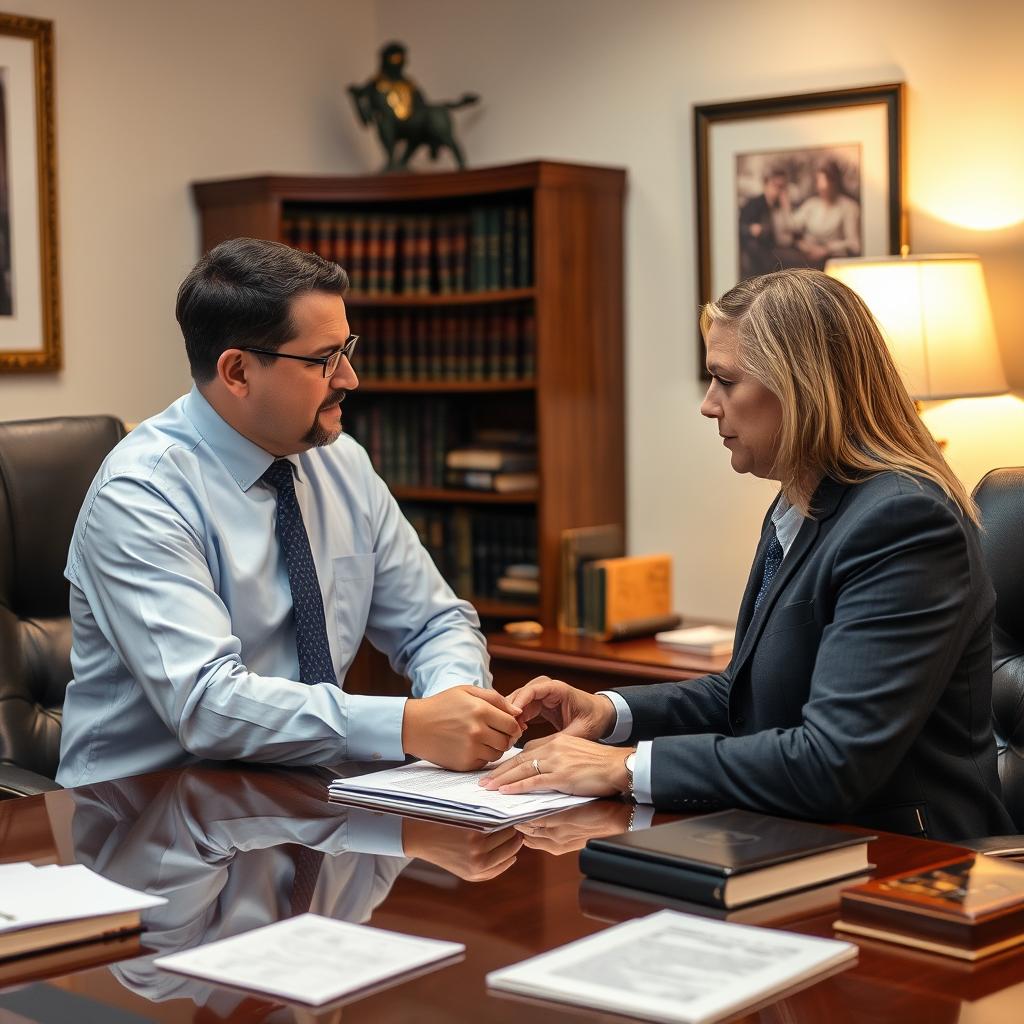
Manufacturing of Controlled Substances lawyer King William County, VA
Facing federal manufacturing of controlled substances charges in King William County, Virginia, places you in a high‑stakes legal situation. Federal drug manufacturing prosecutions under 21 U.S.C. § 841 carry the possibility of lengthy imprisonment, substantial fines, and mandatory minimum sentences that depend on the type and quantity of the controlled substance involved. Unlike state charges, federal cases are prosecuted by the U.S. Attorney’s Office for the Eastern District of Virginia, with investigations led by agencies such as the DEA, FBI, or ATF. If you are under investigation or have already been indicted, you need experienced federal criminal defense counsel who understands the federal court system, the U.S. Sentencing Guidelines, and the procedures of the Eastern District of Virginia. Law Offices Of SRIS, P.C. – Advocacy Without Borders.
Law Offices Of SRIS, P.C., founded in 1997, represents individuals facing federal manufacturing charges in King William County. Mr. Sris, a former prosecutor, and his Of Counsel team work to protect your rights at every stage—from grand jury investigation through trial and sentencing. Reach our firm at (888) 437‑7747 to schedule a consultation.
What Federal Manufacturing of Controlled Substances Charges Mean in King William County
Federal manufacturing of controlled substances is prosecuted under the Controlled Substances Act, and the Eastern District of Virginia handles all such cases arising in King William County. The Richmond Division of the U.S. District Court—located at 701 East Broad Street—serves as the primary venue for federal criminal matters throughout the region, including the rural communities of King William, West Point, and Aylett. Unlike Virginia state court, where a manufacturing charge may be handled in the King William County General District Court or Circuit Court, a federal manufacturing case begins with a grand jury indictment and proceeds under the Federal Rules of Criminal Procedure.
The federal system imposes significantly harsher penalties than state court. There is no parole in the federal system, and good‑time credit is limited. Mandatory minimum sentences are common in drug manufacturing cases, and the U.S. Sentencing Guidelines strongly influence the actual sentence imposed. Because the U.S. Attorney’s Office dedicates substantial resources to drug prosecutions—including multi‑agency task force investigations—mounting an effective defense requires counsel who is familiar with federal practice and the local procedures of the Eastern District of Virginia.
King William County’s location between Richmond and Williamsburg, served by Routes 30, 360, and 33, means that federal cases may involve activity across multiple counties. Our Richmond location routinely represents clients in King William County federal matters and can appear at the U.S. District Court on your behalf.
How Mr. Sris and His Of Counsel Handle Manufacturing Cases
Mr. Sris and his Of Counsel take a thorough, investigative approach to federal manufacturing charges. They begin by scrutinizing the government’s evidence—search warrants, wiretap applications, confidential informant reliability, lab reports, and the chain of custody of any seized substances. Federal agents must follow strict constitutional and statutory requirements; a violation of the Fourth Amendment or of the procedural rules governing electronic surveillance may lead to suppression of evidence or dismissal of charges.
The team works to identify weaknesses in the prosecution’s case at every stage. During the pre‑indictment phase, early engagement can sometimes persuade the U.S. Attorney’s Office not to seek an indictment or to narrow the scope of the charges. After indictment, Mr. Sris and his Of Counsel address pretrial detention, discovery issues, and potential motions practice. At sentencing, they advocate for downward departures under the U.S. Sentencing Guidelines—such as acceptance of responsibility, substantial assistance under § 5K1.1, or safety‑valve eligibility—and argue for a sentence below mandatory minimums where legally possible.
Because federal manufacturing cases often involve complex factual and scientific evidence—including chemical analysis, surveillance recordings, and financial records—the team works with forensic experts when necessary to challenge the government’s narrative. The firm’s multi‑state experience across Virginia, Maryland, the District of Columbia, New Jersey, and New York also means that related matters in other jurisdictions can be handled cohesively.
About Mr. Sris and His Of Counsel Team
Mr. Sris, Owner and Founder of Law Offices Of SRIS, P.C., is a former prosecutor who brings firsthand insight into how the government builds and presents federal drug cases. Mr. Sris testified before the Virginia House Courts of Justice Committee in support of 2019 HB 635 (chief patron Del. David Bulova). He is admitted to practice in Virginia, Maryland, the District of Columbia, New Jersey, and New York.
Mr. Sris’s Of Counsel team includes experienced litigators who handle federal criminal matters. Mr. Sris and his Of Counsel bring extensive combined legal experience. Results may vary.
Collectively, the team has represented clients across a broad range of federal criminal allegations, provides clients with a detailed and well‑prepared defense.
Frequently Asked Questions
What is federal manufacturing of controlled substances?
Federal manufacturing of controlled substances means producing, compounding, converting, processing, or otherwise creating any drug or substance listed under the Controlled Substances Act without legal authorization. This can include operating a clandestine laboratory, growing marijuana on federal property, or synthesizing fentanyl or methamphetamine. The charge is brought under 21 U.S.C. § 841 and prosecuted in the U.S. District Court for the Eastern District of Virginia when the alleged conduct occurs in King William County. For guidance on your specific situation, reach Law Offices Of SRIS, P.C. at (888) 437‑7747.
How does federal manufacturing differ from state‑level manufacturing charges?
Federal manufacturing charges are prosecuted by the U.S. Attorney’s Office, while state charges are handled by local Commonwealth’s Attorneys. Federal sentencing guidelines are generally harsher—there is no parole in the federal system—and mandatory minimum sentences often apply. The investigative resources are broader: federal agencies like the DEA or FBI may deploy wiretaps, undercover operations, and task forces that are not available to local law enforcement. An attorney experienced in federal practice understands these procedural and tactical differences. To discuss your matter, contact Law Offices Of SRIS, P.C. at (888) 437‑7747.
What are the potential penalties for federal manufacturing under 21 U.S.C. § 841?
The statute sets penalties that depend on the type and quantity of the controlled substance. Mandatory minimum prison terms range from five to ten years for smaller quantities, while larger quantities can carry twenty‑year to life sentences. Fines may reach into the millions of dollars, and supervised release following incarceration is standard. The U.S. Sentencing Guidelines calculate a recommended sentencing range based on offense level, criminal history, and aggravating or mitigating factors. Every case is unique; speaking with experienced counsel is essential to understand the exposure you face. Reach Mr. Sris and his Of Counsel at (888) 437‑7747.
Do I need a lawyer if I am being investigated for federal drug manufacturing?
Yes, immediately. Federal investigations do not always result in an arrest right away, but statements you make to agents can be used against you later. Retaining counsel early allows an attorney to communicate with the government on your behalf, preserve evidence, and potentially intervene before an indictment is returned. The earlier you engage representation, the more options you may have. For a consultation, reach Mr. Sris and his Of Counsel at (888) 437‑7747.
How does the defense team approach federal manufacturing cases?
The approach begins with a thorough review of all discovery, including the search warrant affidavit, lab reports, and agent notes. The team looks for constitutional violations, procedural errors, and weaknesses in the chain of custody. If the government’s proof cannot be challenged pre‑trial, the defense shifts to preparing for trial—with a focus on cross‑examining witnesses, presenting alternative theories, and relentlessly testing the government’s evidence. At sentencing, the team advocates for the lowest possible sentence under the guidelines and argues against any enhancements that the government may seek.
What should I do if I am contacted by federal agents about a manufacturing investigation?
Politely decline to answer questions and state that you wish to speak with an attorney. Do not consent to a search of your home, vehicle, or electronic devices without counsel present. Anything you say can be used as evidence. Contact an experienced federal criminal defense attorney as soon as possible. For guidance, reach Law Offices Of SRIS, P.C. at (888) 437‑7747.
Resources
For official information about the federal courts and sentencing, you may find these primary sources helpful:
• U.S. District Court for the Eastern District of Virginia
• U.S. Sentencing Commission — Federal Sentencing Guidelines
• U.S. Attorney’s Office — Eastern District of Virginia
Explore our firm’s federal criminal defense pages in nearby localities:
Federal Criminal Lawyer Fairfax County, VA |
Federal Criminal Lawyer Fairfax City, VA |
Federal Criminal Lawyer Falls Church City, VA |
Federal Criminal Lawyer Prince William County, VA |
Federal Criminal Lawyer Manassas City, VA
Attorney advertising. Prior results do not guarantee a similar outcome. Results may vary. Case results depend on a variety of factors unique to each case.