


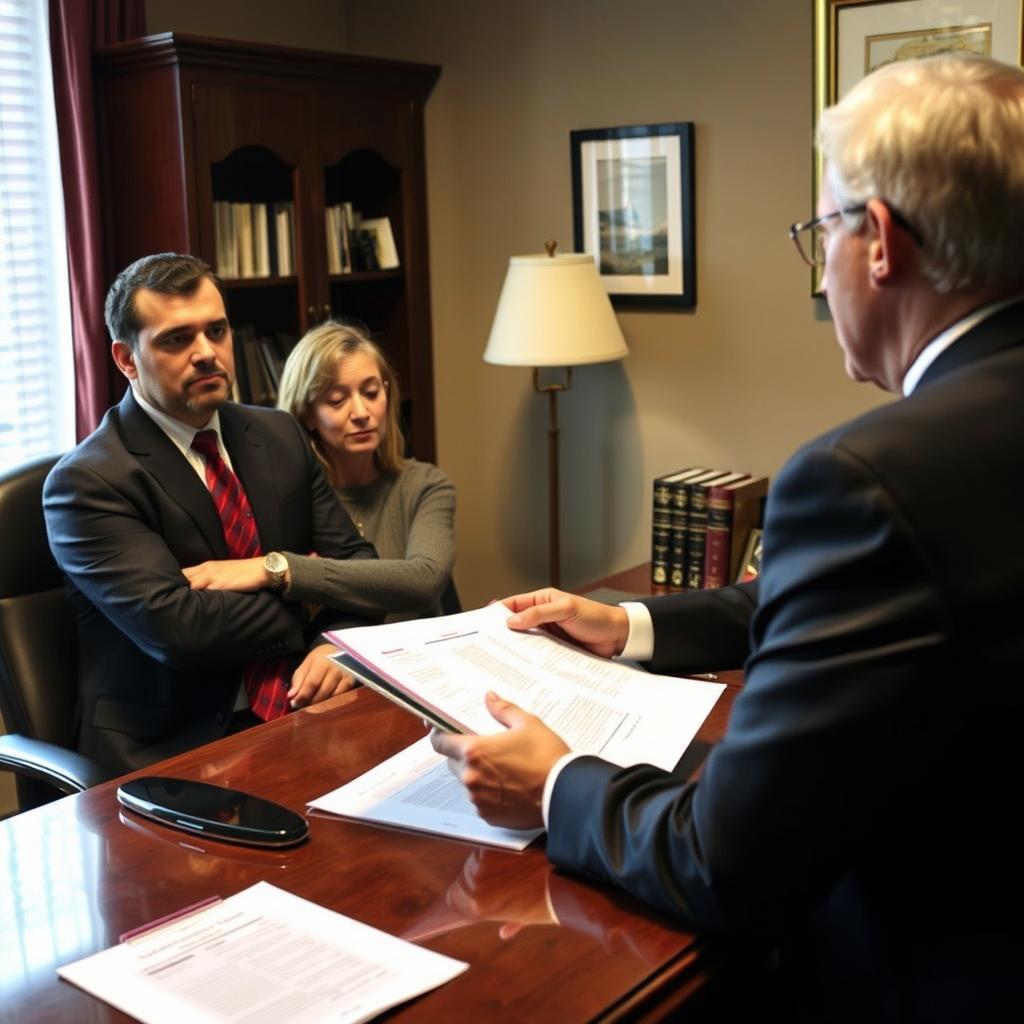
Possession of an Unregistered Firearm lawyer Prince George County, VA
Federal charges for possessing an unregistered firearm carry severe potential penalties and are prosecuted actively by the U.S. Attorney’s Office for the Eastern District of Virginia. For anyone facing such charges in Prince George County, the difference between a state misdemeanor and a federal felony is immense. In the federal system, there is no parole, sentencing guidelines are complex, and convictions can lead to years in a federal penitentiary. Mr. Sris, Owner and Founder of Law Offices Of SRIS, P.C., and the firm’s Of Counsel attorneys represent clients in federal criminal matters throughout Virginia, including Prince George County and the surrounding areas served by the Richmond Division of the U.S. District Court. To request a consultation about a pending or potential federal firearm charge, call (888) 437-7747.
Law Offices Of SRIS, P.C. – Advocacy Without Borders.
What Federal Firearm Possession Charges Mean in Prince George County
Federal firearm offenses are not handled in the Prince George County General District Court. Instead, they proceed in the U.S. District Court for the Eastern District of Virginia. The Richmond Division, located at 701 East Broad Street, is the federal venue for cases arising in Prince George County and much of central Virginia. If you are under investigation or have been indicted for possession of an unregistered firearm, you are facing a federal prosecution that follows a distinct set of rules and procedures, from grand jury indictment through sentencing under the U.S. Sentencing Guidelines.
Because the Eastern District of Virginia is known for its swift docket—often called the “Rocket Docket”—the timeline from indictment to trial can be compressed. Federal prosecutors have substantial resources, and convictions for federal firearm offenses can expose a defendant to mandatory minimum prison sentences and lengthy supervised release. Having counsel who is familiar with the local practices of the Richmond Division and the Assistant U.S. Attorneys assigned to firearm cases is critical. Mr. Sris and the firm’s Of Counsel attorneys appear regularly in federal court and work to ensure that every procedural and substantive defense is explored, from challenges to the legality of the search and seizure to the specific elements the government must prove beyond a reasonable doubt.
How Mr. Sris and His Of Counsel Handle Federal Firearm Possession Cases
When someone is charged with possession of an unregistered firearm in violation of federal law, the case typically begins with an investigation by the Bureau of Alcohol, Tobacco, Firearms and Explosives (ATF) or the FBI. Once a complaint is filed or a grand jury returns an indictment, the defendant is brought before a federal magistrate judge for an initial appearance. At that hearing, the court addresses pretrial release, and the government may seek detention. The firm’s approach focuses on early intervention: reviewing the charging instrument, examining the investigative file, and assessing whether constitutional or procedural violations occurred that could support a motion to suppress evidence or a motion to dismiss the indictment.
If the case proceeds, discovery is exchanged, and pretrial motions are filed. In many federal firearm cases, whether the weapon was actually “unregistered” under the National Firearms Act is a critical element the government must prove. The firm’s attorneys analyze whether the government can establish that the item meets the statutory definition of a firearm requiring registration. Throughout the process, Mr. Sris and his Of Counsel engage in discussions with the prosecution regarding the strength of the evidence and the potential for a resolution that avoids the most serious consequences. Should the matter go to trial, the firm is prepared to present a vigorous defense, cross-examine government witnesses, and challenge forensic testimony.
About Mr. Sris and His Of Counsel Team
Mr. Sris, Owner and Founder of Law Offices Of SRIS, P.C., is a former prosecutor who has practiced in Virginia since 1997. He is admitted in Virginia, Maryland, the District of Columbia, New Jersey, and New York, and he concentrates on federal criminal defense matters in the Eastern District of Virginia. His firsthand understanding of how prosecutors build cases informs the firm’s defense strategies. Mr. Sris testified before the Virginia House Courts of Justice Committee in support of 2019 HB 635 (chief patron Del. David Bulova).
The firm’s Of Counsel attorneys bring extensive combined legal experience. Mr. Sris and his Of Counsel have documented case results across all practice areas since 1997. Results may vary. To discuss a federal firearm matter with an experienced attorney, call (888) 437-7747.
Frequently Asked Questions
What is considered an unregistered firearm under federal law?
Under the National Firearms Act, certain weapons—including short‑barreled rifles, short‑barreled shotguns, machine guns, silencers, and destructive devices—must be registered with the federal government. Possessing such a weapon without a valid registration is a federal felony. The definition of a “firearm” under the NFA is broader than under many state laws, and whether a particular item requires registration depends on its physical characteristics and how it was made. The government bears the burden of proving that the item meets the statutory definition and that the defendant knowingly possessed it without registration. An experienced federal defense lawyer can evaluate whether the government can sustain that burden.
What are the potential penalties for possessing an unregistered firearm in Virginia?
Possession of an unregistered firearm in violation of the National Firearms Act is punishable by up to ten years in federal prison, a substantial fine, and a term of supervised release. If the weapon is a machine gun, a destructive device, or a firearm equipped with a silencer, the statutory maximum may be higher. In the federal system, there is no parole, and good‑time credit is limited. Sentencing is governed by the U.S. Sentencing Guidelines, which take into account the offense characteristics, the defendant’s criminal history, and any applicable mandatory minimums. Because the guidelines are advisory and judges retain discretion, having counsel who can effectively argue for a sentence below the guideline range is essential.
What should I do if I am under investigation for a federal firearm offense?
If you suspect you are under investigation by the ATF or FBI for a federal firearm offense, do not speak to law enforcement without an attorney present. Exercise your right to remain silent and immediately contact a federal criminal defense lawyer. Early intervention allows counsel to communicate with prosecutors before charges are filed, potentially shaping the direction of the investigation. Preserve any documents, records, or electronic evidence that might be relevant, but do not share them with anyone other than your attorney. Prompt action can make a critical difference in the outcome of the case.
How does a federal firearm charge differ from a state charge in Virginia?
A federal firearm charge is prosecuted in U.S. District Court, carries often longer sentences, and eliminates the possibility of parole. By contrast, a Virginia state firearm charge is handled in the General District Court or Circuit Court and may present alternatives such as a suspended sentence or a first‑offender program. Federal prosecutors also have vastly greater investigative resources, and the burden of proof is the same—beyond a reasonable doubt—but federal juries are drawn from a broader geographic area that includes Prince George County and many other Virginia localities. The differences in procedure and potential consequences make it critical to have counsel experienced in federal criminal defense.
Do I need a lawyer for a federal firearm charge, or can I represent myself?
You have the right to represent yourself, but doing so in a federal criminal case is extraordinarily risky. Federal court procedures, the Federal Rules of Evidence, and the U.S. Sentencing Guidelines are complex, and a single procedural misstep can have devastating consequences. The government will be represented by an experienced Assistant U.S. Attorney. Having a qualified federal defense lawyer who can challenge the government’s evidence, negotiate with prosecutors, and, if necessary, try the case before a jury is the strongest way to protect your rights. Law Offices Of SRIS, P.C. offers consultations to discuss your specific situation; call (888) 437-7747.
Related federal criminal defense pages:
Fairfax County Federal Criminal Lawyer
· Prince William County Federal Criminal Lawyer
· Manassas Federal Criminal Lawyer
· Falls Church Federal Criminal Lawyer
For official information about federal court procedures, visit the
U.S. District Court for the Eastern District of Virginia.
Refer to the
U.S. Sentencing Commission
for sentencing guidelines. The investigating agency,
Bureau of Alcohol, Tobacco, Firearms and Explosives,
provides regulatory guidance.
Attorney advertising. Prior results do not guarantee a similar outcome.
Results may vary.
Case results depend on a variety of factors unique to each case.