


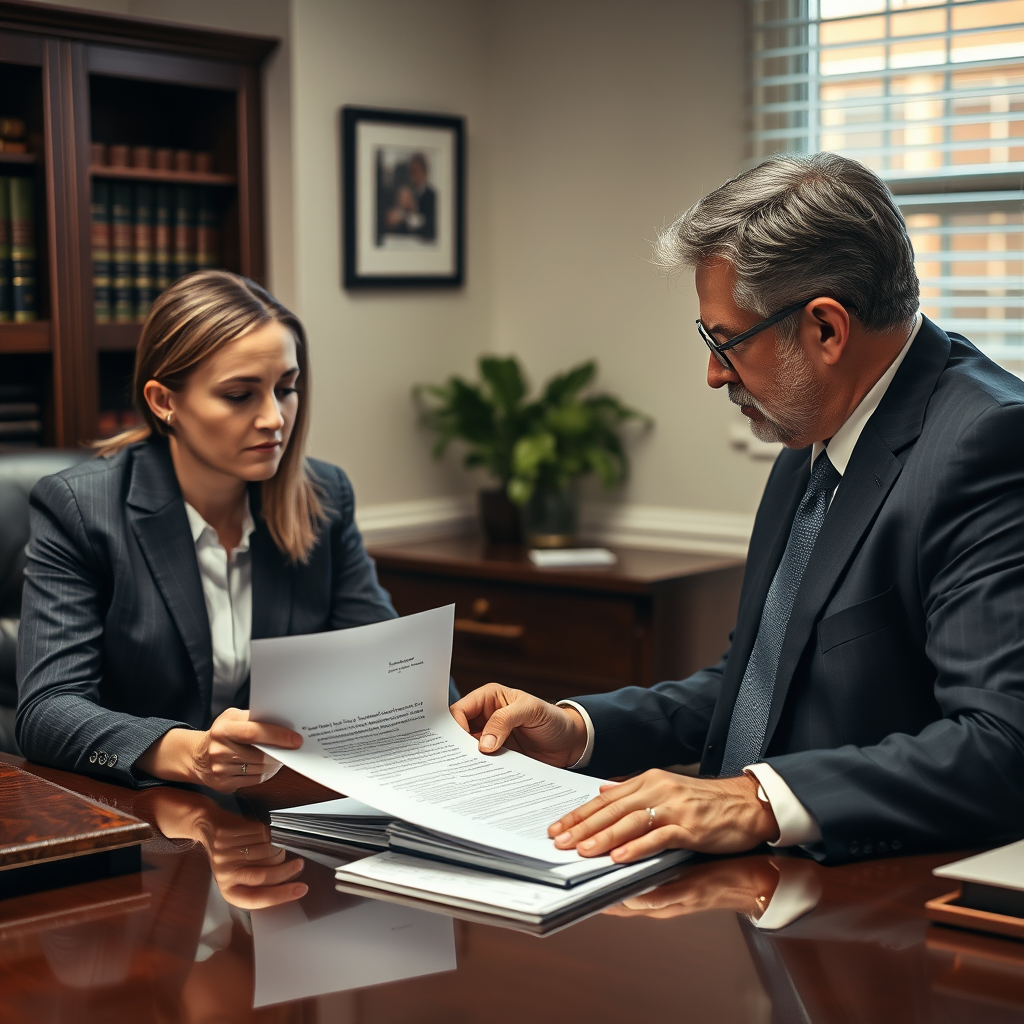
Postnup Lawyer James City County, VA
Postnuptial agreements give married couples a clear, enforceable framework for property division, support, and other financial matters if the relationship ends. In James City County, these contracts are governed by Virginia’s Premarital Agreement Act, found at Va. Code § 20‑147 and following sections of Title 20. The same statutory scheme permits spouses to resolve detailed issues—real estate, retirement accounts, business interests—without waiting for a divorce to begin. Mr. Sris, Owner and Founder of Law Offices Of SRIS, P.C., has practiced family law since 1997. He and his Of Counsel team help clients across Williamsburg, Norge, Toano, Lightfoot, and the rest of James City County draft agreements that meet Virginia’s requirements and anticipate the financial realities of a potential separation. To request a consultation about a postnuptial agreement, reach Law Offices Of SRIS, P.C. at (888) 437‑7747. Law Offices Of SRIS, P.C. – Advocacy Without Borders.
What Postnuptial Agreements Mean in James City County
A postnuptial agreement—often called a postnup—is a voluntary contract entered into by spouses after marriage. Unlike a prenuptial agreement, which is executed before the wedding, a postnup addresses the same types of issues: classification and division of assets and debts, potential spousal support, and the handling of jointly owned property. Virginia law treats premarital and post‑marital agreements under the same title, and the same principles of enforceability apply. Spouses must provide full and fair disclosure of assets and debts, and each must have a meaningful opportunity to consult independent counsel, although independent representation is not strictly required by the statute.
In James City County, postnuptial agreements often come up when one spouse receives a substantial inheritance, starts a business, or when the couple wants to resolve uncertainty about the future of a jointly owned asset such as a family home. The county’s location—midway between Richmond and the Hampton Roads area—means many residents have ties to military installations, defense contractors, or Colonial Williamsburg’s tourism sector. Those employment contexts can create sophisticated compensation structures, including pensions, profit‑sharing accounts, and deferred‑compensation plans that benefit from clear contractual treatment.
Any agreement touching on divorce, equitable distribution, or spousal support falls under the exclusive jurisdiction of the James City County Circuit Court, located at 5201 Monticello Avenue, Suite 4, Williamsburg, Virginia. Standalone custody, visitation, or child‑support disputes are heard by the James City County Juvenile & Domestic Relations District Court. Because Virginia is an equitable‑distribution state, courts do not automatically divide marital property 50/50; instead, they weigh the factors listed in Va. Code § 20‑107.3. A properly drafted postnuptial agreement can replace that default judicial process with a mutually agreed‑upon formula, saving both parties the expense and uncertainty of litigation.
How Mr. Sris and His Of Counsel Handle Postnuptial Agreement Cases
Mr. Sris and his Of Counsel approach each postnuptial agreement as a collaborative planning document rather than merely a protective shield. The initial consultation involves a detailed discussion of the couple’s full financial picture, their goals for the agreement, and any concerns about disclosure or voluntariness. Attorneys then identify all material assets and debts, including those that might straddle the line between separate and marital property—such as businesses started during the marriage with separate funds or commingled investment accounts.
Once the financial field is clear, Mr. Sris and his Of Counsel prepare a draft agreement that complies with Va. Code § 20‑150 (enforceability standards) and addresses the specific concerns the spouses have raised. The agreement is not signed until both parties have had a reasonable opportunity to seek outside legal review. The firm does not act as attorney for both spouses; it represents one party while the other party is encouraged to consult independent counsel. This safeguards the enforceability of the final document.
After execution, the agreement is preserved alongside any supporting documentation—financial statements, disclosures, and evidence of voluntariness—so that it stands up to a later challenge. If the marriage later ends, the agreement governs property division and, where permitted, spousal support. Should a dispute arise over the validity or interpretation of the agreement, Mr. Sris and his Of Counsel are prepared to appear in James City County Circuit Court or, if the matter involves child‑support or custody issues, in the Juvenile & Domestic Relations District Court. Virginia law permits a court to set aside a postnuptial agreement if it was not entered into voluntarily or if enforcement would be unconscionable, so careful drafting and a clear record of disclosure are critical.
About Mr. Sris and His Of Counsel Team
Mr. Sris, Owner and Founder of Law Offices Of SRIS, P.C., is a former prosecutor who has focused his practice on family law, criminal defense, and immigration for nearly three decades. He is admitted to practice in Virginia, Maryland, the District of Columbia, New Jersey, and New York, allowing the firm to assist clients whose legal lives cross state lines—a frequent reality for military families and federal employees stationed in the James City County area.
Mr. Sris and his Of Counsel bring extensive combined legal experience to every postnuptial agreement they draft. Results may vary. The firm’s practice extends from its Richmond Location, at 7400 Beaufont Springs Drive, Suite 300, Room 395, Richmond, Virginia 23225, where clients can meet by appointment. Mr. Sris testified before the Virginia House Courts of Justice Committee in support of 2019 HB 635 (chief patron Del. David Bulova). That testimony reflects a depth of familiarity with Virginia’s equitable‑distribution framework that directly informs the provisions incorporated into postnuptial agreements.
Frequently Asked Questions
What is a postnuptial agreement under Virginia law?
A postnuptial agreement is a contract between spouses, entered into after marriage, that determines how property, debts, and spousal support will be handled if the marriage ends. Virginia’s Premarital Agreement Act, Va. Code § 20‑147 and following sections, applies to both prenuptial and postnuptial agreements. For the agreement to be enforceable, it must be entered into voluntarily and be fair at the time of execution; full financial disclosure is required.
Do courts in James City County enforce postnuptial agreements?
Yes. James City County Circuit Court will enforce a postnuptial agreement that meets Virginia’s statutory standards. The court examines whether the agreement was entered into freely, whether there was adequate disclosure, and whether enforcement would be unconscionable. As with any contract, an agreement procured by fraud, duress, or material misrepresentation will not be given effect.
How does a postnuptial agreement differ from a prenuptial agreement in Virginia?
The primary difference is timing: a prenuptial agreement is executed before marriage, while a postnuptial agreement is executed afterward. Under Va. Code § 20‑147, both are governed by the same substantive rules. In practice, postnuptial agreements sometimes face closer scrutiny because the spouses are already married and may be less adversarial about disclosure; for that reason, meticulous documentation of financial information is especially important for postnups.
Do I need a lawyer for a postnuptial agreement in James City County?
While Virginia law does not require each spouse to have an attorney, the statute does require that each spouse have a reasonable opportunity to consult independent counsel. An experienced attorney can help ensure the agreement is properly structured, that all necessary disclosures are made, and that the agreement is likely to be upheld if later challenged. To discuss the details of your matter, contact Law Offices Of SRIS, P.C. at (888) 437‑7747.
Can a postnuptial agreement cover child custody or child support in James City County?
Virginia courts retain the power to determine child custody and child support based on the best interests of the child at the time of the determination. A postnuptial agreement can express the parents’ preferences, but the agreement will not bind the court on these issues. Child support must comply with the statutory guidelines of Va. Code § 20‑108.1, and the court may deviate from the parents’ agreement if it is not in the child’s best interests.
What happens if one spouse files for divorce without a valid postnuptial agreement in James City County?
Without a valid postnuptial agreement, the James City County Circuit Court will divide marital property under Virginia’s equitable‑distribution framework. The court will classify all property as marital, separate, or part‑marital/part‑separate, then distribute the marital portion based on the factors in Va. Code § 20‑107.3. This process can be unpredictable and expensive; a properly drafted postnuptial agreement replaces that default scheme with rules the spouses themselves have chosen.
Is there a residency requirement to file a divorce in James City County that might affect a postnuptial agreement?
Yes. To file for divorce in Virginia, at least one party must have been a resident and domiciliary of the Commonwealth for at least six months before filing, under Va. Code § 20‑97. A postnuptial agreement does not change that requirement, but it can streamline the divorce process by resolving property and support issues in advance, potentially allowing the spouses to proceed on no‑fault grounds after meeting the statutory separation period.
How can a postnuptial agreement help with a family business in James City County?
If one spouse owns a business, a postnuptial agreement can classify that business as separate property and waive any claim the other spouse might have to its appreciation or profits. For a business started during the marriage, the agreement can define how the non‑owner spouse’s contributions—financial or as a homemaker—will be recognized, avoiding the need for a costly business‑valuation fight in Circuit Court.
For guidance on your specific situation, reach Law Offices Of SRIS, P.C. at (888) 437‑7747.
Related pages:
Attorney advertising. Prior results do not guarantee a similar outcome.
Results may vary.
Case results depend on a variety of factors unique to each case.