


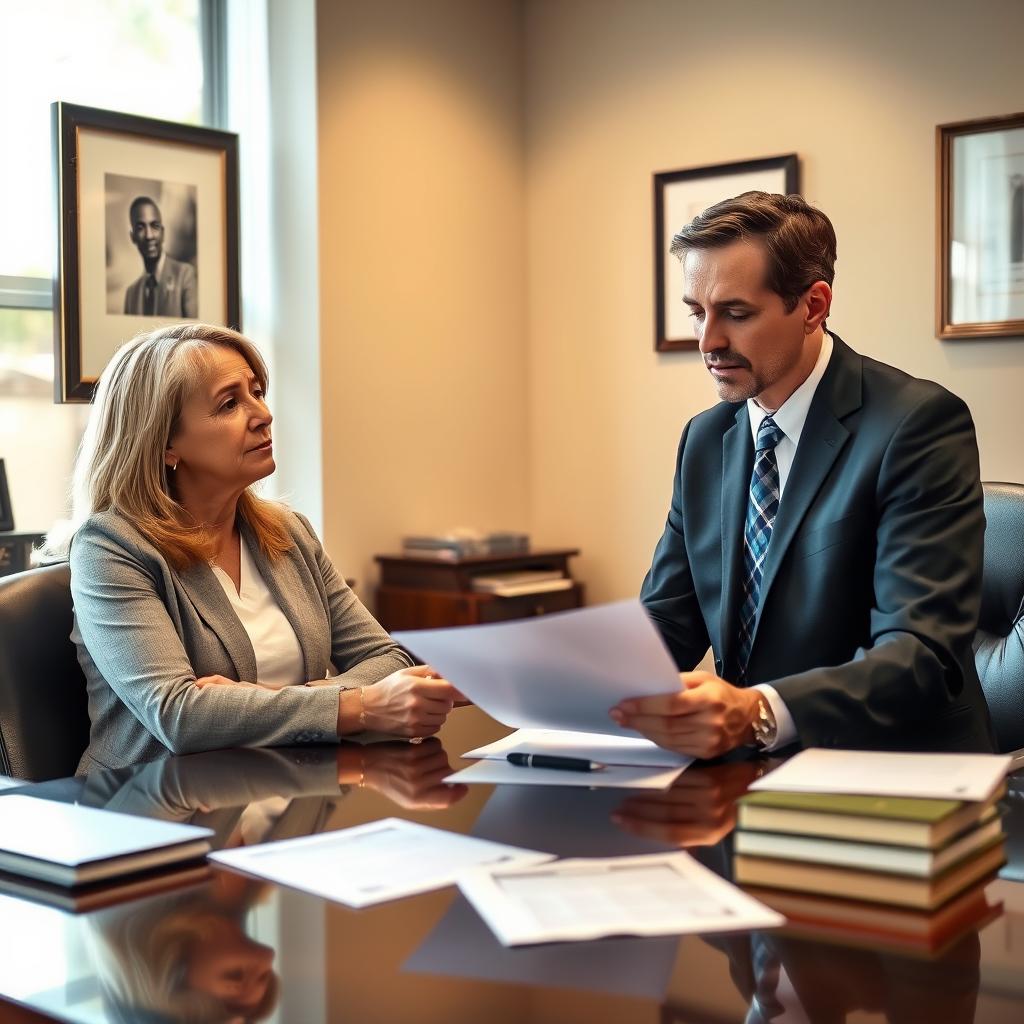
Spousal Support Lawyer Louisa County, VA
When a marriage ends, financial stability can be one of the most pressing concerns for both parties. In Louisa County, spouses facing divorce or separation often need guidance on whether spousal support—sometimes called alimony—will be part of their resolution. Spousal support is not automatically granted in Virginia; rather, it requires a careful examination of each party’s financial needs, earning capacity, and the history of the marriage. Law Offices Of SRIS, P.C. Concentrates its practice on family law matters including spousal support cases in Louisa County. Mr. Sris, the firm’s Owner and Founder, and his Of Counsel team have represented clients in spousal support negotiations, contested hearings, and post-divorce modifications. Whether you are seeking support or responding to a request, understanding how Virginia law applies in Louisa County is essential. Reach our location at (888) 437‑7747 to request a consultation. Law Offices Of SRIS, P.C. – Advocacy Without Borders.
What Spousal Support Means in Louisa County, Virginia
Spousal support in Virginia is governed by Title 20 of the Virginia Code. It is a court-ordered payment from one spouse to the other during or after a divorce, intended to help the receiving spouse meet reasonable needs and maintain a standard of living comparable to that enjoyed during the marriage, when the facts warrant such an award. In Louisa County, spousal support matters are heard in the Louisa County Circuit Court, which has exclusive jurisdiction over divorce and equitable distribution, or in the Louisa County Juvenile and Domestic Relations District Court when support is sought in a stand‑alone context or as part of a custody and support proceeding. The Circuit Court at 100 West Main Street, Louisa, VA 23093 handles divorces, property division, and spousal support tied to the dissolution of the marriage. The J&DR court may address temporary support and enforcement matters where the parties are not yet divorced or where the divorce has already been finalized.
Virginia is an equitable distribution state, meaning marital property is divided fairly but not necessarily equally. Spousal support is a separate legal question that the court resolves by applying the factors set out in Va. Code § 20‑107.1. Those factors include each spouse’s earning capacity, financial resources, and needs; the duration of the marriage; the standard of living established during the marriage; contributions to the family, both monetary and non‑monetary; age and health of the parties; and the division of marital property. Unlike child support, there is no rigid formula for spousal support; the judge has discretion to fashion an award—or deny one—based on the evidence. For couples who reach a signed separation agreement, spousal support terms may be negotiated privately and incorporated into the final divorce decree. Whether a case is resolved through negotiation or litigation, having an experienced attorney familiar with the Louisa County courts helps ensure that the financial picture is presented clearly.
How Mr. Sris and His Of Counsel Handle Spousal Support Cases
Mr. Sris and his Of Counsel team take a methodical approach to spousal support matters. Every case begins with a thorough review of the client’s financial situation—income, expenses, assets, and debts—as well as the factors the court will consider under Va. Code § 20‑107.1. If a settlement can be reached, the firm works to negotiate spousal support terms that are practical and sustainable. When settlement is not possible, the team prepares for a contested hearing before the Louisa County Circuit Court or J&DR court, presenting evidence and arguments that support the client’s position.
Spousal support issues also arise after the divorce decree has been entered. A party may seek modification if there has been a material change in circumstances, such as a job loss, illness, or a substantial increase in the other spouse’s income. Enforcement actions become necessary when a former spouse fails to pay as ordered. Mr. Sris and his Of Counsel represent clients in modification and enforcement proceedings, helping them navigate the procedural requirements of the Louisa County court system. Throughout the process, the firm works to achieve a fair resolution while keeping the client informed of what to expect at each stage.
About Mr. Sris and His Of Counsel Team
Mr. Sris, Owner and Founder of Law Offices Of SRIS, P.C., has been practicing law since 1997. He is a former prosecutor, an experience that gives him insight into case construction and courtroom presentation. Mr. Sris testified before the Virginia House Courts of Justice Committee in support of 2019 HB 635 (chief patron Del. David Bulova). He is admitted in Virginia, Maryland, the District of Columbia, New Jersey, and New York, and he concentrates his practice on family law, including spousal support matters across those jurisdictions.
Mr. Sris and his Of Counsel bring over 120 years of combined legal experience. Results may vary. The firm has documented 4,739+ case results across all practice areas since 1997, including a favorable track record in family law matters. For Louisa County specifically, the firm has 30 documented case results across all practice areas. The Of Counsel team—all non‑employee attorneys engaged through Excella—support the firm’s family law work with backgrounds that include former prosecution, law enforcement, and extensive litigation experience. Their collective knowledge helps clients address the financial dimensions of divorce and separation with a clear understanding of Virginia law.
Frequently Asked Questions
How is spousal support determined in Virginia?
Spousal support in Virginia is determined based on a set of statutory factors that the judge weighs after hearing evidence about each spouse’s finances and circumstances. Under Va. Code § 20‑107.1, the court looks at each party’s earning capacity, financial resources and needs, the length of the marriage, the standard of living during the marriage, and each spouse’s contributions to the family. There is no automatic formula. The judge has broad discretion, and the outcome often depends on the specific facts of the case. For more information about how these factors apply to your situation, contact our location for a consultation.
Can a spousal support order be modified after the divorce?
Yes, a spousal support order can be modified if the party seeking the change shows a material change in circumstances that was not anticipated at the time the order was entered. Common grounds for modification include a substantial increase or decrease in either spouse’s income, involuntary job loss, a serious health issue, or retirement. The request must be filed in the court that issued the original order, such as the Louisa County Circuit Court. The burden is on the moving party to prove the change by a preponderance of the evidence. Mr. Sris and his Of Counsel regularly handle spousal support modification petitions and can explain what the court will examine.
Do I need a lawyer to request spousal support in Louisa County?
You are not legally required to have a lawyer to request spousal support, but the process involves detailed financial disclosures and legal arguments that can significantly affect your financial future. Representing yourself puts the burden of preparing and presenting your case entirely on you. An experienced family law attorney can help you gather the necessary financial documentation, identify the strong $1s under Va. Code § 20‑107.1, and present your position effectively in court. Many spousal support disputes are resolved through negotiation, and counsel can help you evaluate whether a settlement offer is reasonable. To discuss your options, reach Law Offices Of SRIS, P.C. at (888) 437‑7747.
What can I do if my former spouse stops paying spousal support?
If your former spouse stops paying spousal support as ordered, you have the right to seek enforcement through the court. The first step is to document the missed payments and the arrearage. You may file a show cause petition asking the Louisa County Juvenile and Domestic Relations District Court or Circuit Court to hold your former spouse in contempt. The court can order payment of the past‑due amount, plus interest and attorney fees, and impose other sanctions. In some cases, the court may order wage garnishment or a judgment lien. Acting promptly is important because delays can allow the arrearage to grow. For guidance on enforcement, contact the firm.
How long does spousal support last in Virginia?
The duration of spousal support depends on the terms of the order or agreement and the length of the marriage. In some cases, support is set for a specific period—for example, a few years to allow a spouse to return to school or find employment. In other cases, especially after long marriages, support may be ordered for an indefinite duration, subject to modification or termination upon the remarriage or cohabitation of the receiving spouse. Indefinite support does not necessarily mean permanent; it remains subject to the court’s continuing jurisdiction to modify. The specific language of the divorce decree is critical, and an attorney can help you understand your rights and obligations.
Additional family law resources: Fairfax County · Prince William County · Manassas · Falls Church · Fairfax City
Primary legal sources: Virginia Code Title 20 · SCC business entity filings · Virginia Circuit Courts
Attorney advertising. Prior results do not guarantee a similar outcome. Case results depend on a variety of factors unique to each case. Results may vary.