


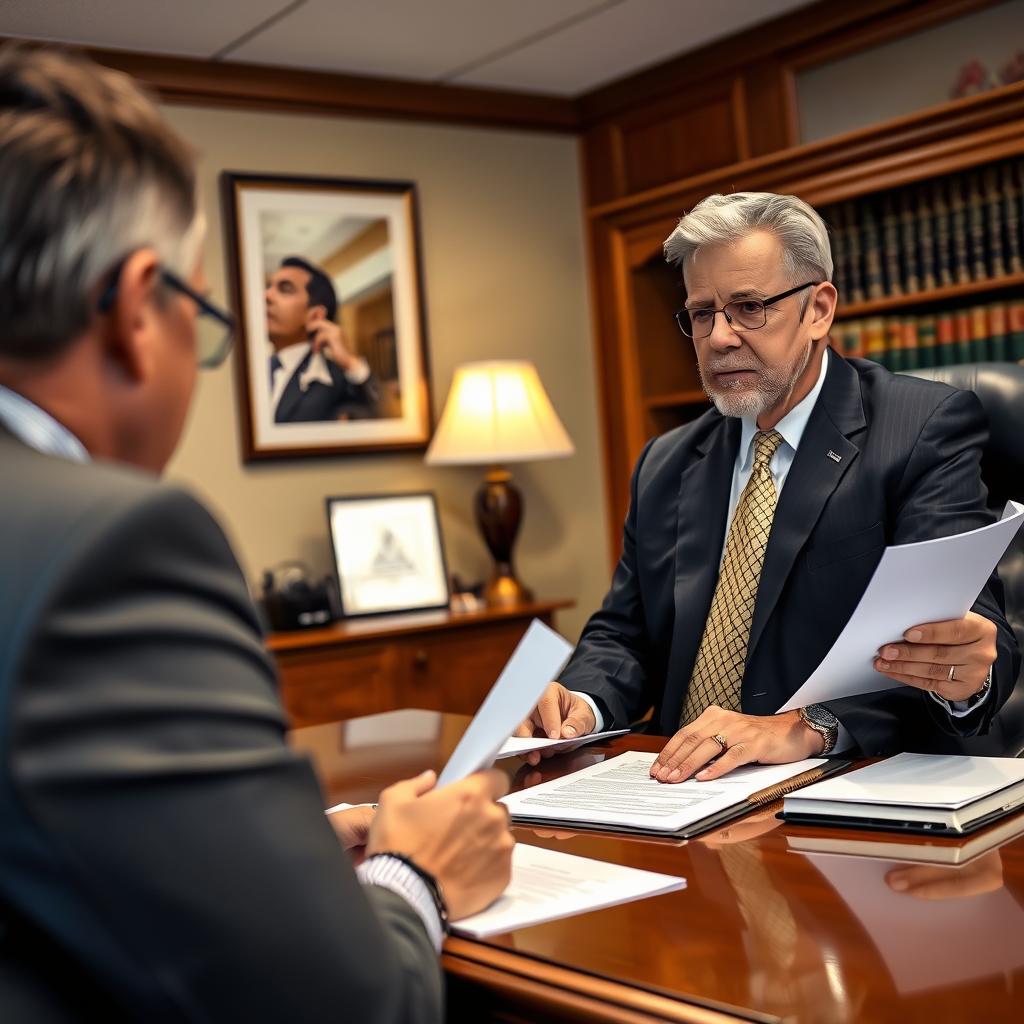
Subornation of Perjury lawyer Prince George County, VA
A federal subornation of perjury charge in Prince George County means the government alleges that you procured another person to commit perjury—to knowingly make a false material statement under oath in a federal proceeding. Subornation is prosecuted under 18 U.S.C. § 1622, which carries a penalty of up to five years in federal prison, a substantial fine, or both, for each count. Federal cases arising in Prince George County are heard in the Richmond Division of the U.S. District Court for the Eastern District of Virginia, a court with a reputation for moving cases efficiently. The U.S. Attorney’s Office in that district prosecutes federal felony charges with significant resources. If you are under investigation or have been indicted for subornation of perjury, retaining an experienced federal defense attorney early is critical. Law Offices Of SRIS, P.C. represents individuals in federal criminal matters throughout Virginia from its Richmond location. To discuss your situation, call (888) 437‑7747. Law Offices Of SRIS, P.C. – Advocacy Without Borders.
What Federal Subornation of Perjury Means in Prince George County
Subornation of perjury is a distinct federal felony. The statute—18 U.S.C. § 1622—criminalizes procuring or inducing another person to commit perjury under 18 U.S.C. § 1621. Perjury itself requires that the declarant, under oath in a federal proceeding, willfully makes a false statement as to a material matter. For subornation, the government must prove that you knew or believed the testimony would be false and that you caused the witness to give it with the intent to deceive the tribunal. The materiality element ensures the false statement had the capacity to influence the decision of the decision-making body.
In Prince George County, the federal court of jurisdiction is the Richmond Division of the Eastern District of Virginia. That division sits at 701 East Broad Street in Richmond, roughly thirty minutes north of Prince George County via I‑95 and I‑295. Federal investigations often begin with an FBI or other agency inquiry long before charges are filed. If a grand jury returns an indictment, the process moves quickly. The Speedy Trial Act generally requires trial within seventy days of indictment, though excludable delays can extend the timeline. Because federal prosecutors win convictions in more than ninety percent of cases that go to trial, early preparation is essential. An attorney familiar with the local federal practice can meet with the Assistant U.S. Attorney, file substantive motions, and begin developing a defense before the case is teed up for trial.
How Mr. Sris and the Firm’s Of Counsel Attorneys Handle Subornation of Perjury Cases
Federal subornation of perjury charges frequently grow out of broader investigations—obstruction of justice, public corruption, or complex fraud matters. The defense therefore begins with a meticulous examination of the underlying proceeding in which the alleged perjury occurred, the nature of the statements, and the relationship between the client and the witness who allegedly perjured themselves. Mr. Sris, a former prosecutor, and the firm’s Of Counsel attorneys bring substantial experience with federal criminal procedure to every matter. The team reviews the grand jury transcripts, the witness’s prior statements, any grants of immunity or cooperation agreements, and the specific questions that were asked. Often, the government’s case rests on the credibility of a single witness; showing inconsistencies, prior inconsistent statements, or a motive to fabricate can be decisive.
In many subornation prosecutions, the key legal issues revolve around whether the defendant had the specific intent to cause perjured testimony and whether the defendant knew the testimony was false. The firm explores constitutional challenges to the government’s investigation, including potential violations of the Fifth Amendment’s privilege against self‑incrimination, Sixth Amendment right to counsel, or the Fourth Amendment when electronic surveillance was involved. Where appropriate, the defense may engage a forensic accountant, a linguistics experienced attorney, or a former federal prosecutor as a consultant to test the government’s narrative. Throughout the pretrial phase, the team evaluates the merits of a motion to dismiss, a motion to suppress evidence, or a motion for a bill of particulars. In federal court, the sentencing exposure under the advisory U.S. Sentencing Guidelines depends on the offense level, the defendant’s criminal history, and acceptance of responsibility. Mr. Sris and the firm’s Of Counsel attorneys work to persuade the government to dismiss or reduce charges, or, if a trial is necessary, to present a coherent defense that holds the government to its burden of proof beyond a reasonable doubt.
About Mr. Sris and the Firm’s Of Counsel Attorneys
Mr. Sris, Owner and Founder of Law Offices Of SRIS, P.C., has practiced criminal defense in the federal courts of Virginia since founding the firm in 1997. As a former prosecutor, he understands the methods federal prosecutors use to build subornation and perjury cases. Mr. Sris testified before the Virginia House Courts of Justice Committee in support of 2019 HB 635 (chief patron Del. David Bulova). His background includes accounting and information systems, which is valuable when financial records or electronic communications are central to the government’s proof. He is admitted in Virginia, Maryland, the District of Columbia, New Jersey, and New York.
The firm’s Of Counsel attorneys contribute broad experience in federal litigation. Together, Mr. Sris and the firm’s Of Counsel attorneys bring extensive combined legal experience. Results may vary. in any particular case. The firm’s Richmond location serves clients in Prince George County, Hopewell, and surrounding central Virginia communities. Consultations are by appointment; call (888) 437‑7747 to speak with the team.
Frequently Asked Questions
What is the difference between perjury and subornation of perjury?
Perjury is the act of willfully making a material false statement under oath; subornation of perjury is procuring another person to commit perjury. Perjury is charged under 18 U.S.C. § 1621, while subornation is charged under 18 U.S.C. § 1622. Both carry a maximum sentence of five years per count. Subornation requires proof that the defendant knew the testimony would be false and induced the witness to give it. A defendant can be convicted of subornation even if the witness is not convicted of perjury, so long as the government proves the underlying perjury occurred.
How does a federal subornation of perjury case start in Virginia?
A federal subornation of perjury case usually begins with an investigation by a federal agency such as the FBI or the U.S. Attorney’s Office for the Eastern District of Virginia. Investigators may interview witnesses, obtain documents, or use grand jury subpoenas to gather evidence. If a grand jury returns an indictment, the defendant is arrested or issued a summons to appear in the Richmond Division. The first court appearance—an initial appearance and arraignment—is a critical juncture where an attorney can begin negotiating conditions of release and start discovery. Because federal prosecutors do not bring subornation charges lightly, early retention of counsel is advisable.
What must the government prove in a subornation of perjury prosecution?
The government must prove beyond a reasonable doubt that the defendant procured another person to commit perjury—that is, to knowingly make a false material declaration under oath in a federal proceeding. Materiality means the false statement was capable of influencing the decision-making body. The defendant must have acted with the specific intent to cause the false testimony. If the defendant believed the testimony was true, or if the statement was immaterial, the government cannot obtain a conviction. The credibility of the witness who allegedly committed perjury is frequently contested, as is the defendant’s knowledge of the falsity.
Can a subornation of perjury charge be dismissed before trial?
Yes, a subornation of perjury charge may be dismissed if the defense can show a legal deficiency in the indictment, a violation of the defendant’s constitutional rights, or insufficient evidence to support the charge. A motion to dismiss under Rule 12 of the Federal Rules of Criminal Procedure might argue that the alleged perjured statement was not material or that the defendant lacked the requisite intent. Motions to suppress evidence obtained through an unlawful search or seizure can also lead to dismissal if the evidence is essential to the government’s case. An experienced federal defense attorney will evaluate every pretrial avenue to challenge the charge and negotiate with the government for a possible reduction or dismissal.
What are the potential penalties for subornation of perjury?
Subornation of perjury carries a maximum penalty of five years in federal prison, a substantial fine, and a term of supervised release. The actual sentence is determined by the U.S. Sentencing Guidelines, which consider the offense level, the defendant’s criminal history, and any acceptance of responsibility. Unlike state sentences, federal sentences have no parole eligibility—the defendant must serve at least eighty‑five percent of the imposed term. Additionally, a felony conviction can have collateral consequences, including the loss of certain professional licenses, voting rights, and the right to possess firearms. A knowledgeable federal defense lawyer can present mitigating factors to argue for a sentence below the advisory guideline range.
Do I need a lawyer for a subornation of perjury investigation in Prince George County?
Yes, anyone who is the subject of a federal subornation of perjury investigation in Prince George County should consult an experienced federal criminal defense lawyer immediately. Statements made to federal agents without counsel can be used as evidence of intent or knowledge, even if the speaker does not realize the legal significance of the words. An attorney can communicate with investigators on your behalf, preserve relevant documents, and assess whether the government has a viable case. Early legal intervention often makes a substantial difference in whether charges are filed. Law Offices Of SRIS, P.C. provides a confidential consultation to discuss the investigation and possible defense strategies.
For guidance on your specific situation, contact Law Offices Of SRIS, P.C. at (888) 437‑7747.
Federal Criminal Lawyer in Fairfax County ·
Federal Criminal Lawyer in Prince William County ·
Federal Criminal Lawyer in Manassas (City) ·
Federal Criminal Lawyer in Fairfax (City)
18 U.S.C. § 1622 – Subornation of Perjury ·
U.S. District Court – Eastern District of Virginia
Attorney advertising. Prior results do not guarantee a similar outcome. Results may vary.
Case results depend on a variety of factors unique to each case.